 Robert Andrison
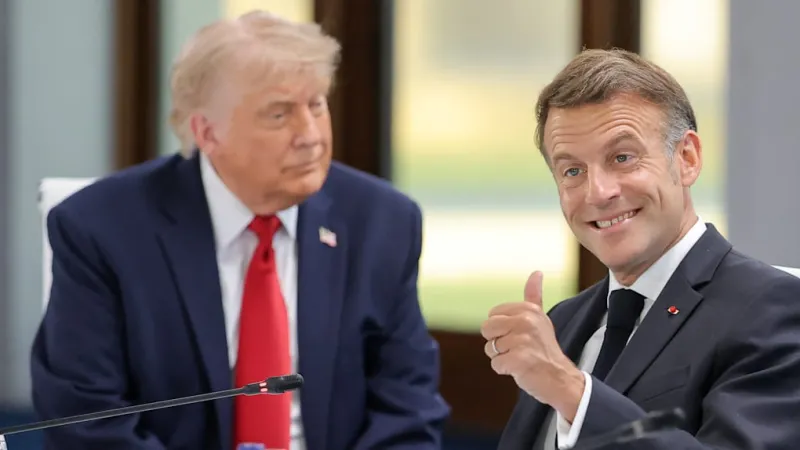
World leaders concluded the recent G7 Summit with surprising productivity, agreeing on nine key declarations. French President Emmanuel Macron described the outcome as a "moment of strategic awakening," a notable pronouncement given that a non-G7 nation, reportedly Iran, emerged as a significant diplomatic beneficiary from the proceedings.
The summit, whose precise location was not immediately disclosed, defied earlier expectations of deep discord, instead yielding a comprehensive set of commitments on pressing global issues. This level of consensus among the leading industrial democracies marked a departure from previous, more contentious gatherings.
The agreements reportedly span critical areas, including global economic stability, climate change mitigation, security challenges, and digital governance. The unanimous adoption of such a broad agenda underscored a renewed spirit of cooperation and a collective resolve to tackle shared global problems.
President Macron's characterization of a "strategic awakening" highlights a potential shift in international diplomatic engagement. His comments suggest a deeper understanding among G7 nations regarding the interconnectedness of global challenges and the imperative for collective, decisive action.
The unexpected diplomatic inroads made by Iran represent a significant outcome, especially in light of ongoing international tensions. President Donald Trump has consistently advocated for new approaches to international relations, particularly concerning the Middle East and the broader geopolitical landscape.
Previous G7 summits, under President Trump's tenure, saw him declaring a Great Success and signaling an imminent Iran accord. Further reports indicated President Trump foreshadowing a swift Iran agreement signing in Switzerland. This latest summit's reported outcome aligns with a long-term diplomatic strategy involving Tehran.
Sources close to the negotiations indicate that discussions surrounding a new framework for Iran's nuclear program and its regional role were a central, albeit largely unannounced, element of the G7 deliberations. This covert focus allowed for sensitive progress away from public scrutiny.
Such a development marks a considerable departure from previous stalemates, where tensions often overshadowed cooperative efforts. The G7 leaders appear to have found common ground to engage with Iran on terms that could redefine regional stability and foster de-escalation.
While the summit's final declarations did not explicitly detail the specifics of Iran-related outcomes, they established a diplomatic pathway forward. This suggests a concerted effort to de-escalate flashpoints and foster dialogue with non-member states crucial for global peace and security.
Observers and analysts will closely scrutinize the long-term implications of these agreements, particularly how the G7 will operationalize its commitments and manage the complexities of a newly engaged Iran. The coming months will reveal the true extent of this "strategic awakening."
Despite the positive momentum, implementing these far-reaching agreements will present considerable challenges. Geopolitical complexities, domestic political considerations, and the inherent difficulties of multilateral coordination will test the resolve of the G7 nations in the months and years to come.
The G7 nations typically convene to address global economic governance, international security, and energy policy. This meeting demonstrated a broader scope, encompassing a more nuanced approach to engagement with critical non-member states.
The role of individual leaders, such as President Trump and President Macron, proved instrumental in navigating complex geopolitical landscapes. Their bilateral meetings and joint statements undoubtedly shaped the summit's ambitious agenda and its unexpected resolutions.
This level of consensus on nine declarations indicates a formidable effort in collective diplomacy, surpassing many prior summits which often concluded with more generalized communiques lacking actionable specifics.
The emphasis on dialogue with non-G7 entities signifies a pragmatic approach to global governance. Recognizing the influence of rising powers and regionally significant states is paramount for achieving enduring peace and economic stability.
This development also arrives at a time when other global challenges, from supply chain resilience to emerging technologies, demand coordinated international responses. The G7's renewed vigor could set a precedent for future multilateral engagements.
The summit's outcome will undoubtedly influence subsequent international forums and bilateral discussions, potentially reshaping alliances and diplomatic priorities for the remainder of the decade. The world watches for the practical execution of these newly forged agreements.