 Angel Doris
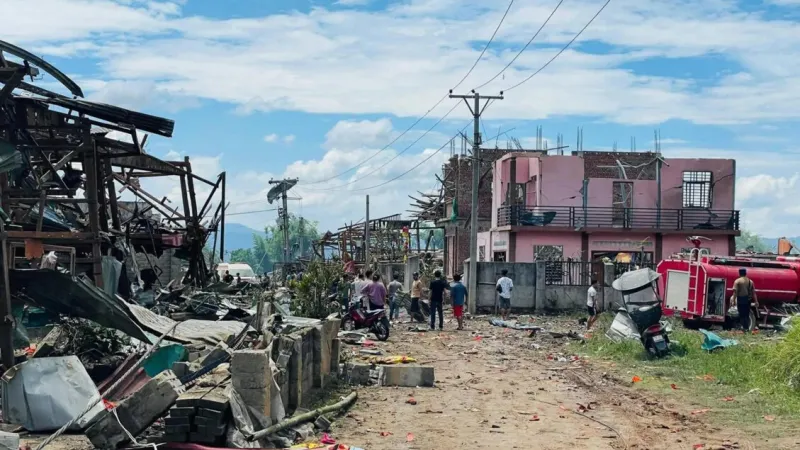
A catastrophic explosion in a building within a rebel-controlled area of Myanmar has resulted in the deaths of at least 50 people and left 70 others injured. The blast, which occurred recently, is attributed to the presence of explosive materials used for mining, exacerbating the humanitarian crisis in a region already grappling with prolonged conflict and instability.
Emergency services, primarily local volunteer groups and community networks, struggled to access the site amid the chaotic aftermath. The sheer force of the detonation leveled the structure, scattering debris across a wide radius and posing significant challenges for rescue and recovery operations. Casualties are expected to rise as search efforts continue in the rubble.
Sources familiar with the region indicate that the building served as a storage facility for mining explosives. Myanmar is rich in natural resources, including minerals, and the illicit trade and storage of such volatile materials are common in areas outside central government control, often fueling local economies and armed groups. The exact circumstances leading to the explosion remain under investigation.
The incident took place in a territory heavily contested between various ethnic armed organizations and the ruling military junta. This precarious security landscape complicates any immediate, coordinated response from national authorities, leaving local communities vulnerable and reliant on limited resources. The ongoing civil unrest has displaced millions and fostered an environment ripe for such tragic accidents.
The presence of mining explosives in civilian areas poses an acute and persistent danger. These materials are inherently unstable and require stringent handling and storage protocols, which are frequently absent in conflict zones. This lack of oversight transforms residential or commercial structures into potential death traps, as tragically demonstrated by this latest event.
International aid organizations have expressed grave concern over the incident and called for immediate humanitarian access to the affected zone. However, the political complexities and active conflict make such access exceedingly difficult, leaving the injured without adequate medical care and the displaced without essential support.
Local residents, speaking on condition of anonymity for fear of reprisal, described a scene of utter devastation. One individual recounted hearing a massive roar followed by a tremor that shook homes kilometers away. "It was like an earthquake, but worse," the resident stated, "then we saw the smoke and knew something terrible had happened."
This Myanmar explosion underscores the devastating impact of the civil war on civilian lives, extending beyond direct combat. The country has been mired in widespread conflict since the 2021 military coup, with numerous factions vying for control and civilians frequently caught in the crossfire or victims of accidental tragedies.
While investigations into the precise cause are ongoing, the incident highlights broader issues concerning the regulation and control of dangerous materials in conflict-affected states. Without robust governance and peace, the proliferation of such explosives in insecure environments will continue to imperil innocent lives.
The international community continues to monitor the deteriorating situation in Myanmar, with calls for de-escalation and humanitarian protection. However, tangible progress remains elusive, and incidents like this serve as a stark reminder of the urgent need for a peaceful resolution and improved safety measures across the nation. The enduring volatility of conflict zones often leads to unpredictable and devastating outcomes.
As rescue workers continue their painstaking efforts amidst the debris, the human cost of the Myanmar explosion reverberates throughout the beleaguered nation. Families grieve lost loved ones, and communities grapple with yet another layer of hardship, reinforcing the dire need for stability and adherence to international safety standards.