 Angel Doris
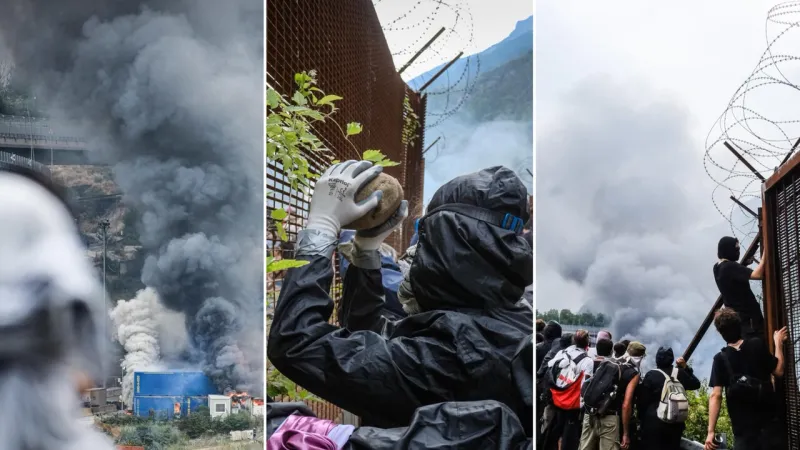
Hundreds of No Tav activists launched a violent assault on high-speed rail construction sites across Italy, deploying paper bombs and tear gas in a dramatic escalation of the long-running dispute. The coordinated attacks immediately drew condemnation from top Italian officials, with President Sergio Mattarella contacting the Interior Minister and Prime Minister Giorgia Meloni vowing that "violence will not bend the State."
The aggressors, numbering in the hundreds, targeted multiple strategic points within the heavily fortified perimeter of the Val di Susa railway project. Witnesses reported chaotic scenes as projectiles rained down, intended to breach defenses and halt ongoing infrastructure work.
Interior Minister Matteo Piantedosi underscored the gravity of the situation, stating, "There are those who want an escalation." His remarks, made shortly after the incident, reflect growing concerns within the government regarding the increasingly aggressive tactics employed by segments of the anti-TAV movement.
Prime Minister Giorgia Meloni unequivocally condemned the acts. "The violence will not bend the State," Meloni declared, reaffirming the government's steadfast commitment to the completion of the strategic high-speed rail link and its zero-tolerance stance on public disorder.
The immediate outreach by President Mattarella to Minister Piantedosi highlighted the profound institutional alarm triggered by the scale and ferocity of the assault. Such direct engagement from the head of state signals a unified governmental front against the perceived threat to public order and national projects.
The No Tav movement, which opposes the Turin-Lyon high-speed railway, has historically engaged in protests, but recent events mark a notable intensification. Supporters argue the project is environmentally destructive and financially wasteful, while the government emphasizes its strategic importance for European connectivity and economic growth.
This latest eruption of hostility follows a pattern of increasingly volatile demonstrations. Earlier this year, masked No Tav assaults escalated, leading to similar pledges of state resolve from Italian leaders. Authorities have consistently struggled to contain these determined and often organized groups.
The government has repeatedly asserted its firm resolve to see the TAV project through to completion, viewing it as a critical piece of national and European infrastructure. Officials maintain that the benefits in terms of reduced travel times, environmental impact from fewer road vehicles, and economic stimulus outweigh the opponents' objections.
The incidents inevitably lead to significant operational delays and increased security expenditures for the construction sites. Law enforcement agencies face a continuous challenge in protecting personnel and infrastructure from these recurring violent incursions.
Minister Piantedosi's assessment of a desired "escalation" by certain elements within the No Tav movement suggests intelligence points to a premeditated strategy rather than spontaneous outbursts. This raises questions about the long-term security implications for the region.
In response to the growing threat, the Italian government has pledged to reinforce security measures around the Val di Susa sites and to pursue legal action against those responsible for the violence. The objective is to deter future attacks and ensure the uninterrupted progress of the rail project.
The persistence of the No Tav movement and the violent nature of some protests pose a consistent challenge to governmental authority. These events frequently ignite broader political debate about freedom of protest versus the imperative of public order and national infrastructure development.
Previous incidents, such as when a violent No Tav march closed highways and saw Prime Minister Meloni again vow state firmness, underscore the recurring nature of these clashes. The commitment from Rome remains unwavering despite the ongoing resistance.
Reports from earlier confrontations also detail instances where No Tav protests turned violent, with arsonists torching police vehicles, illustrating the destructive potential of these demonstrations and the significant risks faced by law enforcement.
Despite the sustained opposition and the recent intensification of violence, the Italian state, through its leadership, has unequivocally declared its intent to uphold the law and complete the critically important TAV infrastructure project, asserting that democratic processes cannot be subverted by extremist actions.