 Debby Wijaya
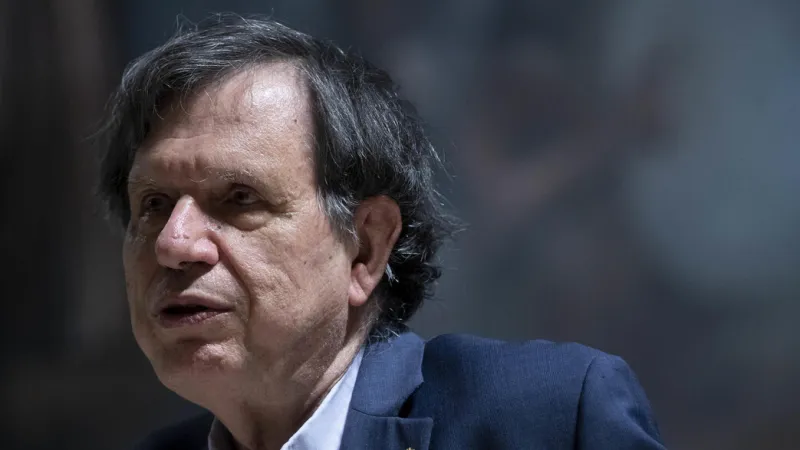
ROME – Nobel laureate Giorgio Parisi has voiced profound concern regarding the burgeoning military application of Artificial Intelligence, asserting that while the risks are considerable, the pathway to international treaties remains achievable. Parisi, a distinguished physicist and recipient of the Nobel Prize for his groundbreaking work on complex physical systems, highlighted the imperative role of the scientific community in educating policymakers and exerting pressure on governments to address these critical technological advancements.
Parisi's apprehension centers on the rapid, unchecked integration of military AI into defense systems, a development he believes carries unprecedented implications for global stability. He underscored the potential for autonomous weapons systems to escalate conflicts and reduce human oversight in critical decision-making processes, thereby fundamentally altering the landscape of modern warfare.
The physicist articulated a clear ethical mandate for scientists. He posited that it is not merely an academic exercise but a moral obligation for researchers to elucidate the multifaceted dangers associated with military AI to both the public and political leaders. This educational effort, Parisi contended, is crucial for fostering informed policy debates.
Beyond mere explanation, Parisi called for active engagement from the scientific community to pressure governments into meaningful action. This pressure, he suggested, should aim to galvanize international dialogue and foster a collective will to regulate the development and deployment of autonomous lethal weapons, rather than allowing an unfettered technological arms race.
Despite the complexities, Parisi maintains an optimistic outlook on the feasibility of establishing international agreements. He drew parallels to past efforts in arms control, indicating that precedents exist for nations to cooperatively manage technologies with destructive potential. Such treaties would be designed to prevent destabilizing developments and ensure ethical considerations guide AI integration into defense.
The challenge of military AI differs significantly from conventional weaponry. Its learning capabilities, potential for unforeseen behavior, and the speed at which decisions can be made present unique ethical and strategic dilemmas. Parisi's remarks echo a growing chorus of experts who advocate for a preemptive approach rather than reactive measures once the technology is widely deployed.
The global implications of an unregulated military AI sector are vast. Nations vying for technological superiority could trigger an arms race where the lines between offensive and defensive capabilities blur, potentially leading to miscalculations or accidental escalation. This scenario, Parisi warned, poses a direct threat to international peace and security.
Achieving treaties on military AI will necessitate robust international cooperation. This involves sharing research, establishing common ethical guidelines, and developing verification mechanisms to ensure compliance. Parisi's call emphasizes the need for multilateral forums where such complex issues can be thoroughly debated and resolved.
Historically, global powers have come together to regulate or ban certain types of weaponry, such as chemical and biological weapons, and have sought to control nuclear proliferation. These examples, Parisi suggested, demonstrate that collective political will, driven by scientific understanding and public pressure, can indeed lead to effective international agreements on potent technologies.
The window for establishing effective regulatory frameworks is narrowing, given the rapid pace of technological innovation. Parisi stressed the urgency for governments to prioritize these discussions, moving beyond theoretical debates to concrete policy initiatives before the widespread deployment of fully autonomous military AI systems becomes an irreversible reality.
Part of the scientists' duty also extends to educating the general public. A well-informed citizenry is better equipped to understand the stakes involved and can, in turn, exert democratic pressure on their elected officials to pursue responsible AI governance. Public awareness campaigns, Parisi implied, are vital for creating a global consensus.
Beyond treaties, establishing comprehensive ethical frameworks for the development and use of military AI is paramount. These frameworks would define acceptable boundaries, accountability mechanisms, and principles for human oversight, ensuring that AI remains a tool under human control, rather than an independent agent of destruction.
Parisi's statements contribute to a broader global dialogue among scientists, ethicists, legal scholars, and policymakers concerning the future of AI. His Nobel stature lends significant weight to these discussions, urging a more proactive and unified approach to what many consider one of the defining technological challenges of the 21st century.