 Dorry Archiles
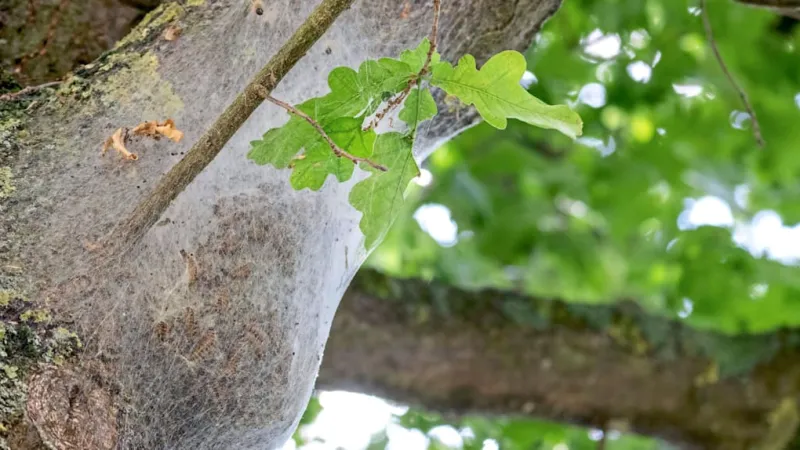
BERLIN The Federal Environment Agency has issued a stark warning regarding the widespread proliferation of oak processionary moth caterpillars across Germany as soaring temperatures in 2026 accelerate their lifecycle. This poses a significant public health threat, particularly in areas frequented by children and athletes. Contact with the caterpillars or their microscopic hairs can trigger severe allergic reactions, prompting urgent calls for public vigilance and preventive measures.
The return of the *Thaumetopoea processionea*, commonly known as the oak processionary moth, is an annual concern, yet this year witnesses an unprecedented surge in populations. The larvae, distinguished by their irritating bristles, have been observed in alarming numbers in various municipalities, raising alarms for public safety.
Exposure to the caterpillar's urticating hairs can lead to a range of debilitating health issues, including painful skin rashes, severe respiratory problems, and persistent eye irritation. In severe cases, individuals may experience anaphylactic shock, necessitating immediate medical intervention. These microscopic hairs can remain active in the environment for years, making clearance a complex and ongoing challenge.
The Federal Environment Agency (Umweltbundesamt) specifically advises against any direct contact with the caterpillars or their distinctive silken nests, which are typically found on oak trees. Citizens encountering these pests are urged to report sightings to local authorities or professional pest control services rather than attempting removal themselves.
Reports indicate high concentrations around urban green spaces, including community sports facilities and daycare centers, where children are especially vulnerable due to their proximity to ground level and natural curiosity. The warm, dry conditions prevalent across Central Europe have created an ideal environment for the caterpillars rapid development and dispersal.
Local councils are increasingly implementing targeted measures, such as professional removal of nests and extensive public awareness campaigns. However, the sheer scale of the infestation in some regions necessitates broader public cooperation and strict adherence to safety guidelines for effective containment.
Entomologists caution that climate change contributes significantly to the earlier emergence and increased prevalence of such invasive species. Longer periods of warm weather allow the oak processionary moth caterpillars to complete multiple life cycles within a single season, thereby exacerbating their population growth and spread.
The challenges posed by the oak processionary moth underscore the growing impact of environmental shifts on local biodiversity and public welfare across European nations. Similar concerns have been raised regarding other invasive species thriving under altered climatic conditions, signaling a broader ecological concern.
Authorities are exploring sustainable management strategies beyond immediate removal, including the cautious deployment of biological controls and the development of advanced monitoring systems to predict and track outbreaks. Educational initiatives aimed at preventing human contact remain paramount, particularly for vulnerable populations.
Public health officials reiterate the importance of covering exposed skin with long sleeves, trousers, and gloves when in affected areas or engaging in outdoor activities near oak trees. Seeking medical attention promptly if symptoms of exposure appear is crucial for effective treatment.
The allergic reactions manifest primarily as dermatitis, characterized by intense itching, redness, and swelling, often forming a distinct rash. Ocular irritation, including conjunctivitis, and respiratory issues like asthma or bronchitis can also occur if airborne hairs are inhaled.
The oak processionary moth spends its larval stage feeding voraciously on oak leaves, forming distinctive silken nests on tree trunks and branches. These elaborate nests, containing thousands of caterpillars and their shed urticating hairs, serve as critical reservoirs of danger throughout the spring and summer months.
While historically endemic to parts of Southern and Central Europe, the oak processionary moth's range has notably expanded northward in recent decades. This migration pattern directly correlates with rising average temperatures across the continent, placing previously unaffected regions at increasing risk.
Beyond direct health concerns, the widespread infestation carries significant economic repercussions. Forestry operations face challenges, tourism in affected natural parks may decline, and local municipalities incur substantial costs associated with pest control and extensive public health campaigns.
Personal protective measures extend to thoroughly washing skin and clothing after potential exposure to outdoor environments where oak trees are present. Pets should also be monitored, as they can inadvertently carry the hairs into homes, posing a risk to residents.
Medical professionals advise that over-the-counter antihistamines can alleviate mild reactions, while more severe cases may necessitate prescribed corticosteroids or emergency medical treatment for acute respiratory distress. Rapid identification of symptoms is key to timely and effective management.
International scientific collaboration is becoming increasingly vital to accurately track the moth's ecological progression and to develop coordinated response strategies across national borders. Researchers are actively studying natural predators and developing specific pheromone traps as potential, less invasive control methods.
Government agencies are intensifying public awareness campaigns, leveraging digital platforms, local community outreach, and school programs to disseminate comprehensive information about the identification, risks, and appropriate actions. The overarching goal is proactive prevention rather than reactive treatment of symptoms.