Gabriella
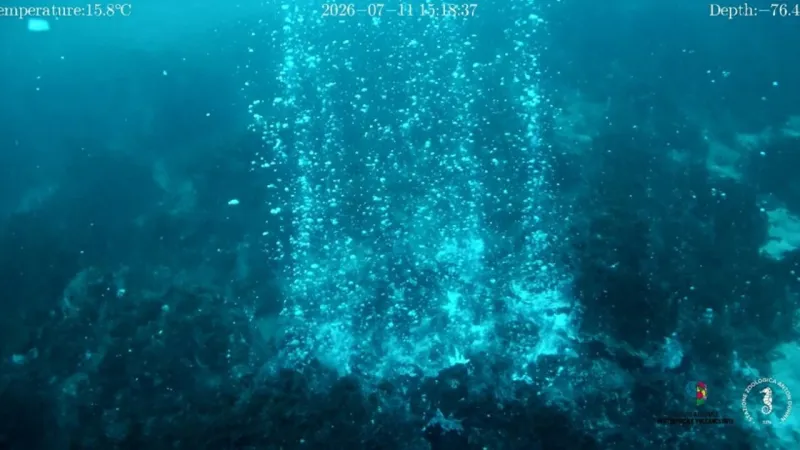
Panarea, Italy – Scientists have announced the discovery of a vast underwater crater and multiple active hydrothermal vents off the coast of the Aeolian island of Panarea. This significant find, detailed in a collaborative study by the Italian National Institute of Geophysics and Volcanology (INGV), the Stazione Zoologica Anton Dohrn (SZN), the Sicily Marine Centre, and CRiMAC, offers crucial new insights into the complex volcanic and geological processes beneath the Tyrrhenian Sea.
The newly identified crater, described as substantial in size, and the network of hydrothermal vents represent a dynamic geological environment previously unmapped in such detail. Researchers believe these features are direct indicators of active magmatic processes occurring deep within the Earths crust beneath Panarea, an island renowned for its historical volcanic activity.
An INGV spokesperson confirmed the origins of the breakthrough, stating, “These discoveries were made possible thanks to a collaborative study involving SZN, the Sicily Marine Centre, and CRiMAC.” This interdisciplinary approach allowed for comprehensive data collection and analysis, revealing the hidden depths of Panarea’s marine landscape.
Hydrothermal vents are fissures in the seafloor from which geothermally heated water issues. These unique environments often support diverse ecosystems, thriving on chemosynthesis rather than photosynthesis. The presence of new vents suggests the potential for previously unknown species adapted to extreme conditions, warranting further biological investigation.
Panarea is part of the Aeolian Archipelago, a chain of volcanic islands north of Sicily. Its submarine landscape is characterized by an active hydrothermal system, making it a critical site for studying shallow-water volcanism and the interaction between geological forces and marine life.
Scientists conducting the research employed advanced seafloor mapping technologies and remotely operated vehicles (ROVs) to explore the seabed. The data collected provided high-resolution imagery and bathymetric details, enabling the precise identification and characterization of these newly found geological structures.
The discovery holds significant implications for understanding regional seismic and volcanic hazards. Monitoring such active systems can provide valuable data for predicting potential future events, contributing to the safety and preparedness of communities in the Aeolian Islands and broader Mediterranean region.
Beyond geological significance, the deep-sea ecosystems supported by hydrothermal vents are often referred to as oases of life. The extreme conditions, high temperatures, and unique chemical compositions create habitats for specialized organisms, including bacteria, archaea, and various invertebrates, that form complex food webs independent of sunlight.
This Panarea underwater discovery is expected to attract international scientific interest, prompting future expeditions to further investigate the crater and vent fields. Researchers plan to analyze water samples, rock formations, and biological specimens to gain a deeper understanding of the processes at play.
The ongoing collaboration between Italian research institutions underscores a commitment to exploring and understanding the complex geological and biological systems that characterize the countrys extensive coastlines and maritime territories. Such findings are vital for both scientific advancement and environmental conservation efforts in sensitive marine areas.