 Stefani Rindus
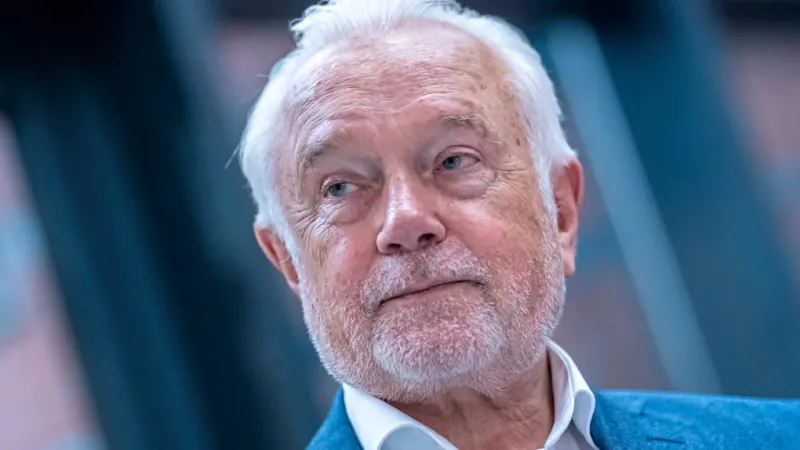
Berlin — A planned personnel reshuffle spearheaded by CDU leader Friedrich Merz has devolved into a dramatic political stalemate, publicly exposing deep fissures within Germany's political landscape. The future of a sitting federal Transport Minister hangs precariously, complicated by the unexpected public disclosure of a highly memorable text message, prompting FDP leader Wolfgang Kubicki to sharply criticize Chancellor Olaf Scholz and the entire affair.
What began as a strategic move by Friedrich Merz, aiming to potentially consolidate influence or realign the Christian Democratic Union's (CDU) shadow cabinet, has instead created an embarrassing spectacle. The intended clarity of the personnel changes has been overshadowed by an enduring state of uncertainty, casting a long shadow over the efficacy of political leadership.
The precarious position of the Transport Minister, whose identity remains a subject of intense speculation and rumor in political circles, highlights the acute sensitivity of these internal party maneuvers. Sources close to the government suggest the minister's tenure is now contingent on navigating a complex web of party demands and public perception, exacerbated by the current revelations.
The flashpoint for this escalating drama arrived with the publication of a critical text message. While the precise contents of the SMS have not been fully disclosed, its leak has been widely interpreted as a significant breach of political protocol and a deliberate attempt to influence the ongoing power struggles. Its public airing has fueled intense media scrutiny and parliamentary debate.
FDP chairman and Bundestag Vice-President Wolfgang Kubicki did not mince words, characterizing the unfolding situation as “a single public humiliation for all involved.” His pointed remarks underscore the growing frustration among coalition partners and the opposition alike regarding the handling of sensitive political transitions.
Kubicki directed particular criticism towards Chancellor Olaf Scholz, suggesting a perceived lack of decisive leadership in managing the escalating political crisis. This critique resonates with broader concerns about the Scholz government's capacity to navigate complex domestic challenges, especially when faced with internal discord and external pressures. The FDP, a key partner in the governing Ampel coalition, has frequently voiced its distinct perspectives on national policy and political strategy.
The dramatic Hängepartie, a German term for a suspenseful, drawn-out situation, reveals the fragility inherent in Germany's current multi-party governance. Such public discord can weaken public trust and hinder the government's ability to present a united front on critical policy issues, ranging from economic stability to energy transition.
Observers note that Merz's initiative, ostensibly designed to project strength and renewal for the CDU, has inadvertently created an opportunity for opponents to highlight internal disarray. This misstep could have implications for the CDU's standing as it prepares for future elections, especially given the dynamic shifts in the broader German politics landscape, as seen in recent polls and regional election results.
The public release of the SMS serves as a stark reminder of the interconnectedness of personal communications and political accountability in the modern era. In an environment where information spreads instantaneously, even ostensibly private messages can carry significant political weight, shaping narratives and influencing outcomes.
This incident also draws parallels with other periods of political tension within German legislative bodies, where internal disputes have spilled into the public sphere. The current climate of political fragmentation means that even minor missteps can quickly amplify into full-blown crises, demanding robust responses from leadership.
As the Transport Minister's political future remains uncertain, the various factions involved face increasing pressure to resolve the stalemate. Any resolution will likely require delicate negotiations and a concerted effort to restore a semblance of order and confidence within the respective parties and the broader government structure.
Amidst these developments, the challenges facing Germany extend beyond this particular reshuffle. Broader concerns about political consensus and effective governance continue to surface. For instance, discussions surrounding national security and defense posture remain vital, as highlighted by debates on strengthening European cooperation and military capabilities, a topic explored previously in articles like Laschet Challenges AfD on Europe and German Defense Posture. These discussions underscore the need for stable political leadership.
The episode has intensified scrutiny on the Chancellor’s role in mediating conflicts within his coalition and with the opposition. A perceived vacuum of authority or a slow response could embolden critics and further destabilize the political environment. The ability to project control and restore equilibrium will be crucial for the government’s continued mandate.
Furthermore, the current political climate in Germany is marked by shifting voter loyalties and the rise of alternative political forces. The challenges of forming stable coalitions and maintaining popular support are ongoing, as evidenced by reports such as AfD Seizes Berlin Poll Lead, Coalition Partners Remain Elusive, which illustrate the complexities of contemporary German politics and the increasing difficulty of securing clear mandates.
Ultimately, the prolonged uncertainty surrounding the Merz reshuffle and the Transport Minister's fate serves as a potent reminder of the volatile nature of high-level politics. The outcome will not only determine the trajectory of individual careers but also potentially influence the strategic direction and public perception of Germany's major political parties in the lead-up to the next federal elections.