 Chandra Wijayanto
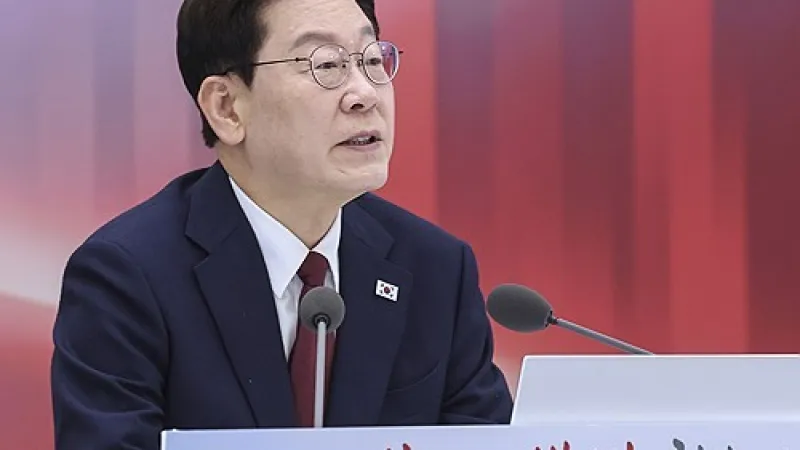
SEOUL, Nov. 13 – South Korean President Lee Jae Myung's approval rating has significantly plummeted below the critical 40 percent mark, according to a new nationwide public opinion poll. The sudden decline signals growing public apprehension regarding his administration's performance and the overall direction of the country.
The latest survey, conducted by a prominent national pollster, placed President Lee Jae Myung's public support at 38.5 percent, a notable drop from its previous standing. This figure represents a considerable retreat, falling back into a territory often associated with increased political vulnerability for sitting leaders.
Political analysts widely view the 40 percent approval threshold as a crucial benchmark for the stability and effectiveness of a presidential administration. A consistent dip below this level frequently indicates deepening public dissatisfaction and can complicate a leader's ability to implement key policies and maintain legislative cohesion.
The erosion in support for President Lee Jae Myung is attributed to a confluence of factors. Persistent economic anxieties, including stubbornly high inflation and rising living costs, continue to weigh heavily on households across the nation. Furthermore, recent controversies surrounding specific government initiatives and cabinet appointments may have exacerbated public skepticism.
Citizens have expressed concerns over the administration's perceived handling of both domestic challenges and complex geopolitical dynamics. There is a palpable sense among some segments of the population that their immediate economic hardships are not being adequately addressed by current government strategies.
The falling approval rating could significantly impact President Lee Jae Myung's political capital. It may empower opposition parties, making it more challenging for the ruling coalition to push through its legislative agenda and secure bipartisan cooperation on critical national issues. Such a downturn often precedes intensified political maneuvering.
While the presidential office has yet to issue a direct statement specifically addressing the poll results, administration officials have frequently reiterated their commitment to improving the livelihoods of ordinary South Koreans. They emphasize ongoing efforts to stabilize prices and foster economic growth.
This dip in approval for President Lee Jae Myung is not unprecedented in South Korean political history. Several past presidents have experienced similar fluctuations in public support, often correlating with national economic performance or major political events. The challenge lies in reversing this trend.
The national media has extensively covered the polling data, with various news outlets analyzing the implications for the remainder of President Lee Jae Myung's term. Public discourse on social media platforms also reflects a diverse range of opinions, from staunch defense to sharp criticism of the current leadership.
Dr. Kim Min-joon, a professor of political science at Seoul National University, remarked, "A president's approval rating is a thermometer of public trust. While swings are normal, a sustained position below 40 percent necessitates a strategic reassessment by the Blue House to reconnect with the electorate."
The administration now faces the imperative task of transparently communicating its vision and demonstrating tangible progress on issues that matter most to the populace. Rebuilding trust will require concerted efforts and visible policy outcomes that resonate with the public's expectations.
The trajectory of President Lee Jae Myung's approval rating will be closely watched by domestic and international observers. His capacity to navigate current headwinds and articulate a compelling path forward will be crucial in defining the legacy of his presidency and shaping the nation's political landscape.