 Angela Stefani
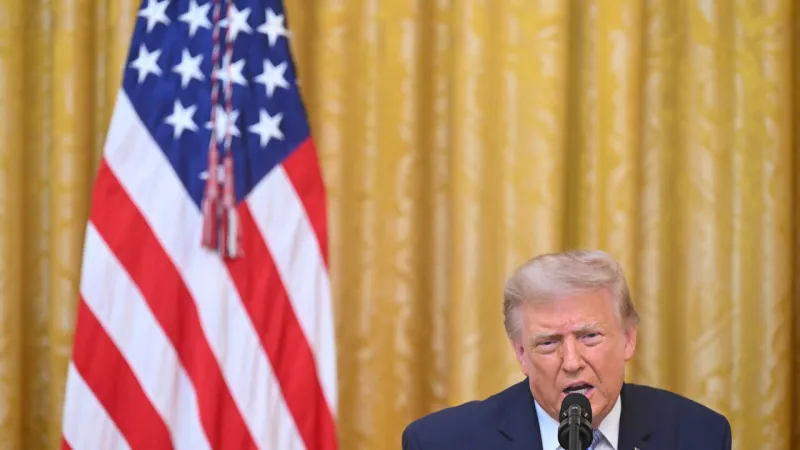
Washington, D.C. – President Donald Trump today publicly accused China of perpetrating the largest electoral data breach in United States history during the 2020 presidential election, asserting that Beijing actively sought to undermine his candidacy. The extraordinary claim, made as the nation approaches another election cycle, reignites profound concerns over foreign interference in American democratic processes.
President Trump made his forceful declaration during a campaign appearance, stating unequivocally, "China did not want me to win" in 2020. He elaborated that this alleged interference constituted an unprecedented violation of US electoral integrity, directly attributing the breach to the Chinese government.
The President offered no specific evidence or detailed intelligence to substantiate his claim of a data breach at the time of his remarks. However, his accusation aligns with a long-standing narrative from his administration regarding external threats to election security.
Security experts and intelligence agencies have consistently warned about sophisticated cyber operations targeting democratic institutions globally. While previous reports have cited Russian interference in the 2016 election and ongoing threats from multiple state actors, a direct presidential accusation of China orchestrating the "largest electoral data breach" specifically aimed at the 2020 outcome marks a significant escalation.
The nature of the alleged data violation remains unclear from President Trump's statements. Whether it involved voter registration databases, campaign networks, or other critical infrastructure central to the election process has not been specified.
Beijing has consistently denied allegations of interfering in the internal affairs or electoral processes of other nations. Any official response from China regarding President Trump's latest accusation is anticipated to echo these denials, likely characterizing the claims as politically motivated.
President Trump's administration has frequently adopted a confrontational stance towards China, particularly on issues ranging from trade imbalances and intellectual property theft to human rights and geopolitical influence. This latest accusation adds a potent new dimension to the already strained bilateral relationship.
The implications of such an electoral data breach, if proven, would be far-reaching. It would necessitate a comprehensive re-evaluation of US cyber defense strategies and international protocols for election security. It also raises questions about the extent of foreign capabilities to impact democratic outcomes.
This is not the first instance where President Trump has raised concerns about the integrity of the 2020 election. His past challenges to the election results have been a recurring theme in his political discourse, though the specific focus on a Chinese electoral data breach of this magnitude is a newly emphasized aspect.
Members of Congress and various political commentators are expected to weigh in on the President's assertion, either demanding further evidence or expressing solidarity with his concerns about foreign threats. The call for transparency and robust verification will undoubtedly intensify.
The Department of Homeland Security and other federal agencies responsible for election security have previously outlined measures taken to protect the 2020 election, acknowledging persistent, though often thwarted, attempts by foreign adversaries to compromise systems. The new claims by President Trump will likely prompt renewed scrutiny of these past assessments.
The broader international community will also be closely observing developments, as allegations of state-sponsored cyberattacks on elections have global ramifications for democratic governance and trust in electoral systems. Allies and adversaries alike will be keen to understand the basis of President Trump's declaration.
The incident underscores the continuing challenge of safeguarding digital infrastructure against increasingly sophisticated nation-state actors. The resilience of electoral systems relies heavily on vigilance, robust defenses, and international cooperation to deter and detect such breaches.
Without concrete evidence presented, the President's remarks currently stand as a significant political accusation. The onus will now be on his administration or campaign to provide further details to substantiate the claim of the largest electoral data breach involving China in 2020.
The political fallout from this assertion could be considerable, influencing public perception of election integrity and potentially shaping foreign policy dialogues ahead of upcoming elections. The discussion will undoubtedly center on both national security and the foundations of democratic trust.
The claim reopens a critical dialogue about the vigilance required to protect sensitive electoral data and the ongoing, evolving nature of cyber warfare in the geopolitical arena.
The nation remains watchful for additional information from the President or relevant intelligence bodies that could shed further light on the alleged Chinese electoral data breach.