Dodi Irawan
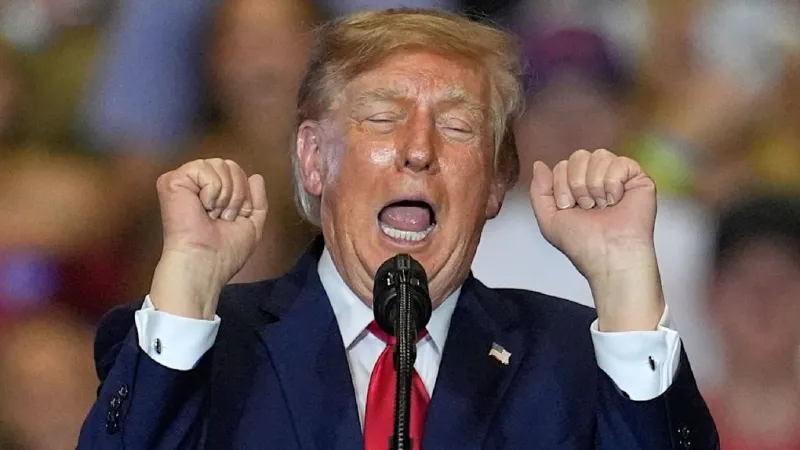
In an extraordinary turn during a recent campaign rally in South Carolina, President Donald Trump lauded an alleged physical altercation among attendees protesting his appearance, subsequently announcing additional federal waterway renamings that immediately drew widespread scrutiny and debate. The dual events underscore a pattern of provocative presidential rhetoric and executive action as the nation approaches a pivotal electoral cycle.
The contentious scene unfolded as demonstrators voiced opposition to the President's platform, leading to an intervention by security personnel. Eyewitness accounts suggest a heated exchange escalating into physical confrontations, a situation President Trump addressed from the podium with remarks that many interpreted as an endorsement of the aggressive responses.
From the stage, President Trump reportedly remarked on the robustness of his supporters, praising their zeal in confronting those who disrupted the event. This commentary diverged sharply from conventional political decorum, where leaders typically call for calm and condemn any form of violence at public gatherings. His words immediately resonated across social media platforms and news outlets, sparking a fresh wave of outrage and support.
Before the controversy over his remarks fully crystallized, President Trump pivoted to another unexpected announcement: a series of new directives concerning the renaming of several federally designated waterways. This move, delivered with little prior public consultation or warning, added another layer of complexity to an already charged atmosphere.
While specific details regarding which bodies of water would be affected remained somewhat opaque immediately following the announcement, White House aides later confirmed the administration's intent to proceed with changes reflecting historical figures or events deemed significant by the President. This initiative follows earlier efforts by the Trump administration to revise geographical nomenclature.
Such renamings, while within presidential authority, often involve extensive consultation with local communities, indigenous groups, and historical societies. Critics argue that bypassing these established protocols could lead to alienating stakeholders and erasing longstanding cultural or historical ties associated with the original names.
The confluence of these events — the perceived embrace of confrontational tactics and the unilateral renaming of public features — signals a continuation of President Trump's unconventional campaign strategy. As the country braces for the upcoming elections, his rallies frequently become focal points for both fervent support and vocal opposition.
Political commentators and opposition figures swiftly condemned President Trump's remarks regarding the protest incident. Senator Maria Rodriguez, a leading voice from the opposing party, issued a statement calling the President's comments “a dangerous incitement to division and hostility, completely unbecoming of the nation's highest office.”
Policy analysts also voiced concerns over the rapid-fire waterway renamings. Dr. Evelyn Hayes, a professor of constitutional law at Georgetown University, noted, “While presidents possess broad executive powers, the manner and rationale behind such significant cultural and environmental changes often face legislative and public challenges, particularly when appearing arbitrary.”
This is not the first instance where President Trump has challenged established norms regarding public discourse or federal administration. His presidency has been characterized by a willingness to break from traditional political etiquette, often appealing directly to his base while alienating critics.
This latest development also aligns with President Trump's assertive approach to foreign policy, including his ongoing efforts to broker international agreements. Notably, President Trump has intensified pressure on Ukraine's President Zelenskyy for a Russia peace deal, a stance detailed in a related report: Trump Intensifies Pressure on Zelenskyy for Russia Peace Deal. Such decisive, often unilateral, actions define his tenure.
Public opinion on these matters remains sharply divided. Supporters often view the President's actions as decisive leadership and a rejection of political correctness, while detractors see them as further erosion of democratic norms and a disregard for established processes.
The immediate aftermath of the South Carolina rally is expected to fuel further partisan debates, potentially shaping the narrative leading into the crucial election cycle. The interplay between presidential rhetoric, public sentiment, and executive decrees continues to define the national political discourse.
Legal challenges concerning the waterway renamings could emerge, particularly if environmental groups or states argue a lack of proper review or consultation. The administrative process for such changes is typically lengthy and subject to public comment periods.
For the campaign, the events might serve to galvanize the President's core supporters, reinforcing his image as a strong leader unafraid to challenge convention. However, they risk further alienating undecided voters and strengthening the resolve of his opposition.
As the nation moves deeper into the electoral season, these incidents highlight the persistent polarization within American politics and the profound impact of presidential actions and statements on the cultural and political landscape.