 Stefani Rindus
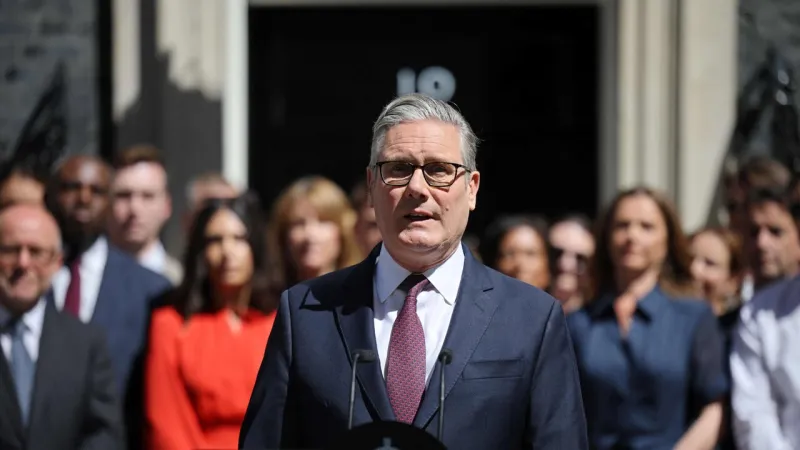
London — Keir Starmer formally resigned as Prime Minister of the United Kingdom today, tendering his departure to King Charles III. Following constitutional protocol, the monarch subsequently appointed Burnham to lead the government, marking a pivotal moment in the nations leadership landscape.
Starmer delivered his final address to the country as prime minister, speaking from 10 Downing Street. During his farewell speech, he pledged his unwavering support for his successor, emphasizing a smooth and cooperative transition of power.
Reflecting on his tenure, Starmer declared, "I leave him a better country," a statement underscoring his optimism for the United Kingdoms future under new leadership and his perceived achievements in office.
The formal process involved Starmer tendering his resignation to the King at Buckingham Palace, a centuries-old tradition that symbolizes the peaceful transfer of authority within the British parliamentary system.
Burnham now assumes the immense responsibility of forming a new cabinet and articulating his governments policy agenda. Political observers and the public alike eagerly await his initial pronouncements, which will likely set the tone for the coming months.
The new premier inherits a complex array of challenges, both domestically and on the international stage. These include persistent economic pressures, evolving social issues, and the need to navigate an intricate global geopolitical environment.
Public attention will be sharply focused on Burnham's early decisions and actions, as citizens look for stability, clear direction, and effective governance from the new administration.
This leadership change will inevitably prompt a re-evaluation of strategies and priorities across the political spectrum. Parties will adjust their platforms and tactics in response to the new governments direction and the shift in the executive.
Globally, allied nations and international partners will closely monitor the transition in the United Kingdom, keen to understand any potential shifts in foreign policy or bilateral relations under the new premiership.
While Starmer concluded his term with an assertion of having improved the nation, this transition signifies both a commitment to state continuity and the inherent changes that accompany new leadership.
Such high-level political changes, while rooted in established constitutional practices, invariably leave a significant imprint on a nations political history, influencing future governance and public discourse.
Burnham's leadership will ultimately be defined by his capacity to unite various factions, effectively address the nations most pressing concerns, and project a cohesive and strong vision for the United Kingdom on the world stage.