 Angela Stefani
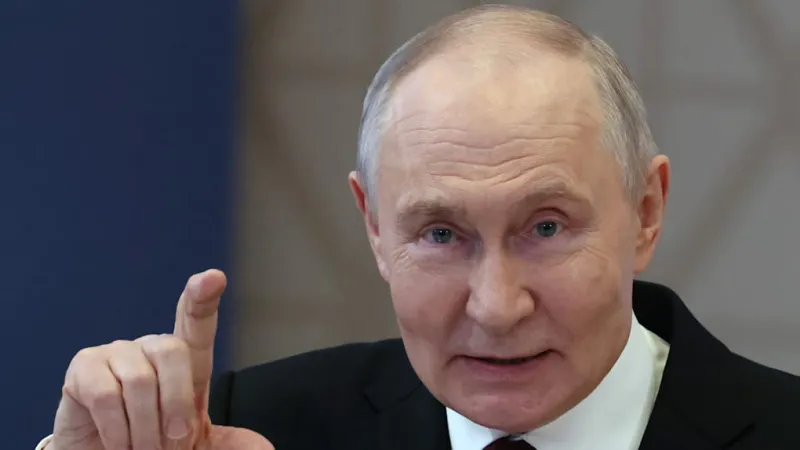
MOSCOW – Russian President Vladimir Putin has reignited a contentious debate by once again proposing former German Chancellor Gerhard Schroder as a trusted mediator in the ongoing Ukraine conflict. Putin, in recent remarks, publicly advocated for Schroder, describing him as "a person one can trust," while simultaneously leveling sharp criticism at the European Union for its alleged refusal to engage in meaningful dialogue with Moscow.
The Russian leader questioned the objections to Schroder's potential involvement, reportedly asking, "What is so bad about that?" This rhetorical query underscores Moscow's persistent efforts to introduce alternative diplomatic channels, often circumventing established Western frameworks, particularly as the conflict approaches its fourth year in 2026.
Schroder, who served as German Chancellor from 1998 to 2005, has maintained close personal and business ties with Putin since leaving office, particularly through his involvement with Russian state-owned energy companies. These connections have made him a highly controversial figure in Western capitals, especially since Russia's full-scale invasion of Ukraine.
Critics frequently question Schroder's neutrality and suitability for any mediation role in the conflict. Despite widespread condemnation from his own Social Democratic Party in Germany and broad criticism across the European Union, Schroder has previously made informal attempts at mediation in the early phases of the Ukraine war.
His efforts, however, yielded no discernible breakthroughs and were largely dismissed by Kyiv and Brussels due to pervasive concerns over his perceived pro-Kremlin bias. The European Union has maintained a robust and largely unified front against Russian aggression.
Putin's latest endorsement of Schroder serves as a strategic maneuver, aiming to highlight a perceived impasse in Russia-EU relations. By casting the European Union as unwilling to communicate, Moscow attempts to shift blame for the stalled diplomatic process, presenting itself as open to dialogue through a familiar, albeit controversial, figure.
The EU's strategy has centered on diplomatic isolation, extensive sanctions, and significant military and financial aid to Ukraine. The collective stance from Brussels has consistently rejected any engagement that might legitimize Russia's actions or undermine Ukraine's sovereignty.
Recent escalations, such as documented instances of Russian drones striking Romanian territory, a NATO member, further solidify the EU's cautious approach to direct engagement with Moscow. Such incidents, which have prompted strong condemnations from leaders like Italian Prime Minister Giorgia Meloni who decried a "grave European security threat," highlight the volatile environment complicating any potential Russia-EU dialogue. For more on this, see Russian Drone Strike Hits Romania; Meloni Decries Grave European Security Threat.
The call for Schroder's involvement also reflects Moscow's apparent preference for bilateral engagements or ad hoc mediation efforts over multilateral platforms. This approach allows Russia greater control over the narrative and the terms of discussion, a stark contrast to the structured diplomatic efforts favored by Western alliances.
The notion of a trusted intermediary who can bridge the divide between Moscow and Kyiv is theoretically appealing, yet the reality of the Ukraine conflict presents immense challenges. Any Ukraine mediator would need to possess unimpeachable impartiality and the trust of all parties, criteria that critics argue Schroder, given his history, cannot fulfill.
For the European Union, engaging with a figure like Schroder could be interpreted as a tacit acceptance of Russia's diplomatic playbook, potentially undermining the unity and moral authority the bloc has painstakingly built in response to the aggression. Brussels has consistently emphasized that any lasting peace must respect Ukraine's territorial integrity and sovereignty.
President Donald Trump's administration, while maintaining a distinct foreign policy approach, has also supported Ukraine's defense efforts, often aligning with European partners on the necessity of holding Russia accountable. The ongoing dynamic between Russia and the West continues to be defined by a complex interplay of pressure, sanctions, and limited diplomatic overtures.
Ultimately, Putin's renewed call for Schroder as a mediator appears to be more a statement on the perceived state of Russia-EU relations than a viable pathway to immediate peace talks. It underscores Moscow's frustration with its diplomatic isolation and its continued attempts to find sympathetic interlocutors, even if those choices are met with disdain by the international community.
The European Union's position remains firm: any Russia-EU dialogue must be substantive, respectful of international law, and genuinely aimed at a just and lasting peace in Ukraine. Without a fundamental shift in Moscow's posture or a credible, mutually acceptable mediator, the path to a diplomatic resolution remains deeply obstructed.
This situation further highlights the chasm separating Moscow's desired narrative from the established realities of international diplomacy concerning the protracted conflict in Ukraine. The question remains whether any figure, however trusted by one side, can overcome such entrenched distrust and facilitate genuine progress.