 Robert Andrison
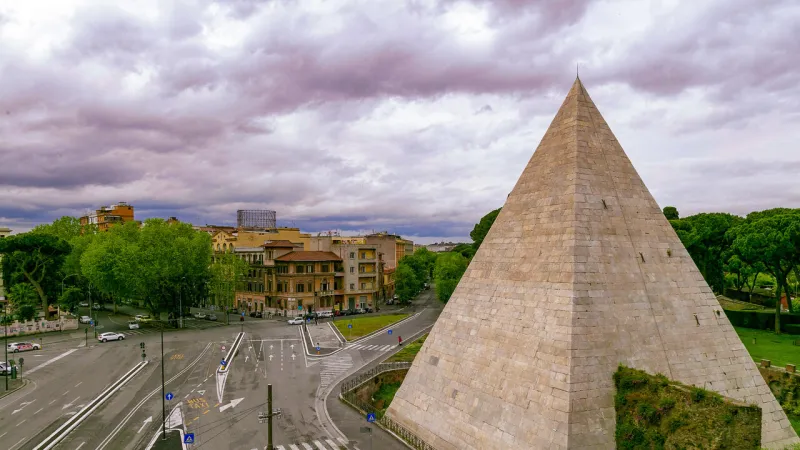
Rome, Italy – The ancient Pyramid of Cestius is set to reopen its venerable gates to the public starting September 4, offering a unique opportunity for free daytime and evening guided tours until October 31. This initiative, announced by cultural authorities, aims to balance the imperative of safeguarding the monument with ensuring broader accessibility for visitors eager to explore one of the Eternal Citys most distinctive historical treasures.
Constructed between 18 and 12 BC as a tomb for Gaius Cestius, a wealthy magistrate, the pyramid stands as an extraordinary example of Egyptian influence on Roman architecture. Its towering white marble facade has graced the Roman landscape for over two millennia, offering a rare glimpse into the funerary practices and artistic tastes of the Augustan age.
Public access to the interior of the Pyramid of Cestius has historically been sporadic, often requiring special permits or limited booking windows. The current reopening represents a significant push to democratize access to this unique historical site, inviting both Romans and international tourists to delve into its enigmatic chambers.
The newly established visiting pathway has been meticulously designed to enhance the visitor experience while rigorously adhering to conservation principles. This thoughtful approach ensures the structural integrity of the monument remains paramount, mitigating any potential impact from increased foot traffic. The project embodies a commitment to sustainable cultural tourism.
Guided tours, available free of charge, will provide detailed historical context and architectural insights into the pyramid and its occupant. These educational sessions are expected to shed light on the pyramids construction techniques, its subsequent integration into the Aurelian Walls, and its place in Roman imperial history.
The Pyramid of Cestius stands near the Porta San Paolo, an area rich with historical resonance. Its presence underscores Romes enduring fascination with foreign cultures and its capacity to absorb and reinterpret diverse artistic traditions, a characteristic that defines much of the citys expansive heritage.
This reopening aligns with a broader governmental push to revitalize access to Italys immense cultural patrimony, following similar initiatives across various archaeological sites and museums. Ensuring that such sites are both protected and experienced by the public is a delicate balance authorities consistently strive to achieve.
The provision for both day and evening visits is particularly noteworthy. Evening tours promise a different, perhaps more atmospheric, perspective on the ancient structure, allowing visitors to experience the monument under the stars, potentially evoking a sense of ancient mystery.
While the tours are free, booking is typically required to manage visitor flow and ensure a quality experience for all participants. Specific details regarding reservation procedures are expected to be announced by the superintendency in charge of Romes archaeological heritage, emphasizing the organized approach to this public offering.
The increased accessibility of sites like the Pyramid of Cestius is anticipated to contribute positively to local tourism, drawing more visitors to the lesser-known, yet equally significant, corners of Rome. This helps diversify tourist routes beyond the most famous landmarks, distributing economic benefits more broadly.
Successful implementation of this model — combining robust preservation with enhanced public accessibility — could serve as a blueprint for managing other ancient monuments across Italy. It highlights a proactive strategy for cultural heritage management in an era where global tourism continues to expand.
As the autumn months approach, the Pyramid of Cestius stands ready to welcome a new generation of explorers, offering an unparalleled journey back to the heart of ancient Rome.