 Angela Stefani
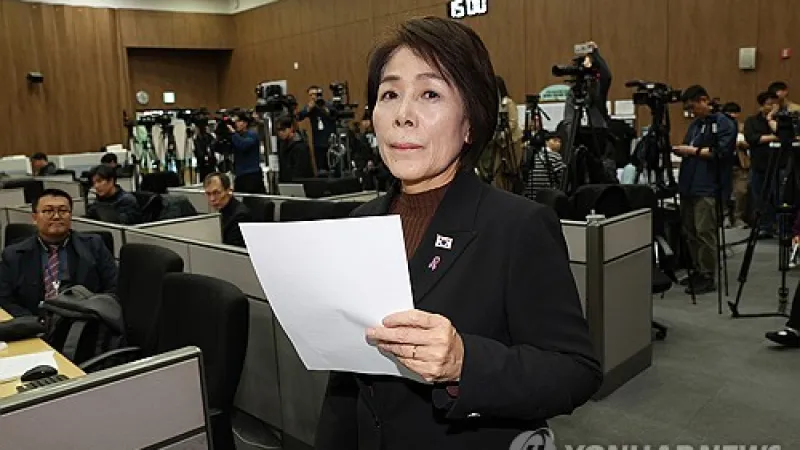
SEOUL, South Korea – A ruling party lawmaker faces a police complaint for defamation, filed Thursday, November 12, 2026, after allegedly referring to journalists as a "pack of hyenas." The accusation has ignited a contentious debate about media freedom and political rhetoric in the nation.
The complaint, lodged by an unspecified group or individual, centers on remarks made by the lawmaker during a recent public address or social media post. Details surrounding the exact context of the lawmaker’s incendiary comment remain under scrutiny as authorities begin their preliminary investigation.
Major journalistic associations in South Korea swiftly condemned the lawmaker’s language, asserting that such disparaging remarks undermine the critical role of the press in a democratic society. They highlighted the importance of respectful engagement, even amidst disagreement, between public officials and media practitioners.
Defamation laws in South Korea are relatively stringent, with both civil and criminal provisions that can result in significant penalties. Legal experts note that public figures, while subject to greater scrutiny, are not exempt from protections against false or malicious statements that damage their reputation.
This incident is not an isolated one, echoing past tensions between political figures and the media landscape in South Korea. Throughout its democratic evolution, the nation has grappled with defining the boundaries of free speech and responsible reporting, often leading to high-profile legal battles.
Critics argue that such rhetoric from elected officials can erode public trust in journalism, fostering an environment where legitimate reporting is dismissed as partisan or biased. Advocates for press freedom emphasize that robust and independent media are indispensable for transparent governance.
While the lawmaker’s identity has not been officially released in conjunction with the complaint, the ruling party has reportedly issued a statement emphasizing its commitment to upholding democratic values, including press freedom, while also calling for factual reporting.
The incident resonates with broader global concerns about the safety and integrity of journalists, particularly when faced with hostile political narratives. Internationally, organizations championing media rights have consistently warned against rhetoric that dehumanizes or targets reporters.
The Seoul Metropolitan Police Agency confirmed receipt of the complaint and stated that an investigation is underway to determine the veracity of the claims and whether the lawmaker’s comments constitute a criminal act of defamation. The process typically involves gathering evidence, interviewing witnesses, and potentially summoning the lawmaker for questioning.
Journalists and civil society groups are calling for swift and impartial action, viewing the outcome of this complaint as a significant indicator of the nation’s commitment to protecting journalistic integrity and holding public officials accountable for their public discourse.
This event underscores the delicate relationship between power and the press, a theme echoed in other international incidents where journalists face undue pressure. For instance, Seoul Journalists Denounce Russia Over Japanese Reporter's Detention highlighted a similar commitment from South Korean media to global press freedom.
The legal proceedings are expected to draw considerable public attention, potentially setting a precedent for future interactions between politicians and media in South Korea. The incident serves as a stark reminder of the responsibilities inherent in public office and the enduring importance of a free and fair press.