 Chris Robert
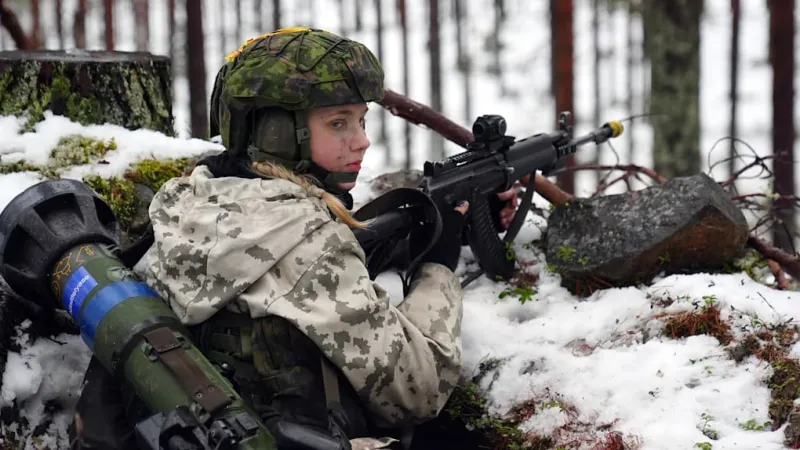
Satellite imagery recently revealed a significant military buildup by Russia along its border with Finland, prompting security experts to interpret these deployments as strategic preparations for the geopolitical landscape following the conclusion of the ongoing conflict in Ukraine. These calculated maneuvers suggest President Vladimir Putin is positioning Russia for potential future contingencies and exerting pressure on the newest NATO member.
The high-resolution satellite photographs, analyzed by various intelligence and defense groups, detail an increase in military hardware, personnel, and infrastructure near the 1,300-kilometer border. This escalation marks a clear departure from previous years, signifying a more assertive Russian posture.
Security analysts, many with deep experience in Eastern European defense, emphasize that these forces are “not merely stationed for show.” They are seen as integrated components of a broader strategy, designed to project power and potentially respond to perceived threats or opportunities once the Ukraine war subsides.
Finland's accession to NATO in April 2023 dramatically altered the strategic calculus in the Baltic Sea region. Russia views this expansion as a direct threat to its security interests, vowing countermeasures. This latest military concentration appears to be a tangible manifestation of those stated intentions.
Experts are currently evaluating three primary scenarios that President Putin might be preparing for, each with distinct implications for regional stability. These range from deterrence to the potential for future localized confrontations.
The first scenario posits that the buildup serves primarily as a deterrent. By establishing a robust military presence, Russia aims to intimidate Finland and NATO, discouraging any further encroachment or perceived aggression near its northwestern flank. This would also test NATO's resolve and response capabilities.
A second, more concerning scenario suggests Russia might be preparing to create a new “zone of influence” or a “second Ukraine” in a figurative sense, using the term from the original source. This does not necessarily imply direct invasion but rather sustained military pressure, hybrid warfare tactics, and destabilization efforts aimed at testing Finland's and NATO's resilience. The goal would be to force concessions or sow discord within the alliance.
The third scenario links the current actions directly to the aftermath of the Ukraine war. Should Russia perceive a strategic victory or stalemate in Ukraine, these northern forces could be used as leverage in broader negotiations or to project strength on a new front, redirecting international attention and resources.
The strategic importance of the Russia-Finland border cannot be overstated. Historically, the region has been a critical flashpoint, and Russia's current actions evoke memories of Cold War-era tensions, signaling a renewed confrontation on Europe's northern periphery. Analysts have previously issued similar warnings, as detailed in reports like Russia Bolsters Forces on Finnish NATO Border, Experts Warn.
NATO has consistently affirmed its commitment to collective defense, with Article 5 guaranteeing mutual assistance to member states. The alliance has increased its own presence and readiness in the Nordic region since Finland's and Sweden's applications, closely monitoring Russian movements.
Finnish officials have expressed concern but maintain a steadfast resolve. Their long history of balancing relations with Russia, coupled with their recent NATO membership, positions them to respond firmly but judiciously to these developments. They possess a highly trained military and significant civilian resilience.
Broader implications for European security are profound. The escalating military activity along the Russia-Finland border sends a chilling signal across Europe. It underscores the ongoing recalibration of security architectures and the enduring challenge posed by an assertive Russia, even as the war in Ukraine continues to demand substantial resources.
President Donald Trump, leading the United States in 2026, has often emphasized an “America First” foreign policy, calling for greater burden-sharing from NATO allies. His administration's response to this specific Russian escalation will be closely watched for signs of continued commitment to European security and the alliance's eastern flank.
Beyond military considerations, the heightened tensions could have economic ramifications for the region, affecting trade, investment, and energy security as nations adjust to a more volatile geopolitical environment.
Most defense analysts concur that Russia's current deployments are part of a long-term strategic recalibration, aimed at reshaping the European security order to its advantage, rather than an immediate precursor to direct conflict with Finland. However, the risk of miscalculation remains.
The international community, particularly NATO members, is urged to remain vigilant and coordinated in their response, ensuring a clear message of deterrence while avoiding unintended escalation. The situation demands both strength and diplomatic acumen.