 Debby Wijaya
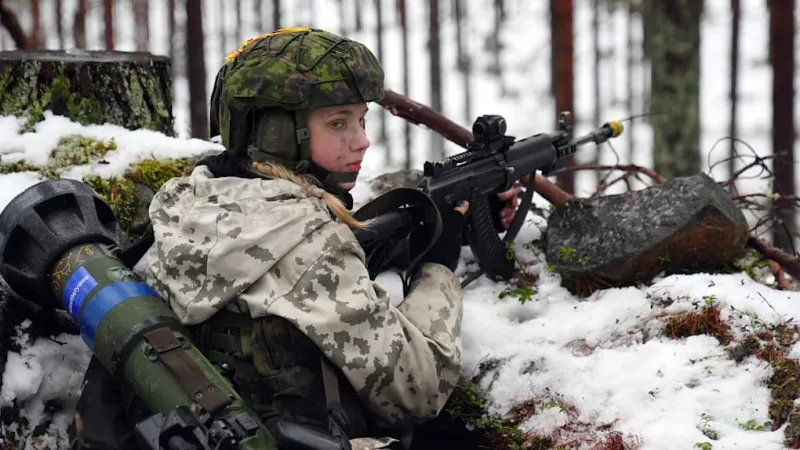
HELSINKI, Finland – Satellite intelligence has revealed Russia is significantly reinforcing its military capabilities along its extensive border with Finland, NATO's newest member, sparking urgent concern among security analysts who interpret the movements as preparations for the period following the ongoing conflict in Ukraine. These strategic augmentations, documented through recent imagery, underscore a shifting geopolitical landscape and pose a critical challenge to regional stability, with experts suggesting Russian President Vladimir Putin may be orchestrating plans for at least three distinct post-war scenarios.
The satellite images, obtained and analyzed by various intelligence agencies and independent defense researchers, depict a noticeable increase in military infrastructure, troop concentrations, and advanced weaponry systems in areas proximate to the 830-mile Finnish frontier. Specific observations include newly constructed barracks, expanded logistics hubs, and the deployment of both conventional and potentially specialized units.
Security experts, who spoke on condition of anonymity due to the sensitive nature of their work, indicate these developments are more than routine military exercises. Instead, they represent a deliberate, long-term strategic investment designed to exert influence and potentially project power across the Nordic region. This buildup is seen as a direct consequence of Finland joining the North Atlantic Treaty Organization in response to Russia's aggression in Ukraine.
Finland's decision to abandon decades of military non-alignment marked a pivotal moment for European security, effectively doubling NATO's direct border with Russia. This geopolitical shift has seemingly galvanized Moscow into a more assertive posture, viewing the Finnish accession as a direct threat to its western flank, despite NATO's defensive mandate.
Analysts postulate that President Putin could be preparing for three primary scenarios. The first involves establishing a robust deterrence capability to discourage any potential NATO encroachment, real or perceived. The second suggests these new capacities could serve as forward staging grounds, enabling swift military actions or pressure tactics in the event of future geopolitical friction. The third, more concerning possibility, anticipates these forces could be used to exploit perceived weaknesses or create new flashpoints once the main theater of the Ukraine conflict subsides.
The fortifications are not isolated to the immediate Finnish border but are part of a broader consolidation of Russian military assets across its northwestern territories. This comprehensive approach signals a sustained commitment to reshaping the security architecture of the Baltic Sea region, potentially impacting neighboring NATO members such as Estonia, Latvia, and Lithuania.
According to a senior analyst at a prominent European think tank, What we are observing is a clear and calculated move by Moscow to recalibrate its military stance against NATO's expanded presence. This is not merely defensive; it possesses significant offensive potential that must be closely monitored by the alliance. The analyst emphasized the need for a unified and resolute NATO response.
Historically, Finland and Russia share a complex relationship marked by periods of conflict and cautious coexistence. The Winter War of 1939-1940, for instance, remains a stark reminder of past hostilities. Finland's postwar policy of neutrality was largely aimed at avoiding a repeat of such confrontations, a policy now decisively abandoned.
NATO officials have acknowledged Russia's increasing military activity near its borders, reiterating the alliance's commitment to collective defense. While specific countermeasures were not detailed, NATO has consistently affirmed its readiness to defend every inch of allied territory, sending a clear message to Moscow regarding any potential miscalculation.
For Finland, these developments translate into an intensified need for vigilance and bolstered national defense. The Finnish defense forces are reportedly adapting their long-term strategies, incorporating advanced surveillance technologies and enhancing readiness along the new NATO frontier. This presents an existential question for the nation, as highlighted by some European commentators, compelling a fundamental reassessment of its security priorities.
The implications extend beyond bilateral relations, impacting the wider European security paradigm. As the continent grapples with the enduring fallout from the Ukraine war, Russia's renewed focus on its western borders introduces another layer of complexity to an already volatile geopolitical environment.
President Donald Trump's administration, while maintaining a firm stance on NATO's collective security, has consistently urged allies to meet their defense spending commitments. The current Russian maneuvers near Finland will undoubtedly be a topic of discussion within alliance summits, further emphasizing the need for robust deterrence in the face of perceived Russian expansionism.
The critical challenge now facing Finland and NATO is discerning Russia's ultimate objectives behind this substantial military buildup. While overtly defensive justifications are often cited by Moscow, the scale and nature of the reinforcements suggest a broader strategy designed to reshape regional power dynamics in the post-Ukraine conflict era.
This situation necessitates continued diplomatic engagement alongside robust defense planning. The international community, led by NATO and the European Union, remains committed to de-escalation while simultaneously ensuring the security and sovereignty of all member states, particularly those on the alliance's front lines.