 Chris Robert
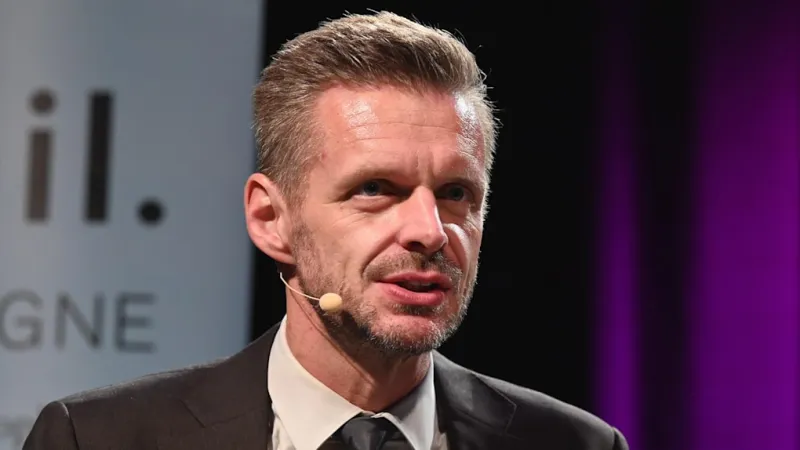
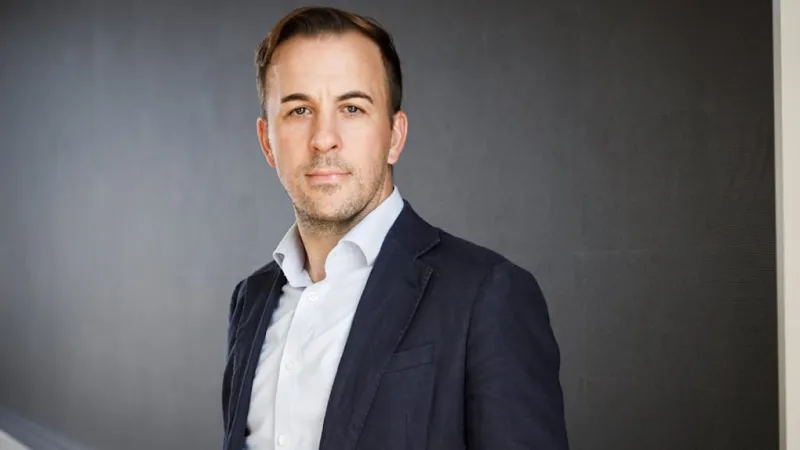
German comedian Florian Schroeder has ignited a national discussion with his recent, sharp critique aimed at parts of East Germany, challenging what he describes as inherent contradictions in their relationship with the state, democratic principles, and foreign policy concerning Russia. His remarks have provoked widespread attention across the nation.
Schroeder's commentary, delivered with his characteristic biting wit, specifically targeted what he terms "Jammer-Ossis," a pejorative referring to East Germans perceived as constantly complaining. The satirist asserted that elements within the region paradoxically desire the very paternalism they often decry, an observation that has resonated with some while alienating others.
He highlighted a perceived disconnect where segments of the population express dissatisfaction with governmental oversight while simultaneously exhibiting a reliance on state structures or a longing for simpler, more directed times. This critique extends to their views on democratic processes, suggesting a wavering commitment.
A significant component of Schroeder's argument involves attitudes toward Russia. He posited that some East Germans display an enduring affinity or uncritical stance towards Russia, which stands in contrast to the broader German foreign policy consensus and democratic values, especially in light of current geopolitical tensions.
The comedian's remarks draw upon a complex historical backdrop. Following German reunification in 1990, East Germany, formerly the German Democratic Republic (GDR), faced substantial economic and social restructuring. This period left a lasting legacy of resentment, economic disparity, and cultural differences that continue to influence political discourse.
This historical context often manifests in distinct voting patterns and political sentiments in the eastern states, which sometimes diverge significantly from those in the west. Parties perceived as anti-establishment or more sympathetic to Russia often find stronger support in these regions.
Schroeder's use of the term paternalism resonates with the centralized state control experienced under the GDR regime. His provocative claim suggests that while outwardly rejecting state interference, an underlying expectation for state provision and guidance persists in some quarters.
The satirists sharp words have not gone unnoticed, prompting a torrent of reactions across social media, traditional news outlets, and political circles. Debates have flared regarding the accuracy of his observations and the appropriateness of his confrontational tone.
The discussion also touches upon the role of media in shaping regional narratives. Alternative media platforms, as highlighted in related analyses, have significantly contributed to amplifying polarization in East German elections, further complicating the public discourse around such critiques. Alternative Media Reshapes East German Elections, Amplifying Polarization.
Schroeder's commentary contributes to an ongoing national conversation about the state of German unity more than three decades after reunification. It underscores persistent divisions and the challenges of integrating diverse experiences and perspectives within a unified nation.
The varying perspectives on Russia, a central point of Schroeder's criticism, are not merely domestic concerns but also bear on Germany's broader foreign policy and its role within the European Union and NATO. The comedian Kaminer has also explored Russia's dual reality, contrasting war and civilian life. Russia's Dual Reality: War Bites, Festivals Flourish, Says Kaminer.
As a kabarettist, Schroeder operates within a tradition of political satire that uses humor and exaggeration to highlight societal truths and provoke critical thought. His approach, though controversial, serves to bring uncomfortable topics to the forefront of public consciousness.
For current German leadership, navigating these deeply entrenched regional sentiments presents a continuous challenge. Understanding and addressing the root causes of discontent, rather than merely dismissing them, remains crucial for national cohesion.
The comedian's remarks are likely to fuel further discussions and analyses regarding the socio-political dynamics of post-reunification Germany. They compel a deeper examination of how historical narratives and present-day grievances shape regional identities and national dialogue.