Angel Doris
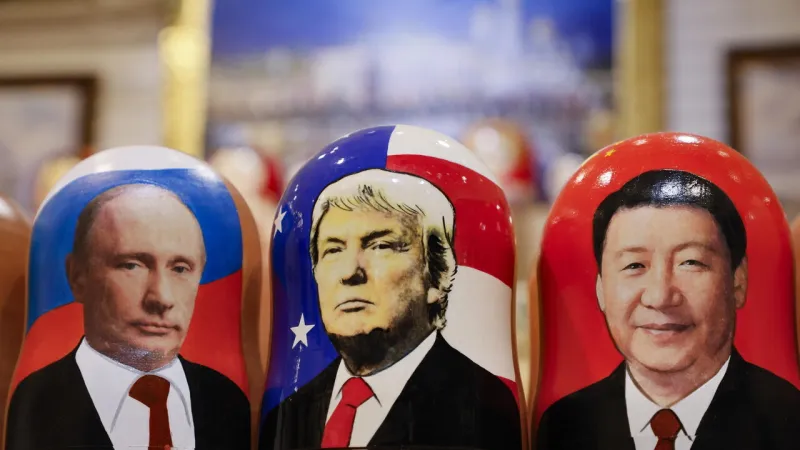
SHENZHEN – Chinese President Xi Jinping, US President Donald Trump, and Russian President Vladimir Putin are set to convene on November 19 in an anticipated trilateral summit in Shenzhen, China, primarily to discuss matters of global peace. This high-stakes diplomatic gathering unfolds just days after the United States and its allies formalized an agreement aimed at safeguarding artificial intelligence supply chains from potential Chinese influence, adding a layer of geopolitical tension to the peace agenda.
The Chinese Foreign Ministry officially confirmed the summit, specifying the date and location for the pivotal discussions. This rare convergence of three of the world's most powerful leaders signals a concerted effort to address pressing international issues, though the exact scope of their peace deliberations remains under wraps.
Adding another intriguing dimension to the diplomatic calendar, President Trump indicated the possibility of a separate meeting with North Korean leader Kim Jong Un while in the region. Such an encounter would mark a significant moment for denuclearization efforts and stability on the Korean Peninsula, building on past engagements between the two leaders.
The backdrop to this summit is a rapidly intensifying technological rivalry. The Financial Times recently reported on a groundbreaking agreement where the United States and its key allies committed to protecting their artificial intelligence supply chains. This initiative specifically targets minimizing reliance on Chinese components and technologies, citing national security and economic resilience concerns.
This pact, formalized mere days before the Shenzhen meeting, underscores the growing strategic competition surrounding advanced technologies like AI. Nations are increasingly viewing dominance in artificial intelligence as critical for future economic prosperity and military advantage, transforming technological development into a central geopolitical battleground.
The inclusion of AI supply chain security on the periphery of a global peace summit highlights the dual nature of contemporary international relations: a need for cooperation on existential threats alongside fierce competition in critical technological sectors. The delicate balance between these two imperatives will likely shape the tenor of the discussions.
Observers suggest the world peace agenda could encompass a wide array of topics, from de-escalating regional conflicts to promoting nuclear non-proliferation and addressing transnational challenges such as climate change. Each leader brings their own geopolitical priorities and perspectives to these overarching discussions.
How the leaders navigate this landscape, seeking common ground on global stability while differing sharply on economic and technological sovereignty, will be closely watched by international analysts. The simultaneous pursuit of peace and the hardening of technological boundaries presents a formidable diplomatic challenge.
President Trump's potential engagement with Kim Jong Un, if it materializes, could inject a fresh dynamic into the summit's broader impact. Past meetings between Trump and Kim have often generated significant global attention, with outcomes that have both advanced and stalled diplomatic progress.
Hosting such a high-profile event, China assumes a central role in shaping the global discourse. Beijing's confirmation of the trilateral summit demonstrates its willingness to engage in top-tier diplomacy, even as it navigates complex economic and technological disputes with Western nations.
Russia's participation, alongside China and the United States, positions Moscow as a key player in discussions concerning global stability. This trilateral format provides an important platform for Russia to project its influence and contribute to solutions for international challenges.
The agreement on AI supply chain protection, particularly its focus on mitigating Chinese involvement, points to a broader trend of decoupling in strategic sectors. This has implications for multinational corporations and global trade flows, potentially impacting companies like Nvidia, which faces dual threats from rising AI rivals amidst internal turmoil, as they navigate evolving geopolitical landscapes.
The stakes in Shenzhen are exceptionally high. The outcome of these discussions could set precedents for future multilateral engagements, influence the trajectory of US-China technological competition, and potentially redefine the pathways to global stability in an increasingly multipolar world.
Diplomatic observers will scrutinize every statement and body language emanating from Shenzhen. The summit represents not just a series of meetings, but a microcosm of the complex, interconnected challenges facing the international community in 2026.
As leaders prepare for the high-level talks, the world anticipates whether this convergence can truly foster a pathway towards enduring peace or if the underlying tensions, particularly those related to technological supremacy, will overshadow cooperative aspirations.