Chris Robert
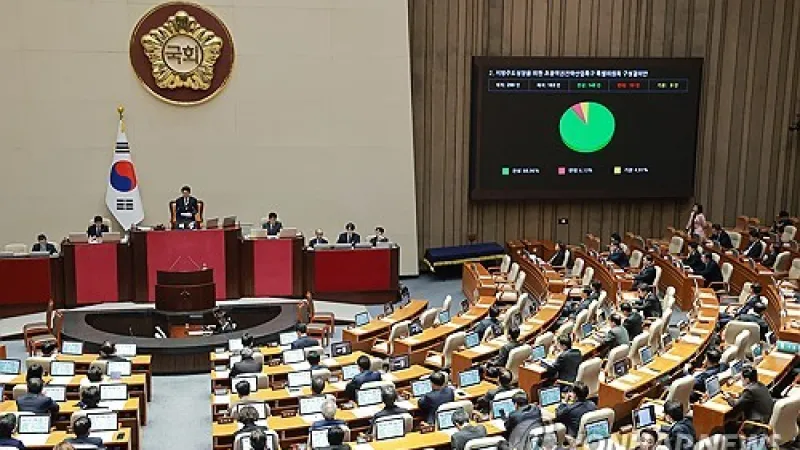
SEOUL, Nov. 6, 2026 – The South Korean National Assembly, under the leadership of the ruling Democratic Party, today passed a contentious special counsel bill aimed at investigating allegations of fabricated indictments. This legislative move, approved by a majority vote, sets the stage for a high-stakes legal and political confrontation, demanding independent scrutiny of the nation's justice system.
The bill's passage comes amidst fervent debate and significant opposition from minority parties, who contend the measure is politically motivated. Proponents, primarily from the Democratic Party, argue that a special counsel is indispensable for uncovering the truth behind claims of prosecutorial misconduct and ensuring public trust in the judiciary.
These allegations center on claims that certain high-profile indictments were not based on credible evidence but rather on manufactured circumstances designed to target specific political figures or individuals. The bill grants the special counsel broad powers to investigate, subpoena documents, and summon witnesses.
The legislative session on Friday saw heated exchanges, reflecting the profound ideological divide within the Assembly. Lawmakers from the ruling party emphasized the necessity of accountability, citing public demand for transparency in the face of what they describe as systemic issues within the prosecution service.
Conversely, opposition factions voiced strong objections, labeling the bill as a politically opportunistic maneuver designed to undermine political adversaries. They expressed concerns that the special counsel could be used as a tool for political retribution rather than a genuine search for justice, thus politicizing the legal process.
The scope of the special counsel's investigation will encompass specific cases where allegations of indictment fabrication have been raised. This includes scrutinizing the evidence collection processes, the decision-making rationale behind indictments, and any potential undue influence on prosecutors. The Assembly article, South Korean Lawmakers Advance Special Counsel Probe Over Indictment Allegations, provides further context on the legislative journey of this significant measure.
The special counsel, once appointed, will operate independently of the existing prosecutorial framework, a key provision designed to assuage fears of bias. The selection process for the special counsel itself is expected to be another point of contention, requiring bipartisan agreement or, failing that, an appointment by the President.
Political observers in Seoul suggest that this bill could precipitate a significant realignment of power dynamics within South Korean politics. The findings of the special counsel investigation, regardless of outcome, are anticipated to have far-reaching implications for public perception of legal integrity and political leadership.
The Democratic Party, holding a substantial majority in the Assembly, utilized its legislative strength to push the bill through. This move underscores their commitment to addressing perceived imbalances and injustices within the state apparatus, a core tenet of their platform.
Historically, special counsel investigations in South Korea have often been initiated during periods of heightened public distrust in government institutions. Such probes are typically reserved for cases deemed too sensitive or complex for regular investigative bodies to handle without external pressure.
The implications extend beyond the immediate political landscape, potentially influencing future electoral contests and public policy discourse. The outcome of the special counsel's work will undoubtedly shape debates around judicial reform and prosecutorial independence for years to come.
This development follows a period of heightened public scrutiny over various governmental departments, with calls for greater accountability and transparency becoming increasingly vocal. The National Assembly's decision reflects a responsive approach to these public sentiments.
The special counsel bill is now subject to promulgation by the President. While the presidential office has not yet issued a definitive statement, the legislative branch's decisive action places immense pressure on the executive to acknowledge the public demand for thorough inquiry.