 Dorry Archiles
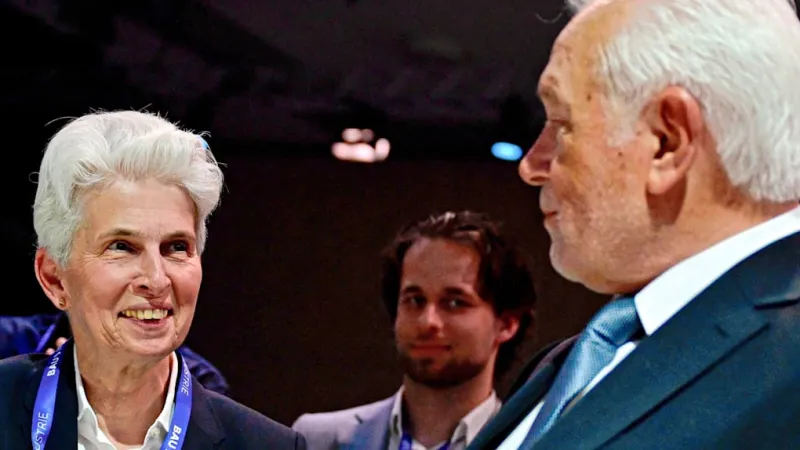
Berlin — Germany's Free Democratic Party (FDP) faces a tumultuous new chapter marked by deep internal divisions, as prominent defense policy expert Marie-Agnes Strack-Zimmermann unequivocally rejected the notion of unilateral party leadership during a recent party congress. Her statements, delivered amidst a challenging political restart for the liberals, signal a significant power struggle and a pushback against the current trajectory. Strack-Zimmermann issued a pointed warning against a perceived rightward shift within the political center, asserting that the party would not simply follow its chairman's directives.
The FDP, attempting a political reboot, found its internal fissures starkly exposed at the gathering. Strack-Zimmermann, widely seen as a counterpoint to Chairman Christian Lindner and figures like Wolfgang Kubicki, articulated a vision of collaborative leadership. Her remarks directly challenged the traditional top-down approach that has, at times, characterized German political parties.
"That one person dictates everything and everyone else follows is history," Strack-Zimmermann declared, addressing the palpable tension within the party ranks. This bold declaration underscored a growing discontent among certain factions who advocate for a more inclusive decision-making process. The sentiment reflects broader anxieties about the party's identity and its future direction within the complex German political landscape.
The contentious congress highlighted the ideological tug-of-war threatening the FDP's cohesion. While the party grapples with its identity, Wolfgang Kubicki recently secured FDP leadership amidst internal strife, a move that only seems to have intensified calls for more internal debate and less centralized control. Strack-Zimmermann's position is a clear indication that a significant segment of the party is unwilling to passively accept policy mandates.
Her explicit warning against a rightward shift in the political center suggests a concern that the FDP might be alienating its more centrist or socially liberal base in an attempt to capture votes from other conservative parties. Such a move could fundamentally alter the party's appeal and electoral prospects. The FDP has historically struggled to maintain a clear ideological line, often oscillating between economic liberalism and social progressivism.
This internal dissent is not unprecedented. The FDP has frequently faced internal squabbles regarding its leadership and strategic direction. However, Strack-Zimmermann's public pronouncements from a high-profile position indicate a more serious challenge to the incumbent leadership than typically observed. Her influence, particularly in defense and foreign policy, lends considerable weight to her criticisms.
The implications for the FDP's role in the current coalition government, or any future political alliances, are significant. A deeply divided party struggles to project a unified front, potentially weakening its negotiating power and overall political efficacy. Allies and rivals alike will be closely observing whether Chairman Lindner can effectively navigate these internal pressures.
Furthermore, Strack-Zimmermann's firm stance signals that various factions within the FDP are demanding greater respect and input into policy formulation. As highlighted in a related report, Strack-Zimmermann has previously issued warnings about the need for Kubicki to respect FDP factions. This recurring theme underscores a broader party-wide desire for more democratic internal processes.
The "restart with pitfalls," a phrase used to describe the FDP's current predicament, aptly captures the challenges ahead. While party leaders may seek to present a united image, the open dissent from prominent figures like Strack-Zimmermann ensures that the underlying tensions remain at the forefront. The success of this restart hinges on the leadership's ability to bridge these ideological divides.
Analysts suggest that ignoring these internal voices could prove detrimental to the FDP's long-term viability. The party has seen its electoral fortunes fluctuate dramatically in recent years, and a failure to address core concerns regarding its direction and internal democracy could further erode public trust and support.
The challenge for the FDP leadership now lies in demonstrating responsiveness to these concerns without appearing to capitulate entirely. Balancing the need for coherent party policy with the demand for diverse internal voices will be a critical test of leadership, particularly as Germany navigates complex domestic and international issues in 2026.
This internal dynamic also invites scrutiny into the broader health of liberal democracy in Germany, echoing concerns expressed by Pope Francis on polarization imperiling global peace. The FDP, as a traditional pillar of centrist politics, plays a crucial role in maintaining balance. Its internal strife could reverberate across the political spectrum.
The outcome of this power struggle within the FDP will undoubtedly shape its future electoral performance and its capacity to influence government policy. Whether Strack-Zimmermann's outspoken challenge leads to a more inclusive and robust FDP, or further exacerbates its divisions, remains a critical question for German politics.