 Demian Sahputra

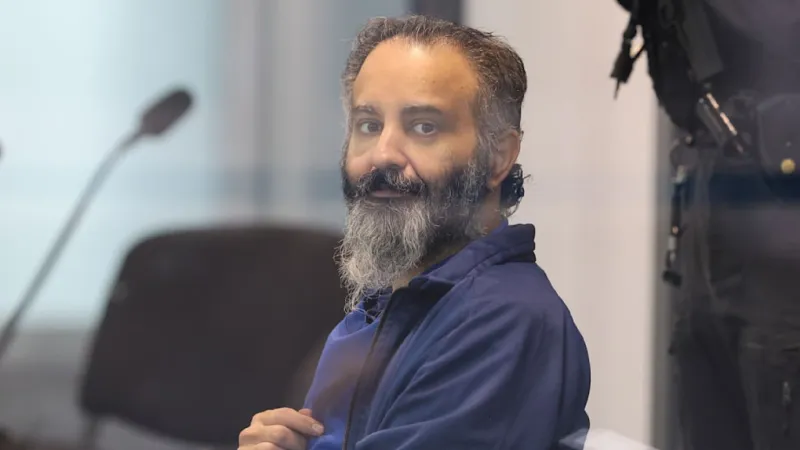
New York – An alleged terror mastermind, accused of orchestrating a series of attacks targeting Jewish institutions across Europe, made his initial appearance before a US court today, reportedly laughing at the serious charges leveled against him and provocatively declaring himself a prisoner of war. The dramatic courtroom event marks a significant step in international efforts to prosecute individuals implicated in widespread terror activities, especially those operating under deceptive covers.
The individual, whose identity is being withheld pending further court proceedings, is believed to have traveled internationally under the guise of a government employee, leveraging this cover to facilitate his alleged terror plot. This tactic raises critical questions about security protocols and the ease with which high-level operatives can exploit official channels.
Federal prosecutors presented evidence linking the accused to multiple violent incidents targeting Jewish communities in several European nations. These attacks, which caused significant damage and instilled widespread fear, have been a focus of counter-terrorism agencies on both continents for an extended period.
Eyewitnesses in the courtroom described the suspect's behavior as defiant. He reportedly chuckled during the reading of the indictment, a gesture seen by many as contempt for the judicial process and a stark disregard for the victims of the alleged crimes.
His declaration of being a prisoner of war immediately drew attention, a legal and political assertion that fundamentally challenges the jurisdiction of the US court and the nature of the conflict he believes himself to be engaged in. This claim is expected to be a central point of contention in future legal arguments.
The successful apprehension and extradition of the alleged terror mastermind underscore heightened international cooperation in combating terrorism. Law enforcement agencies from multiple European countries worked closely with US authorities to bring the suspect to justice, highlighting the global nature of modern security threats.
The suspect's alleged use of a government employee identity to travel also points to a sophisticated operation, potentially involving state actors or significant network support. This aspect of the case is likely to prompt further investigations into potential collaborators or state-sponsored elements.
The extradition of such high-profile figures often involves complex legal and diplomatic negotiations, reflecting the intricate nature of international justice. Cases such as that of convicted Neonazi Liebich, who was ordered extradited to Germany, illustrate the precedent for international transfers of individuals sought for serious offenses.
For Jewish communities throughout Europe, the arrest and US trial of this alleged terror mastermind offers a measure of reassurance, though the memory of the attacks remains stark. Community leaders have called for vigilance and continued efforts to combat antisemitism and extremist ideologies that fuel such violence.
The legal proceedings are expected to be protracted, involving extensive evidence presentation and potentially sensitive intelligence sharing. The defendant's claim of being a prisoner of war could further complicate the trial, requiring careful consideration of international law and conventions.
While US government officials have largely remained tight-lipped due to the ongoing investigation, sources close to the matter indicate that securing this arrest was a top priority for national security agencies. The use of a government employee disguise is particularly troubling to counter-intelligence efforts.
This case sets a significant precedent for future counter-terrorism operations, particularly those involving individuals who exploit official capacities for illicit ends. It underscores the ongoing challenges faced by global security forces in tracking and neutralizing sophisticated terror networks.
As the trial progresses, more details regarding the scope of the alleged terror network and the precise nature of the attacks are anticipated to emerge. The international community watches closely, hopeful that justice will be served and that this prosecution will deter future acts of violence.