 Angela Stefani
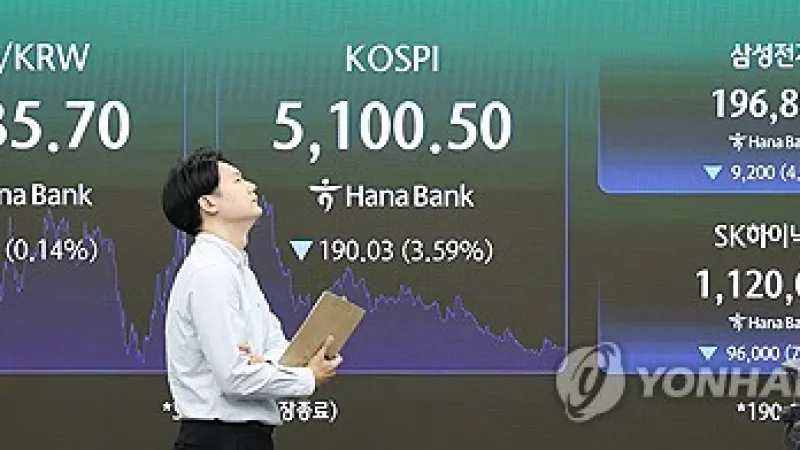
SEOUL – The South Korean won recorded marginal gains against the US dollar on November 16, 2026, marking a subtle yet significant shift within the perpetually fluctuating global currency markets. This appreciation signals a moment of nuanced adjustment for one of Asia's pivotal economies, drawing close scrutiny from international financial observers.
The movement, while slight, reflects a complex interplay of domestic economic data, regional trade dynamics, and broader international investor sentiment concerning both the Republic of Korea and the United States. Such shifts are meticulously monitored by exporters, importers, and policymakers alike, given their pervasive impact on national competitiveness and purchasing power.
Currency valuations are intrinsically linked to a nation's economic health, interest rate differentials, and trade balances. A stronger won can render Korean exports more expensive in foreign markets while simultaneously making imports, including critical raw materials, more affordable for domestic industries and consumers.
South Korea, an export-driven powerhouse, frequently experiences its currency fluctuations tied to global demand for its semiconductors, automobiles, and petrochemical products. Economic resilience in the face of varying international trade conditions often underpins the won's stability and trajectory.
Conversely, the US dollar's global standing is influenced by the American economy's performance, monetary policy decisions by the Federal Reserve, and the fiscal policies enacted by President Donald Trump's administration. Any signals regarding inflation, employment figures, or interest rate adjustments from Washington can ripple across currency exchanges worldwide.
Recent initiatives further underscore Seoul's deepening engagement with regional and global partners. Efforts like the proposed ASEAN AI Initiative for Inclusive Growth exemplify South Korea's proactive stance in fostering economic stability and technological advancement across Asia. These strategic alignments can indirectly bolster confidence in the won.
Market analysts suggest that this incremental strengthening of the South Korean won might be attributed to a confluence of factors, including robust local manufacturing outputs and a potentially softening dollar driven by evolving US economic outlooks. Investors often seek stability and growth potential, making dynamic economies like South Korea attractive.
For South Korean businesses operating internationally, even slight currency shifts necessitate adaptive strategies. Companies engaged in significant overseas transactions must navigate exchange rate volatilities to protect profit margins and maintain competitive pricing.
The Bank of Korea, the nation's central bank, closely monitors currency movements to safeguard financial stability and support sustainable economic growth. Its interventions, or lack thereof, can significantly influence the won's path, reflecting a delicate balance between export competitiveness and inflation control.
This latest development occurs within a broader geopolitical context where Seoul continues to navigate complex international relations, including efforts to address funding for crucial infrastructure projects such as the US Embassy rebuild. Such large-scale expenditures and diplomatic engagements indirectly factor into perceptions of national economic stability.
Looking ahead, the trajectory of the South Korean won against major global currencies will likely remain a key indicator of the nation's economic resilience and adaptability. Future movements will depend on a combination of domestic policy effectiveness, global trade health, and the ongoing fiscal and monetary policies emanating from major world economies, including the United States.
The subtle gain recorded on November 16, 2026, thus provides a snapshot of the intricate dance between global economic forces and local market reactions, highlighting the persistent volatility and interconnectedness inherent in contemporary financial systems.