 Angela Stefani
WASHINGTON – The catastrophic fragmentation of a Soviet-era satellite has dramatically intensified the peril of orbital incidents, culminating in the damage of a spacecraft docked at the Chinese space station in January 2026. This event underscores the escalating threat posed by space debris to active satellites and human spaceflight missions operating in Earths orbit.
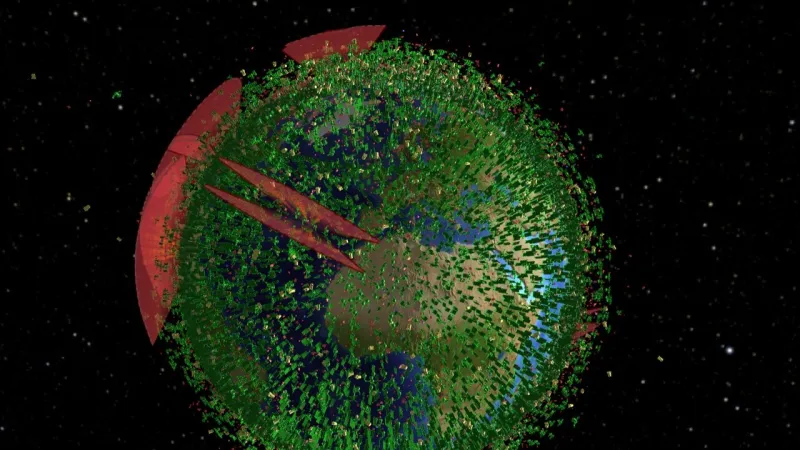
The incident, confirmed by international space monitoring agencies, highlights a persistent challenge for global spacefaring nations. Millions of pieces of defunct spacecraft, spent rocket stages, and fragments from previous collisions or anti-satellite tests now hurtle around Earth, each a potential projectile capable of devastating operational infrastructure.
The January 2026 damage to a vessel attached to the Chinese Tiangong space station serves as a stark reminder of this reality. While the full extent of the damage or the specific impactor has not been publicly detailed, experts widely attribute the event to a growing cloud of debris originating from the Soviet satellite disintegration.
Orbital debris, often moving at speeds exceeding 17,000 miles per hour, carries immense kinetic energy. Even tiny fragments can cause severe damage, potentially disabling critical systems or breaching pressurized modules, posing direct risks to astronauts.
Space agencies worldwide have long grappled with the implications of such debris. The increasing number of objects in orbit, both operational and defunct, creates a hazardous environment where collisions become statistically more probable with each passing year.
This recent incident with the Chinese spacecraft adds to a worrying trend. Scientists and policymakers have repeatedly warned about the possibility of a Kessler syndrome scenario, where a cascading series of collisions could render certain orbital altitudes unusable for generations.
Efforts to track and mitigate orbital debris are ongoing, involving radar systems and optical telescopes that monitor hundreds of thousands of objects larger than a centimeter. However, tracking every dangerous fragment remains an insurmountable task with current technology.
International cooperation on space traffic management and debris removal technologies is deemed crucial. President Donald Trumps administration, in its focus on American leadership in space, has emphasized the need for robust space situational awareness and the development of solutions for a sustainable orbital environment.
The long-term consequences of failing to address the orbital debris problem extend beyond the immediate risk of collisions. It threatens the future of space exploration, satellite-dependent global communication, navigation systems, and climate monitoring infrastructure.
Analysts suggest that the current trajectory demands more than just avoidance maneuvers. Active debris removal missions, though costly and technically challenging, are increasingly discussed as a necessary measure to reclaim vital orbital highways.
The incident in January 2026 serves as a powerful call to action for the international community. Without concerted global efforts, the specter of further damage to space stations and crucial satellites looms larger than ever, jeopardizing the collective benefits humanity derives from space.