 Chris Robert
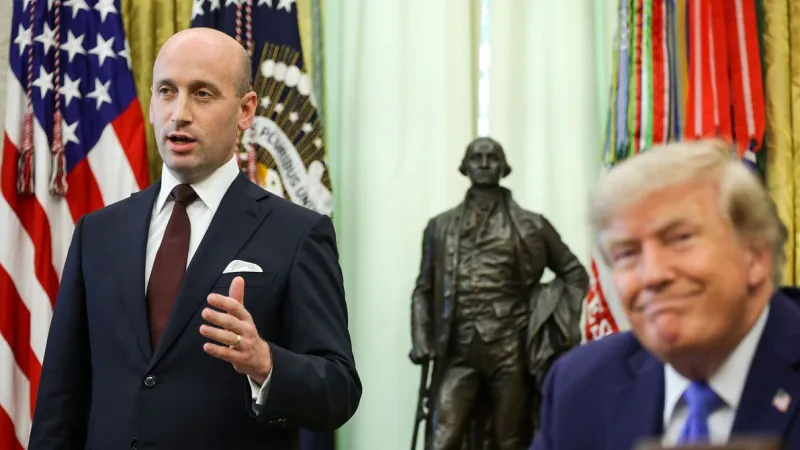
WASHINGTON – Stephen Miller, widely recognized as a principal architect behind the Trump administration's stringent immigration policies and responses to dissent, has been elevated to the pivotal role of White House chief of staff. This appointment positions Miller, who previously served as a senior advisor, at the apex of President Donald Trump's executive operations, signaling a potential reinforcement of the hardline strategies that characterized his prior influence within the administration as of early 2026.
The strategic promotion of Miller, long considered one of the President's most trusted and influential confidantes, underscores a clear intention to double down on the policies that defined the first Trump presidency. His appointment is expected to streamline decision-making processes and ensure ideological alignment across various executive departments.
Miller has cultivated a reputation as a relentless policy advocate, particularly on issues of border security and immigration enforcement. His prior tenure saw the implementation of significant policy shifts, including the family separation policy at the southern border and various restrictions on legal immigration. These actions sparked widespread debate and drew both ardent support and vehement criticism from across the political spectrum.
Sources within the administration, speaking on background, suggest Miller's ascension reflects President Trump's desire for a chief of staff intimately familiar with his policy preferences and unafraid to execute them decisively. Miller's deep understanding of the President's agenda positions him uniquely to navigate the complexities of White House operations.
His appointment follows a period of intense speculation regarding leadership within the executive branch. The role of chief of staff, often described as the gatekeeper to the President, demands exceptional organizational acumen, political sensitivity, and unwavering loyalty. Miller's career trajectory, marked by his close association with President Trump, demonstrates these qualities prominently.
Advocates for stricter immigration controls and a more assertive nationalistic stance have lauded the move, viewing it as a decisive step toward fulfilling campaign promises. They point to Miller's proven track record as evidence of his capability to translate the President's vision into actionable policy. His supporters often highlight his intellectual rigor and strategic foresight.
Conversely, civil rights organizations and Democratic lawmakers have voiced strong concerns. They anticipate the appointment will lead to an intensified push for policies they deem inhumane and discriminatory. The move is likely to galvanize opposition efforts and increase scrutiny on the administration's human rights record.
The political landscape in 2026 remains highly charged, with a divided Congress poised for ongoing legislative battles. The arrival of new Democratic Congress members, some of whom have already expressed intentions to challenge the administration's agenda, suggests a contentious period ahead for the new chief of staff. Miller's ability to navigate these congressional challenges will be a crucial test of his effectiveness.
Miller, informally referred to by some as the prime minister during his previous role, is known for his hands-on approach to policy formation and implementation. His move to chief of staff signals a consolidation of power, centralizing policy direction directly under his purview, with the explicit backing of President Trump.
His strategic thinking and unflinching commitment to the President's agenda are attributes frequently cited by allies. This dedication is expected to translate into a more tightly controlled White House operation, focusing relentlessly on the administration's stated goals for its second term.
Observers expect Miller to immediately prioritize key legislative and executive actions, including further strengthening border enforcement, potentially revisiting trade agreements, and addressing issues related to domestic dissent. His historical focus on the culture wars also suggests these topics could see renewed emphasis.
The appointment solidifies the continuity of the Trump administration's core philosophy and heralds a phase where key policy architects are empowered to directly oversee the execution of the President's vision. The coming months will reveal the full extent of this strategic shift and its implications for both domestic and international policy.
Caption: Stephen Miller, seen here during a White House press briefing, assumes the role of Chief of Staff in the Trump administration in 2026, a move expected to cement hardline policy stances.