Gabriella
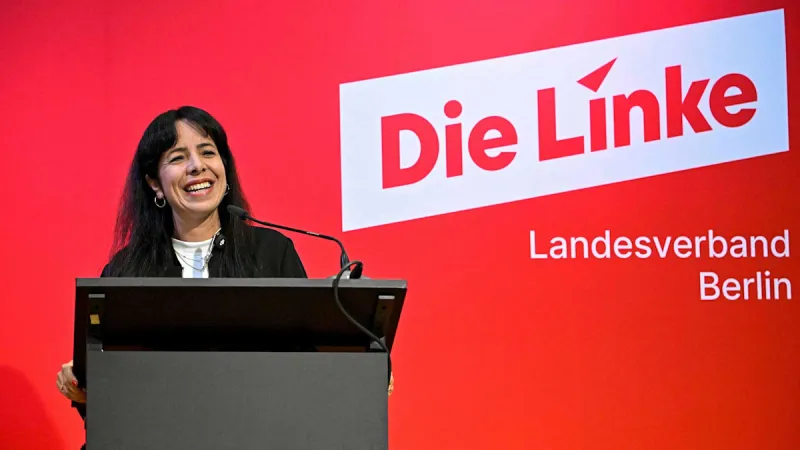
BERLIN — Germany's The Left Party is currently under immense scrutiny, facing severe antisemitism allegations and a burgeoning clan affair, as it convened a special party conference to deliberate on potential coalition discussions. During the proceedings, top candidate Elif Eralp underscored the party's commitment to protecting Jewish life, aiming to address the mounting criticism and redefine the party's stance amidst considerable internal and external pressure.
The allegations of antisemitism have cast a long shadow over The Left Party, sparking widespread condemnation from political rivals and Jewish community organizations. These accusations center on various incidents and statements attributed to party members, which critics argue demonstrate a failure to unequivocally condemn anti-Jewish sentiment, particularly in the context of discussions surrounding the Israeli-Palestinian conflict.
Compounding the party's woes is a separate, unsettling clan affair that has further eroded public trust. While specifics of the affair remain under investigation, it broadly involves allegations of illicit activities and undue influence linked to organized crime networks, further entangling the party in a web of controversy that distracts from its policy agenda.
The confluence of these scandals necessitated the special party conference, a pivotal moment for The Left Party to confront its challenges head-on. Delegates gathered not only to discuss the path forward regarding potential governmental alliances but also to grapple with the existential questions posed by the dual crises.
It was against this backdrop that Elif Eralp, a prominent figure within the party and a key contender for leadership, delivered a crucial address. Eralp asserted, "As Leftists, our empathy applies to all people," a statement widely seen as a foundational principle. She then explicitly emphasized the imperative to protect Jewish life, a direct response to the antisemitism claims that have plagued the party.
Eralp's declaration represented a concerted effort to draw a clear line against antisemitism and to reaffirm the party's commitment to inclusivity and the protection of minority communities. Her remarks were intended to reassure both the public and party members about the ethical compass guiding The Left Party.
The deliberations over potential coalition talks are equally critical. With the German political landscape in constant flux, The Left Party must navigate these internal crises while simultaneously positioning itself as a credible and viable partner for future governance. The party's ability to demonstrate stability and a clear ethical framework will be paramount in any such negotiations.
Political analysts suggest that the party's future electoral prospects heavily depend on its capacity to decisively address these allegations. Failure to do so could alienate voters and make coalition partnerships increasingly difficult, isolating The Left Party further within the German Bundestag.
Indeed, other political entities in Germany have also grappled with similar dilemmas. The Green Party, for instance, has faced its own coalition dilemma over antisemitism in German politics, highlighting a broader challenge within the nation's political discourse to maintain a clear stance against prejudice while navigating complex geopolitical issues.
The special conference saw animated discussions among party members, reflecting the deep divisions and differing viewpoints on how best to tackle the issues at hand. Some members called for more rigorous internal investigations and stricter disciplinary measures, while others emphasized the need for clearer public communication strategies.
Eralp, in her role, faces the formidable task of uniting these factions and steering The Left Party towards a coherent and principled future. Her leadership will be tested as the party attempts to rebuild its image and reaffirm its core values in the face of intense public scrutiny.
The protection of Jewish life and the unequivocal rejection of all forms of antisemitism are not merely political statements but fundamental responsibilities, particularly given Germany's historical context. The party's response to these challenges will therefore be closely observed by national and international observers.
Ultimately, The Left Party stands at a crossroads. Its ability to reconcile its progressive ideals with the urgent need to address systemic issues of prejudice and corruption will determine its relevance and credibility in the evolving German political arena. The outcomes of this special conference and the subsequent actions taken by its leadership will undoubtedly shape the party's trajectory for years to come.