 Debby Wijaya
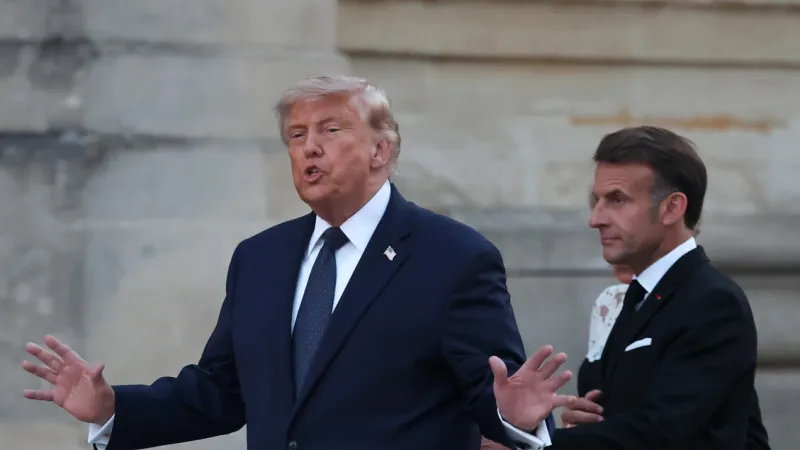
WASHINGTON – The White House officially confirmed today that President Donald Trump electronically signed a crucial memorandum of understanding with Iran, a pivotal step aimed at ending the protracted conflict. The accord, a significant diplomatic breakthrough, was reportedly finalized after discussions with French President Emmanuel Macron during a dinner at Versailles, as first reported by Axios. This development signals a new phase in US-Iran relations, potentially reshaping geopolitical dynamics in the Middle East.
The memorandum of understanding represents a framework agreement designed to de-escalate tensions and establish a pathway towards a more lasting peace. While specific details of the accord remain confidential, sources indicate its primary objective is to facilitate an end to military hostilities and lay groundwork for future diplomatic engagement between the two nations. This move follows months of intense international diplomacy.
The electronic signature, a modern approach to international accord, underscores the swift and decisive nature of the agreement's finalization. While the physical signing may not have occurred at the historic French palace, the symbolic backdrop of Versailles during President Trump's discussions with President Macron provided the impetus for its completion. The precise timeline of the electronic transaction was not immediately disclosed, but the confirmation from the White House arrived shortly after initial reports.
This confirmation aligns with previous statements from President Trump, who had foreshadowed an imminent agreement with Iran. Prior to the G7 summit, the President had signaled that a significant breakthrough was on the horizon, hinting at a potential deal that would either mandate Iranian compliance or risk renewed escalation. Analysts previously noted that the G7 meeting itself forged several pacts, with Iran emerging as an unexpected diplomatic beneficiary. President Trump Declares G7 a 'Great Success,' Signals Imminent Iran Accord.
Axios, a prominent news outlet, was the first to report on President Trump's electronic signature, citing sources familiar with the high-level discussions. The report specifically mentioned the dinner with President Macron in Versailles as the setting where the final details were ironed out, leading to the signing. The White House subsequently corroborated these claims, lending official weight to the groundbreaking news.
Indeed, the Iranian side had also confirmed an electronically signed protocol after the Trump-Macron Versailles talks, indicating mutual commitment to the process. This bilateral acknowledgement lends credibility to the agreement and suggests a shared understanding of its immediate implications. Iran Confirms Electronically Signed Protocol After Trump-Macron Versailles Talks.
The conflict between the United States and Iran has been a persistent source of instability in the Middle East, impacting global oil markets and regional security. Years of escalating rhetoric, economic sanctions, and proxy engagements have characterized the fraught relationship. A cessation of hostilities, as envisioned by this memorandum, holds profound implications for maritime security in vital waterways like the Strait of Hormuz and for the broader geopolitical landscape.
While immediate international reactions are pending, the agreement is expected to garner significant attention from world leaders who have consistently urged de-escalation. European nations, particularly France, have played a crucial role in mediating talks, advocating for a diplomatic resolution to the standoff. President Macron's involvement at Versailles underscores the collaborative international effort behind this significant development.
Despite the apparent breakthrough, the path forward remains complex. Implementing the terms of the memorandum and building lasting trust will require sustained diplomatic efforts and a demonstrable commitment from both Washington and Tehran. The details of verification mechanisms and accountability measures will be critical in ensuring the agreement's long-term viability and addressing skepticism from hardliners on both sides.
This diplomatic maneuver further illustrates President Trump's distinctive approach to foreign policy, often characterized by direct engagement and a willingness to negotiate with traditional adversaries. His administration has consistently prioritized securing agreements that, in his view, serve American interests, even if it means challenging conventional diplomatic norms.
The broader context of recent international summits, including the G7, where various global challenges were addressed, provided a fertile ground for such high-stakes negotiations. The G7 discussions, while broad, also focused on regional stability, making the Iran accord a natural, albeit unexpected, outcome of sustained diplomatic engagement. G7 Forges Nine Pacts; Iran Emerges As Unexpected Diplomatic Beneficiary.
The potential for a lasting peace agreement with Iran could significantly alter alliances and power balances across the Middle East. Neighboring countries and global powers will closely monitor the implementation of this memorandum, assessing its impact on their own security interests and regional strategies. The ripple effects of such a profound shift are anticipated to be far-reaching.