Robert Andrison
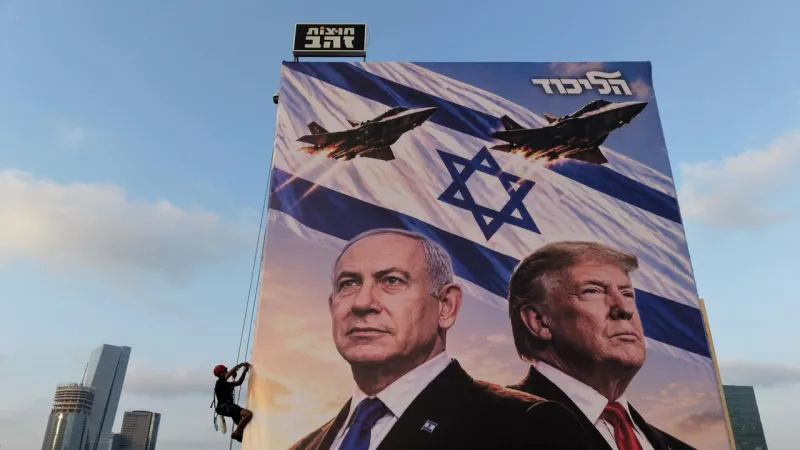
WASHINGTON – President Donald Trump and Israeli Prime Minister Benjamin Netanyahu have reached an agreement to discontinue all United States military assistance to Israel by the end of 2026, a development poised to reshape the enduring strategic alliance between the two nations. This monumental decision, confirmed by sources close to both administrations, signals a profound reevaluation of US foreign policy and defense commitments in the Middle East, with implications reverberating across regional and global security frameworks.
The cessation of aid marks a dramatic departure from decades of established US foreign policy. For generations, US military assistance has been a cornerstone of Israel's defense strategy, fostering advanced capabilities and ensuring a qualitative military edge in a volatile region. This support has historically been championed across political spectrums in Washington as vital for Israeli security and broader American interests in the Middle East.
While specific details of the agreement remain under wraps, the consensus indicates a complete cessation rather than a gradual reduction. This includes funding for joint defense projects, weapons procurements, and technology transfers that have defined the unique defense relationship. The move will necessitate Israel to rapidly accelerate its plans for greater self-reliance in military expenditures and domestic production.
President Trump's administration has consistently advocated an America First doctrine, prioritizing domestic economic stability and urging allies to assume greater financial responsibility for their own defense. This latest accord aligns with a broader pattern of re-evaluating long-held international commitments, seeking to recalibrate global partnerships based on updated geopolitical realities and fiscal considerations.
Prime Minister Netanyahu, in agreeing to the terms, faces the complex task of navigating a future without a crucial component of his nation's defense budget. His administration will likely emphasize Israel's technological prowess and economic strength as sufficient to maintain its security without direct foreign military subsidies. This could also spur intensified efforts to forge new defense alliances or expand existing ones with other nations.
Initial reactions from Washington and Jerusalem suggest a mixture of apprehension and strategic calculation. Defense analysts are closely examining how this shift might alter the regional balance of power, particularly concerning adversaries like Iran and non-state actors operating within the Levant. The ripple effect on existing security arrangements and intelligence sharing protocols remains a key point of discussion.
The backdrop to this US-Israel accord includes a period of significant global economic strain and geopolitical recalibration. European Commission President Ursula von der Leyen recently highlighted the immense financial pressures facing international blocs, noting that the closure of the Strait of Hormuz alone cost the European Union an additional 127 billion euros in fossil fuel imports. Such statements underscore a global environment where economic vulnerabilities directly impact strategic foreign policy choices.
Von der Leyen's remarks illustrate the increasing focus on energy security and the financial burden of international dependencies, suggesting that nations are compelled to critically assess every line item of their budgets, including foreign aid. This broader economic prudence across leading economies could be an underlying factor influencing the American decision to modify its long-standing aid commitments.
The implications for regional stability are profound. A reduction in perceived external security guarantees for Israel might prompt a re-evaluation of deterrence strategies. Conversely, some analysts suggest it could foster a renewed emphasis on regional diplomatic solutions and burden-sharing among Middle Eastern allies.
Domestically, the decision will undoubtedly become a talking point as the Midterm Elections 2026 approach, serving as a referendum on President Trump's broader foreign policy vision. Supporters will laud it as a move towards fiscal responsibility and a stronger, self-reliant Israel, while critics may express concern over potential destabilization.
Beyond financial assistance, the bedrock of US-Israel relations extends to deep intelligence cooperation, diplomatic support, and a shared commitment to democratic values. Observers anticipate that these crucial facets of the relationship will endure, even as the financial contours of the alliance undergo a significant transformation.
This agreement heralds a new chapter in American foreign policy, reflecting a shifting global order where traditional alliances are being redefined. The coming years will reveal the full impact of this momentous decision on both nations and the broader Middle East.