 Stefani Rindus
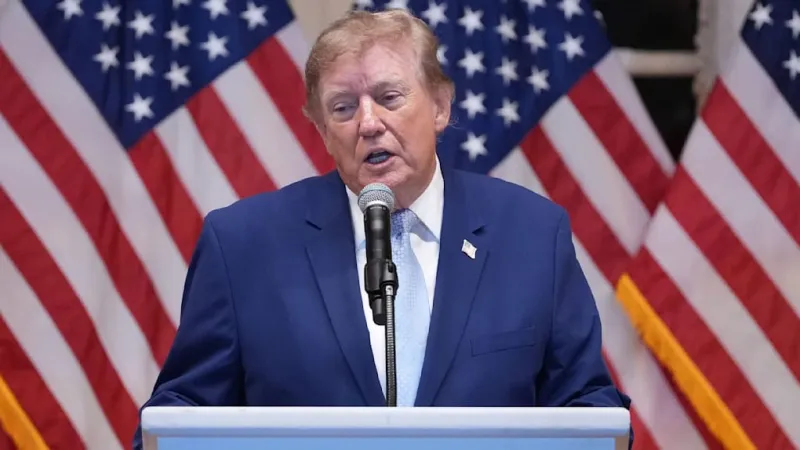
WASHINGTON President Donald Trump has unilaterally decided to halt the implementation of new tariffs against Russia, a significant move that signals a potential reevaluation of the United States long-standing economic pressure campaign against Moscow. The unexpected suspension of these planned duties, intended to target key sectors of the Russian economy, became public through an official White House announcement earlier this week, sparking immediate international speculation.
The tariffs, which had been under consideration for several months, aimed to penalize Russia for its continued aggression in Eastern Europe and alleged cyber interference in global affairs. Their deferment marks a distinct shift from previous administration stances that prioritized robust sanctions as a primary foreign policy tool to influence Russian behavior.
Observers suggest President Trump's decision could be an overture for diplomatic engagement or a strategic maneuver to de-escalate tensions in a volatile geopolitical landscape. The administration has offered limited public rationale beyond a vague reference to evolving global dynamics and the need for flexible foreign policy tools, leaving room for widespread conjecture about the true motives behind the policy reversal.
Economic advisors within the administration reportedly weighed the potential impacts of the tariffs on global markets, particularly European allies who maintain significant trade ties with Russia. Concerns about collateral damage to international supply chains and the potential for retaliatory measures from Moscow likely played a role in the high-level deliberations leading to the pause.
This move occurs against a backdrop of complex international relations, including ongoing discussions surrounding the conflict in Ukraine. Recent reports indicated Elon Musk advised President Trump on Ukraine's Starshield satellite capabilities, highlighting the multifaceted considerations influencing US foreign policy decisions in the region.
Allied nations, particularly those in the European Union, are now closely monitoring Washington for further clarification. While some may welcome a potential de-escalation of trade tensions, others could view the suspension as a weakening of collective resolve against Russian actions, potentially creating fractures within established alliances.
Domestically, the decision is likely to draw mixed reactions. Supporters of President Trump may hail it as a pragmatic approach to international relations, prioritizing American interests and diplomatic flexibility. Critics, however, are poised to question the timing and strategic wisdom of easing pressure on Russia, especially given the history of their relationship.
Throughout his presidency, President Trump has often challenged conventional diplomatic norms, seeking to forge new pathways in international relations. His previous actions and statements have sometimes indicated a desire to recalibrate the US approach to Russia, distinct from the policies of prior administrations.
The decision also resonates deeply with the ongoing situation in Ukraine, where a protracted conflict continues to destabilize the region. President Trump has previously signaled a potential rift with Kyiv, a stance that has prompted warnings from Ukrainian President Volodymyr Zelensky regarding the potential for widespread refugee crises. The tariff freeze could be interpreted as part of a larger strategy concerning the conflict.
The immediate future of US-Russia trade relations remains uncertain. Whether this suspension represents a temporary reprieve or a fundamental shift in policy will become clearer as the administration articulates its broader strategy. This development could reshape the contours of international economic diplomacy for years to come.
Foreign policy analysts are scrambling to interpret the administration's intentions. Many suggest this unexpected move aligns with President Trump's transactional approach to diplomacy, where economic leverage is often fluid and subject to renegotiation. The underlying goal might be to extract concessions or open new channels for dialogue.
The comprehensive US sanctions regime against Russia comprises a complex web of restrictions targeting individuals, entities, and entire sectors. Freezing a new layer of tariffs, even before implementation, sends a powerful signal about the potential elasticity of this framework under the current administration. It might prompt other nations to reassess their own sanction strategies.
Moscow's reaction to this tariff freeze is anticipated with keen interest. While Russia has consistently condemned international sanctions as unwarranted interference, this gesture could be perceived either as a genuine opening for improved relations or a sign of weakness to be exploited. Official statements from the Kremlin are expected in the coming days.
Beyond the immediate bilateral implications, the decision has repercussions for global trade dynamics. Any softening of trade barriers with a major energy and commodity producer like Russia could ripple through international markets, influencing prices and trade flows, particularly for oil and gas.
Sources close to the White House, speaking anonymously, indicated that the President prioritizes direct negotiations and bilateral agreements over multilateral pressure tactics. This philosophy often underpins the administration's approach to complex geopolitical challenges, suggesting this tariff halt is consistent with that broader vision.
Congressional leaders, particularly those from both parties who advocate for a firm stance against Russia, are expected to scrutinize this decision closely. The administration may face demands for a comprehensive explanation of its long-term strategy and the specific conditions that led to the deferment of these economic penalties.
The energy sector, a significant component of Russia's economy, was among those potentially targeted by the planned tariffs. The suspension offers a temporary reprieve for Russian energy giants and could impact global energy security discussions, especially concerning European reliance on Russian gas supplies.
This unilateral action establishes a precedent for how the Trump administration might approach future economic policy tools. It underscores a willingness to adjust or reverse punitive measures if deemed strategically beneficial, rather than adhering strictly to predetermined sanction timelines or conditions.
Ultimately, the decision to freeze these tariffs represents a pivotal moment in US-Russia relations under President Trump. It necessitates a recalculation by allies and adversaries alike, forcing a reevaluation of the stability and direction of US foreign policy in 2026 and beyond.
As the international community awaits more details, the immediate impact is a climate of uncertainty, balanced by the potential for renewed diplomatic discourse. The coming weeks will be crucial in understanding whether this pause is a tactical adjustment or a fundamental pivot in Washington's Russia strategy.