 Angela Stefani
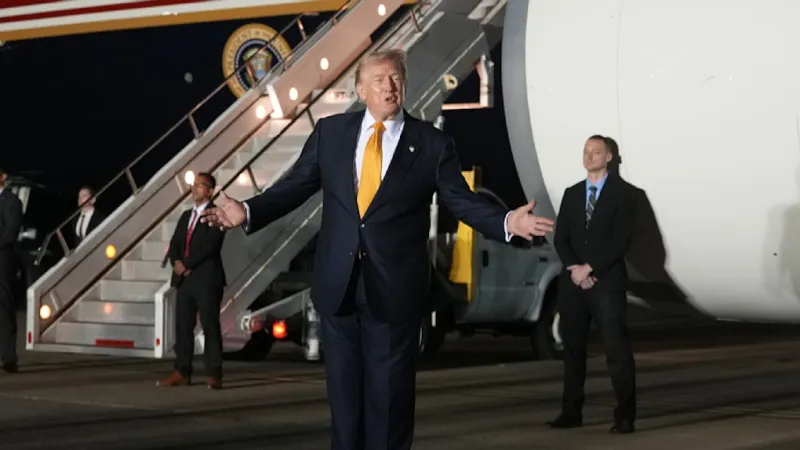
President Donald Trump claimed he is considered the primary target by Iran, stating, "I am at the top of their list," during an informal exchange with reporters on his return flight from the NATO summit. The President's assertion, made en route to the United States, underscored the persistent geopolitical friction overshadowing the alliance meeting, even as German Chancellor Merz offered a positive assessment of the gathering.
The candid remark, delivered aboard Air Force One, provided a glimpse into President Trump's perception of personal risk in the volatile landscape of Middle Eastern relations. It followed a period of intense diplomacy and often contentious discussions that characterized the recent NATO proceedings.
Indeed, the NATO summit had been largely overshadowed by President Trump's critiques of allied nations and his characteristic hardline stance on various international issues. Despite this, Chancellor Merz maintained a hopeful outlook, citing a specific comment from the US President as evidence of progress and underlying unity.
President Trump's declaration about Iran signals a potential escalation in rhetoric, particularly given the already strained relationship between Washington and Tehran. Such a statement from the commander-in-chief invariably draws global attention and scrutiny regarding the specifics of intelligence assessments and strategic implications.
The US and Iran have been locked in a prolonged standoff, marked by reciprocal threats and military posturing. Recent events, including renewed strikes and alleged breaches of truces, have kept tensions at a fever pitch. For further context, see our related coverage: Trump: Iran Truce Ends As New Raids Ignite Tensions.
This latest comment by President Trump reverberates across international capitals, prompting allies to gauge the potential ramifications for regional stability and global security. Adversaries, too, will likely interpret the statement through the lens of their own strategic calculations.
Previous episodes have seen Iran broadcasting missile strikes targeting US Gulf interests, further illustrating the precarious nature of the relationship. Reports of the Iran Broadcasts Missile Strikes Targeting US Gulf Interests highlight these ongoing confrontations.
Domestically, President Trump's assertion frames the Iran threat in a highly personal context, potentially rallying support among his base while simultaneously inviting questions from political opponents regarding the specifics of such intelligence and its broader policy implications.
Chancellor Merz's efforts to portray a constructive summit outcome, even amidst President Trump's often disruptive presence, underscore the delicate balancing act many European leaders undertake. The German leader aimed to emphasize points of agreement rather than discord, despite the President's frequently unsettling pronouncements.
The alliance recently experienced moments where President Trump both threatened allies and then affirmed NATO unity, causing significant shifts in diplomatic sentiment. This complex dynamic is explored in articles like Trump Threatens Allies, Then Affirms NATO Unity Amidst Tensions.
The lingering questions regarding NATO's long-term cohesion and the trajectory of international relations remain pertinent. President Trump's words, particularly concerning such a critical adversary as Iran, carry immense weight and continue to shape the global agenda.