Gabriella
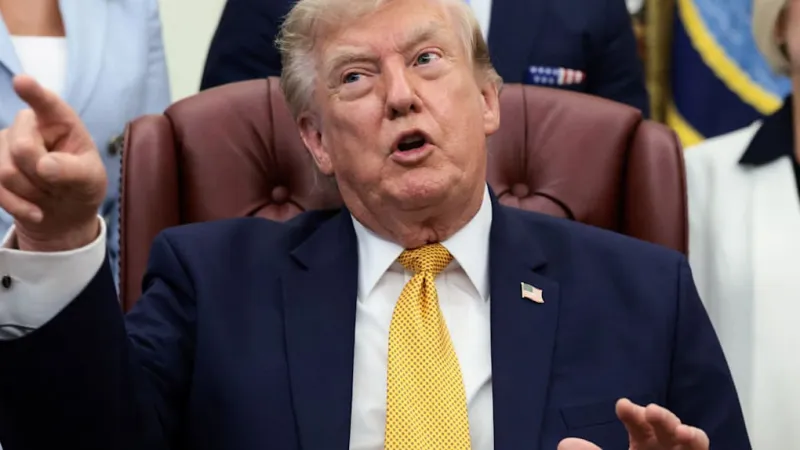
WASHINGTON – President Donald Trump has issued a severe warning to Tehran, threatening what he termed the “decapitation” of his adversaries, even as the US military reportedly solicits “creative” new ideas for potential conflict with Iran. This diplomatic escalation occurs amid Iran’s firm denial of any ongoing negotiations with Washington, underscored by an internal US communique indicating dissatisfaction with existing American approaches in the region.
The provocative remarks from President Trump highlight a deepening chasm in relations between the United States and Iran. His use of “decapitation” imagery signals an uncompromising stance against those perceived as threats to US interests, amplifying global anxieties surrounding the enduring standoff.
Simultaneously, an internal US military message has come to light, revealing a clear directive for innovative strategic thinking concerning Iran. The request for “creative” ideas suggests a re-evaluation within military circles regarding the efficacy of current tactics and a desire to explore unconventional pathways for engagement or deterrence.
This development comes at a critical juncture, particularly as Iran has consistently rebuffed claims of direct talks with Washington. Tehran’s official position remains steadfast: no discussions are underway, further complicating any diplomatic resolution to the escalating tensions. Iran Dismisses Trump's Claims: No US Talks, Hormuz Deal Unlikely.
The dual revelations – President Trump’s explicit threat and the military’s quest for fresh strategies – paint a picture of intense pressure and strategic uncertainty emanating from Washington. Analysts suggest that the call for creativity might reflect an acknowledgement of the complex and multifaceted nature of potential hostilities with Iran.
The persistent friction between the two nations has significant ramifications for regional stability, particularly in the Persian Gulf and the crucial Strait of Hormuz. US foreign policy under President Trump has emphasized a firm stance against what it perceives as Iranian aggression and its nuclear ambitions.
President Trump has previously articulated a policy of sustained pressure against Tehran. This includes potential economic blockades and naval actions aimed at curtailing Iran’s influence and capabilities, an approach detailed in earlier statements. Trump Vows Persistent Naval Blockade on Iran Until Total Surrender.
The internal military communication underscores a recognition that conventional methods may not suffice in managing or resolving the Iran situation. The term “creative” could encompass a broad spectrum of options, from advanced technological applications to novel diplomatic or economic pressure points, extending beyond traditional military interventions.
Experts on international relations are closely monitoring these developments, debating whether such overt threats and strategic brainstorming increase the likelihood of conflict or are merely part of a larger psychological warfare campaign designed to coerce Iran into concessions.
Iran, for its part, continues to maintain its sovereignty and asserts its right to self-defense, dismissing what it calls baseless accusations from the United States. The regime has vowed to resist any attempts at external coercion, emphasizing its readiness to protect its national interests.
The current dynamic creates a volatile geopolitical environment where miscalculations could have profound global consequences. The world watches as the US seeks new answers to an old problem, complicated by the direct and often incendiary rhetoric of President Donald Trump.
Ultimately, the confluence of President Trump’s hardened rhetoric and the US military’s proactive search for alternative strategies signals a significant phase in the prolonged US-Iran standoff, with both diplomatic and military avenues under intense scrutiny and re-evaluation.