Angela Stefani
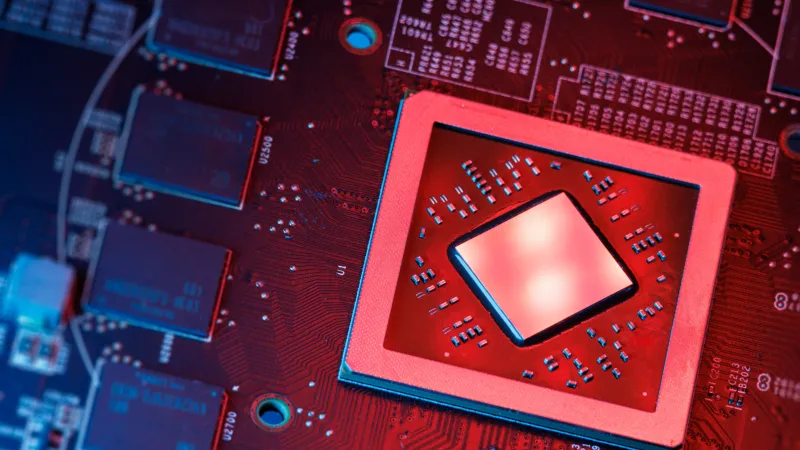
The integration of specialized hardware dedicated to artificial intelligence is rapidly redefining personal computing in 2026, with Neural Processing Units, or NPUs, emerging as a foundational component in a growing number of modern laptops. These dedicated accelerators efficiently handle AI and machine learning workloads, promising enhanced performance, improved battery life, and novel capabilities for users across various applications, from advanced video conferencing to sophisticated content creation.
A Neural Processing Unit is a microprocessor designed specifically to perform the mathematical operations crucial for neural networks and machine learning algorithms with greater efficiency than a general-purpose Central Processing Unit (CPU) or Graphics Processing Unit (GPU). This specialization allows for faster execution of AI tasks while consuming significantly less power.
The proliferation of NPUs reflects a broader industry shift towards ubiquitous AI. As software applications increasingly incorporate AI features—think real-time background blurring in video calls, intelligent noise suppression, or generative AI tools—the demand for dedicated hardware to process these complex computations locally has surged.
One of the primary advantages of an NPU is its superior power efficiency. By offloading AI tasks from the CPU and GPU, the system can perform these operations with fewer watts, directly translating to extended battery life for laptop users. This is particularly crucial for mobile professionals and students who rely on their devices for prolonged periods away from power outlets.
Beyond efficiency, NPUs dramatically accelerate AI performance. Tasks that might strain a traditional CPU or bottleneck a GPU can be executed far more swiftly on an NPU. This speed is vital for applications requiring instantaneous AI processing, such as facial recognition, predictive text, or on-device language models.
Many users already benefit from NPUs, often without realizing it. Features like Windows Studio Effects, which offer automatic framing, eye contact correction, and advanced background effects during video conferences, leverage NPUs. Creative professionals utilize NPUs for accelerated AI filters in photo and video editing software, speeding up workflows considerably.
The true potential of NPUs lies in fostering a new era of on-device AI. This capability allows complex AI models to run directly on a laptop without constant reliance on cloud servers. This approach enhances privacy by keeping sensitive data local and ensures functionality even without an internet connection. The broader trend of AI integration is evident across industries, as seen in developments like Autonomous Skies: AI Takes Command Amid Pilot Shortages, which underscores the push for localized, efficient AI solutions.
Leading chip manufacturers are heavily invested in NPU technology. Intel has integrated its AI Boost NPU into its Core Ultra processors, while AMD features its Ryzen AI engine in its latest mobile CPUs. Apple has long included its Neural Engine in its M-series chips, showcasing the performance benefits for its ecosystem. Qualcomm is also a significant player, emphasizing NPUs in its Snapdragon X series designed for Windows laptops.
The evolution of NPUs is symbiotic with the development of software. Operating systems like Windows are increasingly optimized to delegate AI workloads to these dedicated units, and developers are adapting their applications to take full advantage of NPU capabilities. This growing ecosystem is a testament to the hardware's increasing importance.
While the advantages of NPUs are clear, the immediate necessity for every laptop user in 2026 remains a point of discussion. For basic tasks like web browsing, word processing, or email, a dedicated NPU might not yet offer a transformative experience. However, for those engaged in creative work, heavy video conferencing, or leveraging the latest AI-driven productivity tools, an NPU is rapidly becoming a significant differentiator.
The push for specialized AI hardware like the NPU aligns with global trends where artificial intelligence is becoming a strategic imperative. From geopolitical advancements such as Ukraine Develops AI Drone System, Seeks War Advantage to scientific breakthroughs like AI Transforms Laser Physics, Accelerating Simulations 250-Fold, the capability to process complex AI models efficiently is paramount. Even the larger economic and political landscape surrounding AI investment, as highlighted in Nvidia Turmoil, Democratic Congress Poised to Reshape AI Investment Landscape, reflects the critical role of specialized computing in this domain.
The shift to on-device AI processing facilitated by NPUs also holds significant implications for user privacy. By minimizing the need to send data to cloud servers for AI computation, sensitive information remains on the user's local machine, reducing exposure to potential breaches and bolstering data security. This local processing capability is a key selling point for many enterprise and government users.
Despite their rapid adoption, NPUs still face challenges, primarily in standardization and developer adoption. Ensuring consistent performance and compatibility across different NPU architectures is an ongoing effort. However, the trajectory is clear: as AI permeates more aspects of daily digital life, the NPU will transition from an innovative feature to an expected, indispensable component of every capable laptop.
In essence, the NPU is not merely a technical upgrade; it represents a fundamental architectural change responding to the omnipresence of AI. It empowers laptops to handle increasingly sophisticated AI tasks locally, efficiently, and securely. For consumers contemplating a new laptop purchase in 2026, understanding the presence and capabilities of an NPU is increasingly vital to future-proof their investment and unlock the full potential of emerging AI-driven applications.