Gabriella
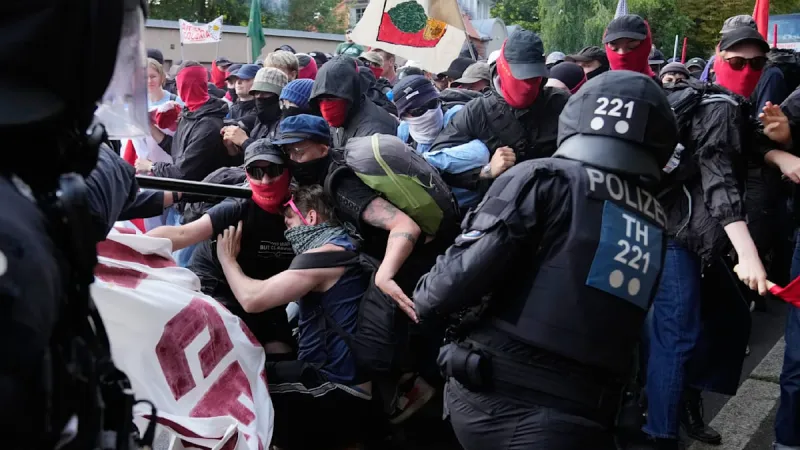
Erfurt, Germany – Significant protests and blockades, marked by sporadic violence, unfolded across the city preceding a contentious Alternative for Germany (AfD) party conference. While authorities primarily described the demonstrations as peaceful, isolated attacks targeted journalists and an AfD party office, raising concerns about public safety and political discourse.
Local law enforcement officials confirmed that while the majority of participants engaged in non-violent dissent, specific incidents marred the overall peaceful narrative of the demonstrations.
Reports indicated that individuals assaulted journalists covering the events, while others targeted an office associated with the AfD. These acts underscore a volatile atmosphere surrounding the political gathering and the deep divisions present.
Security expert Malte Roschinski commented on the inherent dangers of such confrontations. On WELT TV, Roschinski stated, "Mob situations are very dangerous," highlighting the rapid escalation potential of large, emotionally charged crowds.
Roschinski emphasized the critical challenges security forces face in maintaining order and protecting individuals when public gatherings turn hostile, particularly in dense urban environments.
The demonstrations in Erfurt are the latest in a series of public outcries against the AfD, a party that has seen a surge in support but also faces widespread accusations of extremism and anti-democratic tendencies. AfD Congress Sparks Protests, Recalls Weimar's Troubled Past.
The party conference itself served as a platform for the AfD to solidify its policy positions and elect new leadership, drawing both its fervent base and staunch opponents to the Thuringian capital.
Despite the reported incidents of aggression, the police presence maintained a measured approach, aiming to de-escalate tensions rather than provoke further confrontations with the demonstrators.
Germany has witnessed increasing polarization, with protests against and in favor of various political factions becoming a more frequent occurrence in urban centers across the nation.
Authorities continually balance the constitutional right to peaceful assembly with the imperative to prevent property damage and ensure the safety of all citizens, including those expressing differing views.
The targeting of journalists during these events highlights a growing concern for press freedom and the ability of reporters to cover public demonstrations without fear of reprisal.
The AfD's growing influence has also sparked broader debates about its potential ban, a topic that continues to divide the German populace. AfD Widens Lead As German Public Divides on Party Ban.
As the political landscape continues to evolve, the events in Erfurt serve as a stark reminder of the deep divisions within German society and the challenges faced by law enforcement in managing public dissent and ensuring security.