 Angela Stefani
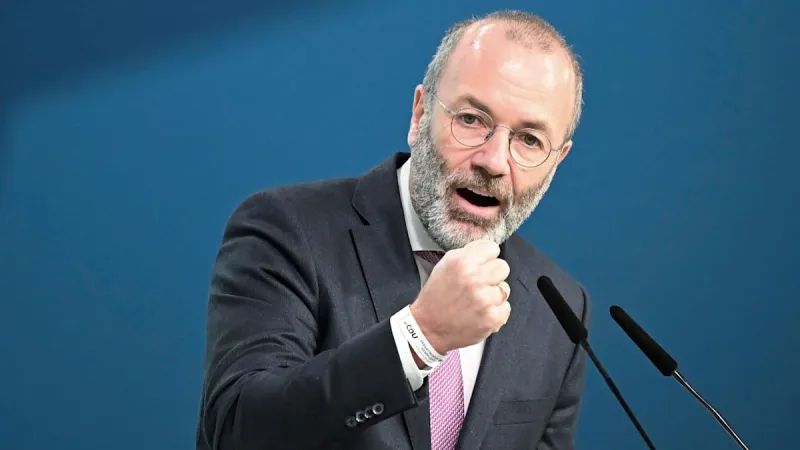
Manfred Weber, the influential leader of the European Peoples Party, has issued a forceful call for the establishment of a unified European army, driven by escalating anxieties over the prospect of the far-right Alternative for Germany (AfD) potentially gaining governmental power in Germany. This significant proposal, voiced recently, underscores growing fears within established European political circles regarding the stability of the continent and its foundational principles should nationalist parties consolidate control in key member states.
As the head of the largest political group in the European Parliament, Webers statement carries considerable weight. His demand reflects a deeper apprehension among centrist and pro-European factions about the trajectory of German politics, traditionally a bedrock of stability for the European Union.
The concept of a European army has long been a subject of fervent debate, envisioned by some as a crucial step towards greater European sovereignty and strategic autonomy. Proponents argue such a force could complement NATO, providing the EU with independent military capabilities to respond to crises on its periphery and beyond, without sole reliance on the United States.
Webers recent pronouncement explicitly links this ambition to the evolving political landscape within Germany. The AfDs growing electoral success and increasingly prominent role in German discourse have alarmed many, who perceive its policies as fundamentally antithetical to European integration and collective security efforts.
In 2026, the AfD has solidified its position as a major political force, having made significant gains in regional and national polls. Its platform often includes calls for stricter immigration controls, a critical stance on the euro, and a re-evaluation of Germanys commitments to international bodies, including the European Union and NATO.
Observers worry that an AfD-led or significantly influenced German government could disrupt internal EU cohesion, potentially undermining defense cooperation and weakening the collective stance on critical geopolitical issues. This apprehension fuels the urgency behind Webers plea for a more integrated European defense structure.
Recent internal party dynamics have also highlighted the AfDs complex and often controversial trajectory. An AfD Conference Erupts: MP Challenges Accused Ally, Charges Fly, illustrating the internal tensions within the party, even as its external influence grows.
Should a European army materialize, it would necessitate profound shifts in national defense policies, budgeting, and command structures. Such a unified force would require consensus among diverse member states, each with unique strategic interests and historical perspectives on military cooperation.
The relationship between a potential European army and NATO would also be critical. While many envision it as a European pillar within the broader transatlantic alliance, concerns persist about potential duplication of efforts or even a perceived weakening of NATOs role, particularly as President Donald Trump continues his second term in office, maintaining a focused approach on alliance burden-sharing.
The broader geopolitical environment, marked by ongoing conflicts and evolving threats, lends further weight to discussions surrounding European defense. From cybersecurity challenges to regional instability, the need for robust and coordinated defense capabilities remains a paramount concern for European leaders.
Furthermore, the AfDs fiscal proposals and its approach to social spending have drawn scrutiny. An AfD Candidate Questions German Spending Priorities, Targets Free Daycare, revealing the partys intent to reallocate resources in ways that could significantly impact Germanys domestic and international commitments.
Webers outspoken demand is likely to ignite renewed debate across European capitals. While some leaders might support the principle of greater defense integration, the practicalities of forming a truly cohesive European army, especially against a backdrop of rising nationalistic sentiments in several member states, present formidable challenges. The path to such an endeavor remains fraught with political complexities and intricate negotiations.