 Angela Stefani
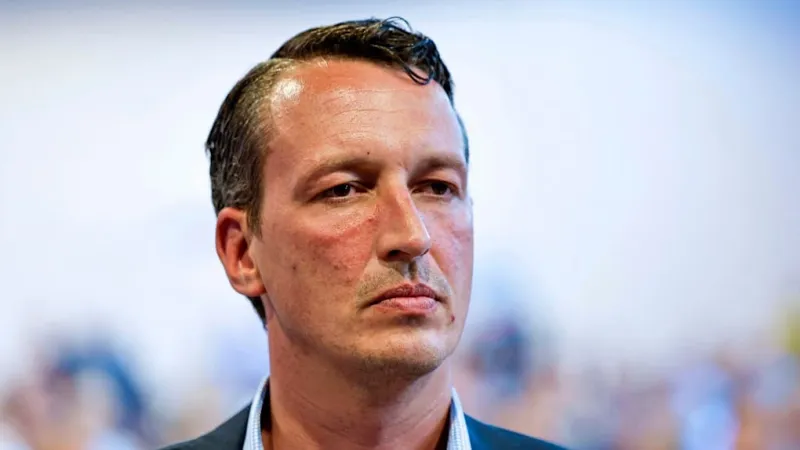
DUISBURG, Germany – A deeply contentious candidate nomination conference for the Alternative for Germany (AfD) in North Rhine-Westphalia devolved into a fiery internal confrontation as Bundestag Member Helferich directly challenged an accused confidant of state party leader Vincentz for a coveted list position. The charged atmosphere, marked by boisterous calls and boos from the assembly, saw serious allegations exchanged on stage, signaling deep fissures within the party ahead of crucial state elections.
The dramatic showdown unfolded during the party's convention to finalize its slate of candidates for the upcoming state parliamentary elections. Helferich, a sitting member of the federal parliament, launched an unexpected bid, pitting himself against a figure widely recognized as a close associate of Vincentz, the influential state party chairman. This direct challenge immediately ratcheted up tensions, creating a volatile environment within the hall.
Sources within the party described the accusations leveled during the confrontation as existentially damaging. While specific details of the charges remain under wraps, attendees reported heated exchanges that underscored profound ideological and personal divisions. The use of such strong language by a prominent federal politician against a state-level operative indicates a significant power struggle at the heart of the regional chapter.
The convention hall became a cauldron of competing sentiments. Supporters of both factions voiced their approval and disapproval, creating a cacophony of shouts and boos. This public display of disunity is particularly damaging for the AfD, a party that often projects an image of cohesion, especially when confronting mainstream political rivals.
The individual challenged by Helferich is reported to be under indictment, a detail that has added another layer of complexity and controversy to the internal party dynamics. The decision by state leader Vincentz to back an accused individual, implicitly or explicitly, has raised questions about judgment and party standards among some members, exacerbating the internal dissent.
This internal discord in North Rhine-Westphalia is not an isolated incident but rather symptomatic of broader challenges facing the AfD. The party, which has seen fluctuating electoral fortunes, frequently grapples with factionalism, disputes over leadership, and internal policy battles. Such public confrontations risk alienating voters who seek stability and a clear political agenda amidst national political uncertainty.
Indeed, the party has recently seen other internal debates, such as when an AfD candidate questioned German spending priorities, targeting free daycare, indicating a continuous struggle within its ranks to define its core economic and social policies. These incidents collectively paint a picture of a party grappling with its identity and direction.
North Rhine-Westphalia, Germany's most populous state, represents a crucial battleground for all political parties, including the AfD. Success here can significantly bolster the party's national standing and influence, making the internal selection process all the more critical and fiercely contested. The stakes for this internal struggle are therefore exceptionally high.
Helferich's decision to directly confront Vincentz's confidant is widely interpreted as a strategic move to either consolidate his own power base within the state chapter or to challenge the perceived dominance of Vincentz and his allies. His federal position affords him a platform to voice dissent with considerable weight, adding gravity to his challenge.
State leader Vincentz now faces the delicate task of managing the fallout from this public dispute. His ability to maintain party unity and present a strong front for the upcoming elections will be severely tested. The accusations and the challenging behavior within his own ranks inevitably complicate his leadership and public image.
Historically, the AfD has been no stranger to internal power struggles. Since its founding, the party has experienced several high-profile departures and expulsions, often stemming from disagreements over ideology, strategy, and personal leadership. This current episode follows a familiar pattern for the populist party, highlighting its persistent challenges with internal cohesion.
The internal strife within the AfD comes at a time of heightened political scrutiny across Germany. As the party attempts to position itself as a viable alternative to established parties, any public display of disunity provides ammunition to its political opponents and raises questions about its governance capabilities, potentially hindering its broader appeal.
The outcome of this particular challenge, and how the party moves forward from the acrimonious conference, could significantly impact the AfD's performance in the North Rhine-Westphalian state elections. A fractured party risks losing voter confidence and failing to capitalize on potential electoral gains, thereby undermining its long-term objectives.
The immediate aftermath of the confrontation left many party members stunned by the intensity of the accusations. The incident serves as a stark reminder of the volatile nature of internal party politics, especially within a party striving to move from protest movement to governing contender, demanding careful navigation of its internal rifts.
Ultimately, the AfD's leadership faces an urgent imperative to foster a semblance of unity and coherence if it wishes to achieve its electoral ambitions in North Rhine-Westphalia and strengthen its national footprint. The path forward appears fraught with challenges as internal divisions continue to simmer beneath the surface, threatening future electoral success.