Chris Robert
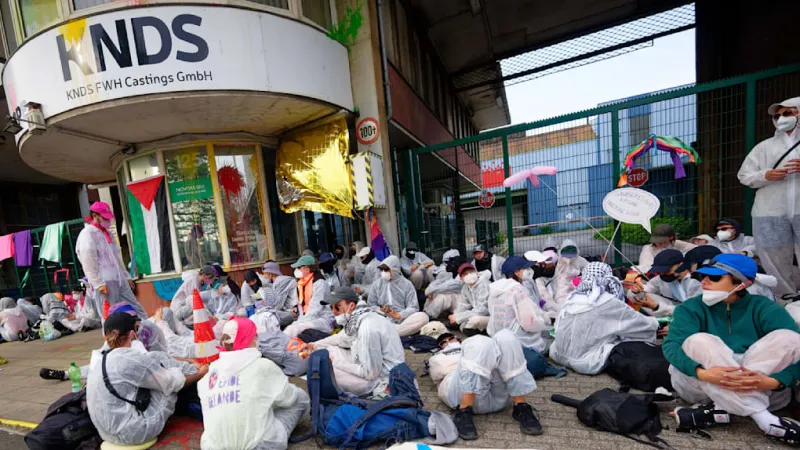
On Friday, environmental and anti-war activists in Muelheim an der Ruhr, Germany, initiated a sustained blockade of a prominent tank manufacturing facility, effectively preventing the early shift employees from accessing the plant. This localized action formed part of broader protest movements across the region, highlighted by the notable presence of acclaimed climate activist Greta Thunberg at a concurrent climate camp.
The demonstration commenced in the early hours, with activists forming human chains and deploying obstacles at the factory gates. Their objective was to impede the operations of the defense contractor, drawing attention to issues of arms production and its perceived role in conflict and environmental degradation.
The target facility, a key player in the European armaments industry, produces armored vehicles used by various nations. Protest organizers emphasized their opposition to the manufacturing of weapons, advocating for a shift towards peaceful and sustainable industries.
The blockade created significant disruption, with reports indicating that workers scheduled for the morning shift were unable to enter the premises, leading to operational delays for the company.
Simultaneously, a climate camp, attracting numerous participants, served as another focal point for activist gatherings. These camps often combine educational workshops, strategic planning sessions, and direct action initiatives to raise public awareness and pressure policymakers on environmental issues.
Greta Thunberg, an internationally recognized voice in the climate movement, joined the climate camp activities. Her participation lends significant visibility to such events, often amplifying their message on a global scale.
Her presence underscores the increasing convergence of environmental activism with broader anti-war and social justice movements. Many activists now connect military expenditures and conflicts to their environmental impact, highlighting the extensive carbon footprint and resource consumption associated with defense industries.
The Muelheim blockade represents a tactic commonly employed by activist groups seeking to disrupt business as usual and generate media attention. Such actions aim to force public discourse and encourage reconsideration of established practices.
Local law enforcement monitored the situation, ensuring the safety of both demonstrators and factory personnel. Details regarding potential arrests or the duration of the blockade were still emerging as the day progressed.
The incidents on Friday collectively showcased the determination of activist groups to challenge industrial activities they deem harmful, whether related to weapons production or environmental policy. These protests reflect a growing global sentiment demanding accountability from corporations and governments alike.
The broader context of such demonstrations in Germany often involves calls for stricter export controls on armaments and a reevaluation of the nation's role in global defense markets. Activists frequently argue that Germany, as a major arms producer, bears a responsibility to promote peace rather than contribute to conflict through weapon sales.
This latest wave of protests underscores the ongoing tension between industrial operations and the persistent demands of environmental and peace movements. As the global political climate remains volatile, such demonstrations are likely to continue serving as a critical means of expressing dissent and advocating for change.