Gabriella
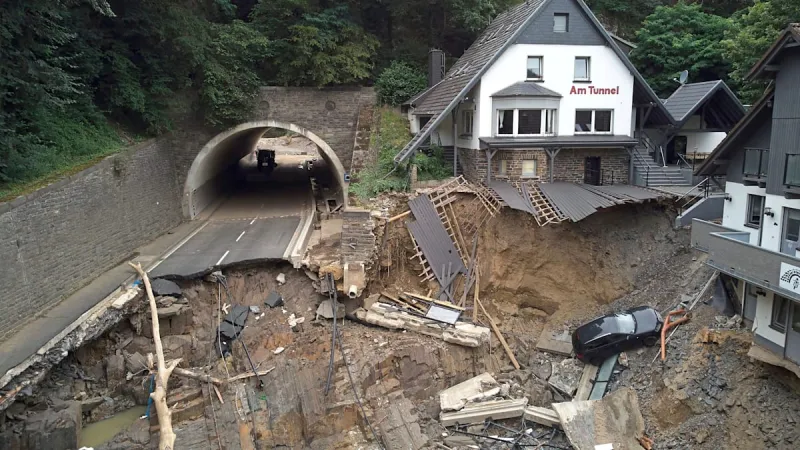
AHRIAL, Germany — Five years after the devastating 2021 Ahrtal flood catastrophe, residents of the picturesque valley express profound frustration over persistently stalled recovery efforts. Victims, many of whom lost everything, describe a disheartening landscape where many objects and structures remain untouched, mirroring the devastation of half a decade ago.
Yvonne Glasner, a resident who tragically lost her home during the deluge, stands as a poignant voice for the communitys collective grief and anger. She recounts a litany of missing warnings, critical failures in disaster protection, and an agonizing lack of processing and accountability for the catastrophe.
Glasner articulates the widespread sentiment within the community, stating, “That no one, truly no one in the Ahrtal understands.” This sentiment underscores a deep-seated feeling of abandonment and neglect among those most affected by the natural disaster.
The initial flood in July 2021 wreaked unprecedented havoc across parts of western Germany, particularly the Ahrtal. Torrential rains transformed the Ahr River into a raging torrent, sweeping away homes, bridges, and infrastructure, claiming over 130 lives, and displacing thousands of people.
Critiques from residents and experts alike have consistently pointed to severe lapses in the warning systems preceding the flood. Despite early meteorological predictions of heavy rainfall, an effective and timely alert system failed to reach many residents, denying them crucial hours to evacuate or secure their properties.
Further compounding the tragedy were significant deficiencies in the disaster protection mechanisms. Emergency services and local authorities faced criticism for what many survivors perceived as inadequate preparation and a slow, uncoordinated response during the critical initial hours of the event. The systems designed to protect citizens proved woefully insufficient.
Five years on, the visible signs of stalled recovery are inescapable. Debris piles remain in certain areas, damaged buildings stand as skeletal reminders, and essential infrastructure, though partially restored, has not fully rebounded. The pace of rebuilding homes and public amenities has been agonizingly slow for many.
This lack of visible progress has taken a severe psychological toll on survivors. The ongoing presence of devastation hinders the healing process, trapping many in a perpetual state of limbo and grief, unable to fully move past the trauma of losing their homes and livelihoods.
The economic ramifications are equally dire. Local businesses, particularly those reliant on tourism in the scenic valley, have struggled to regain footing. The slow reconstruction deters visitors and stifles economic revitalization, exacerbating the communitys long-term challenges.
Despite initial governmental pledges of extensive aid and swift reconstruction, the reality on the ground has often fallen short. Bureaucratic hurdles, logistical complexities, and a perceived lack of urgency have plagued the recovery efforts, fueling the despair felt by residents.
The Ahrtal catastrophe serves as a stark reminder of escalating extreme weather events across Europe, a phenomenon also observed with persistent heatwaves in Italy this summer, leading to red alerts soaring across its cities. Such incidents underscore the urgent need for robust disaster preparedness and climate adaptation strategies globally.
As 2026 marks half a decade since the devastating floods, the call for renewed governmental commitment and transparent accountability grows louder from the Ahrtal. Residents demand not just rebuilding, but a comprehensive review of past failures to prevent future tragedies and to restore faith in their protection.
The experience of Yvonne Glasner and her neighbors highlights a crucial lesson for disaster management worldwide: recovery is not merely about financial aid, but about efficient execution, clear communication, and unwavering support for those whose lives have been irrevocably altered.