 Chris Robert
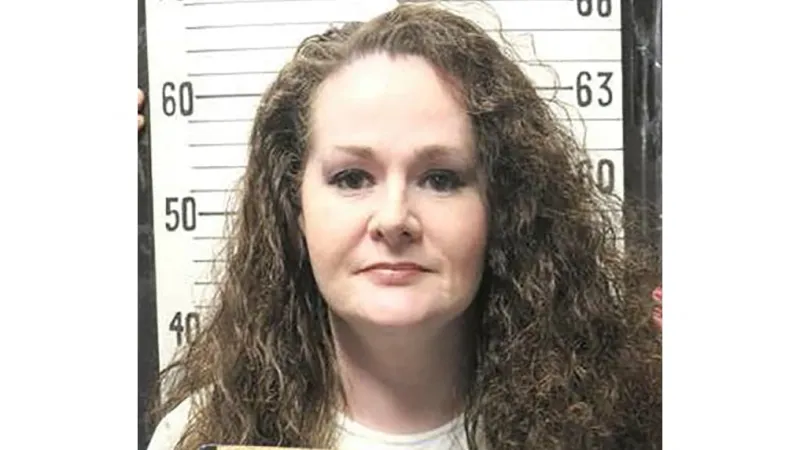
In a stunning turn of events in Tennessee, a scheduled execution by lethal injection failed recently, leaving condemned inmate Christa Pike alive and sparking immediate, vehement accusations of negligence from the family of the victim she was convicted of murdering. Pike reportedly survived the procedure after infusion lines were allegedly incorrectly placed, leading to a frantic effort by medical personnel to stabilize her condition.
Sources close to the correctional facility, who spoke on condition of anonymity due to the sensitivity of the situation, indicated that the execution was halted after several minutes when it became apparent the drugs were not having the intended effect. Medical staff, initially tasked with administering the fatal dose, then pivoted to emergency protocols to save Pike's life, transporting her to an undisclosed medical facility.
The family of the woman Pike murdered expressed profound shock and outrage upon learning of the failed execution. A family spokesperson, visibly distressed, stated, "They messed up! This is an insult to our loved one's memory and a monumental failure of justice." The spokesperson emphasized the family's long wait for finality, only to be confronted with what they termed an "incompetent spectacle."
Christa Pike gained notoriety decades ago for her brutal crime. She was convicted in 1996 for the torture and murder of her roommate, Colleen Slemmer, in the Cherokee National Forest. Pike, who was 20 years old at the time of the crime, became the youngest woman ever sentenced to death in Tennessee.
The details of Slemmer's murder were particularly gruesome, involving a dispute over a boyfriend that escalated into a premeditated act of violence. Pike, along with an accomplice, lured Slemmer to a secluded area, where Slemmer was attacked with a box cutter and bludgeoned with a rock. The brutality of the crime has long made Pike a controversial figure in the annals of capital punishment.
The method of lethal injection itself has been a continuous source of legal and ethical debate across the United States. Critics argue the procedure can lead to cruel and unusual punishment if improperly administered, citing various instances of protracted or visibly painful deaths. This latest incident in Tennessee reignites those persistent concerns about the reliability and humanity of the process.
Several states have faced scrutiny over botched executions in recent years, often attributed to difficulties in accessing execution drugs or the inexperience of personnel performing the procedure. These incidents have led to temporary moratoriums and legal challenges, although capital punishment remains legal in many jurisdictions.
Officials from the Tennessee Department of Correction have remained tight-lipped following the incident, issuing a brief statement confirming an "unforeseen complication" during the execution and that an internal review is underway. They have offered no further details regarding the specific nature of the medical error or the current condition of Christa Pike.
The implications of this botched execution extend beyond Tennessee. It raises critical questions about transparency, accountability, and the protocols governing capital punishment nationwide. Legal experts suggest this incident could trigger renewed calls for a reevaluation of lethal injection practices and potentially lead to new legal challenges from death row inmates.
The political ramifications for Tennessee's leadership, particularly Governor Bill Lee, could be significant. Proponents of capital punishment will likely demand answers and assurances of competence, while opponents will use the incident to bolster arguments for abolition or a moratorium on executions. The state's handling of the aftermath will be under intense national scrutiny.
For the victim's family, the trauma of Slemmer's murder is now compounded by the agonizing failure of the state to carry out the sentence. Their spokesperson articulated the profound emotional burden, stating that the botched procedure has reopened wounds that were slowly beginning to heal, forcing them to relive the pain and the injustice.
Human rights organizations and civil liberties groups have swiftly called for an independent, external investigation into the incident. They argue that an internal review by the same department responsible for the botched procedure may lack the necessary objectivity and transparency to uncover the full truth and prevent future occurrences.
One of the core challenges facing states that perform lethal injection executions is finding qualified medical personnel willing to participate. Medical ethics typically prohibit healthcare professionals from engaging in procedures that intentionally cause death, leading to a reliance on staff who may not have extensive experience with intravenous drug administration in such a high-stakes environment. This often contributes to errors like misplaced infusion lines.
The legal future of Christa Pike is now uncertain. Having survived the execution attempt, her defense team could potentially argue that another attempt would constitute cruel and unusual punishment under the Eighth Amendment of the U.S. Constitution. This could lead to extensive appeals and a prolonged legal battle, further delaying any final resolution.
The incident has already ignited a fervent public discourse on social media and news forums, with opinions sharply divided between those demanding accountability for the procedural failure and those questioning the morality and effectiveness of the death penalty itself. The case is poised to become a flashpoint in the national debate on criminal justice.
Ultimately, the botched execution in Tennessee serves as a stark reminder of the complexities and inherent risks involved in state-sanctioned killings. It underscores the critical need for flawless protocol, rigorous oversight, and absolute adherence to legal and ethical standards in any application of capital punishment.