 Edward DP Situmorang
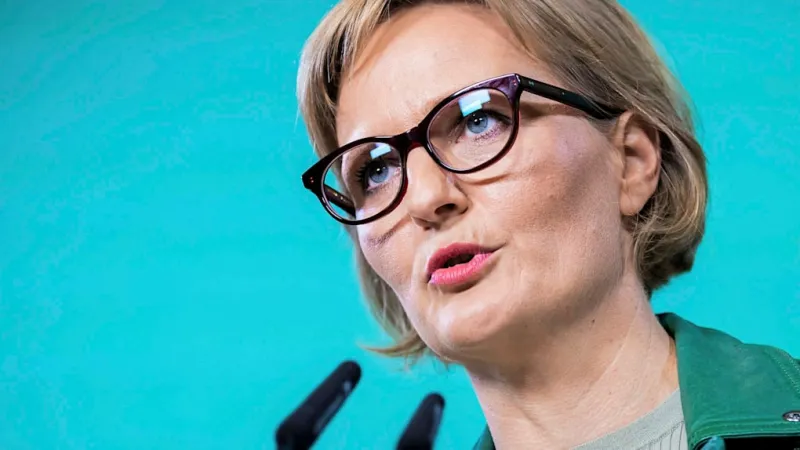
BERLIN – Green Party politician Franziska Brantner recently highlighted the pervasive fears many women experience daily, releasing a video detailing common self-protective behaviors. Her portrayal swiftly drew sharp criticism from prominent Christian Democratic Union (CDU) politician Christoph Ploß, who accused the Greens leader of what he termed “hypocrisy” for omitting crucial aspects from the broader discussion on public safety.
Brantners video resonated with many, illustrating actions such as holding keys ready, sharing ones location digitally, and intentionally changing sides of the street when encountering perceived threats. These behaviors underscore a lived reality for countless women navigating public spaces with heightened caution.
However, Ploß, a leading voice within the CDU, reacted with immediate and forceful condemnation. He contended that while acknowledging womens fears is vital, the Green Party selectively focuses on certain aspects of the issue, thereby presenting an incomplete and, in his view, disingenuous narrative.
He specifically criticized what he perceives as a deliberate omission of factors contributing to increased insecurity, particularly those tied to migration and integration policies. Ploß argued that true debate on womens safety must encompass all societal challenges, not just those politically convenient for the Greens.
This exchange underscores a deepening ideological chasm within German politics regarding public security and social responsibility. The Green Party often emphasizes systemic issues and gender-based violence, advocating for preventative education and structural changes.
The CDU, conversely, tends to prioritize law and order, alongside a robust discussion of external factors influencing crime rates. Their perspective frequently calls for stronger law enforcement and a more candid assessment of demographic shifts impacting safety perceptions.
Brantners initiative comes at a time when discussions around womens safety remain at the forefront of social discourse across Europe. Reports of harassment and assault continue to fuel public demand for effective preventative measures and greater accountability.
The political spat highlights the perennial tension between parties on how to best address complex societal issues. While both sides ostensibly aim for enhanced public safety, their approaches and chosen focal points diverge significantly.
Indeed, this debate mirrors broader disagreements plaguing the German political landscape, where consensus on challenging topics often remains elusive. Discussions on leadership and coalition effectiveness, such as those highlighted in the article SPD Blasts Merz: Weak Leadership Plagues German Coalition, demonstrate the ongoing friction.
Ploßs accusation of hypocrisy suggests a belief that the Greens are strategically avoiding discussions that might challenge their established political narrative or alienate certain voter bases. Such political maneuvering is not uncommon, yet it often stifles constructive dialogue.
Conversely, supporters of Brantner argue that focusing on universal experiences of fear and vulnerability empowers women and validates their concerns, regardless of the underlying causes. They contend that any attempt to politicize these fears by linking them to specific demographics only serves to deflect from the core issue of gender inequality and male violence.
The public now watches to see if this pointed exchange will evolve into a more comprehensive, fact-based discussion or further entrench existing partisan divides. The need for credible solutions to womens safety remains paramount, transcending political rhetoric.
The onus is on political leaders to bridge these divides and ensure that the vital conversation around safety evolves beyond accusations and into actionable strategies benefiting all citizens. The safety of women should not become a casualty of political point-scoring.