 Edward DP Situmorang
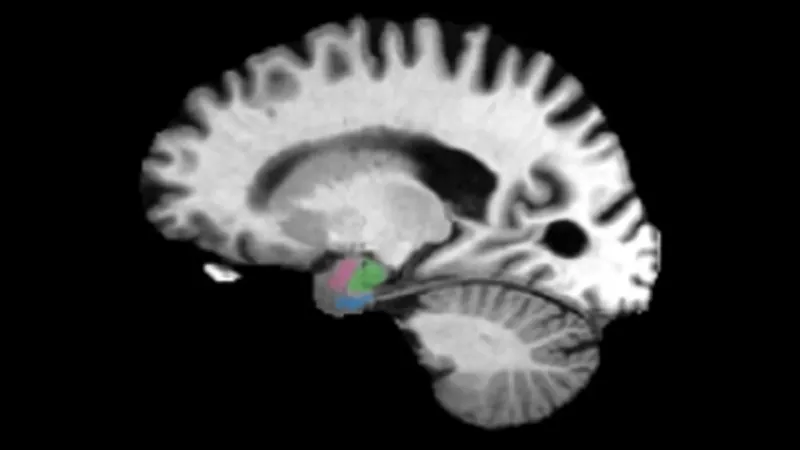
BALTIMORE – Johns Hopkins scientists have identified previously undetected warning signs of Alzheimer’s disease, revealing that two key brain regions associated with memory and emotion begin shrinking up to a decade before individuals experience any measurable cognitive decline. This groundbreaking research, centered on advanced brain imaging, suggests a powerful new pathway for early detection, preceding the typical examination of the hippocampus for disease markers.
The study challenges conventional understanding of Alzheimer’s progression, indicating a prolonged silent phase where critical neurological changes unfold long before outward symptoms manifest. Researchers utilized sophisticated brain scans to pinpoint these subtle structural alterations, offering an unprecedented window into the disease’s insidious onset.
Specifically, the investigation highlighted atrophy in two distinct brain areas: the entorhinal cortex and the amygdala. These regions, crucial for processing memory and emotional responses, exhibited significant shrinkage years before the hippocampus—historically the primary focus for early Alzheimer’s diagnosis—showed similar deterioration. This temporal shift in observable pathology marks a significant diagnostic pivot.
Crucially, these early structural changes are directly correlated with the abnormal accumulation of tau protein. While amyloid plaques often receive significant attention in Alzheimer’s research, the progressive buildup of toxic tau tangles is increasingly recognized as a stronger predictor of neurodegeneration and cognitive impairment, particularly in the disease’s initial stages.
The identification of such early markers holds immense promise for the development of new diagnostic tools. Current Alzheimer’s diagnoses frequently occur when the disease is already advanced, making interventions challenging. A reliable method for pre-symptomatic detection could revolutionize patient care by allowing for interventions at a far earlier, potentially more effective, stage.
Early detection could enable clinicians to identify individuals at high risk long before memory loss becomes apparent. This could facilitate proactive lifestyle modifications, participation in clinical trials for emerging therapies, and strategic planning for future care, offering families invaluable time and options.
This research underscores the complex, multi-faceted nature of Alzheimer’s disease, moving beyond a sole focus on amyloid pathology to encompass a broader understanding of neurodegenerative processes. The interaction between tau pathology and regional brain atrophy appears to be a critical early event.
The implications for pharmaceutical development are substantial. Many experimental treatments for Alzheimer’s have shown limited success in trials involving patients with established cognitive deficits. Identifying individuals during the pre-symptomatic phase could allow these therapies to be tested when the brain may be more responsive, potentially altering the disease’s trajectory.
Scientists envision a future where routine screenings or targeted imaging for at-risk populations could incorporate these new markers. Such advancements would shift the paradigm from reactive treatment to proactive disease management, mirroring successes seen in other areas of medicine like cancer screening.
While promising, further longitudinal studies are essential to validate these findings across diverse populations and to determine the precise predictive power of these early brain changes. Researchers will also need to explore how these structural alterations correlate with other biomarkers and genetic predispositions.
This breakthrough provides renewed hope for millions globally affected by Alzheimer’s disease. By unveiling the hidden progression of the condition, Johns Hopkins researchers have paved the way for a new era of diagnostic precision and targeted therapeutic strategies that could one day prevent or significantly delay the devastating impact of memory loss.