 Debby Wijaya
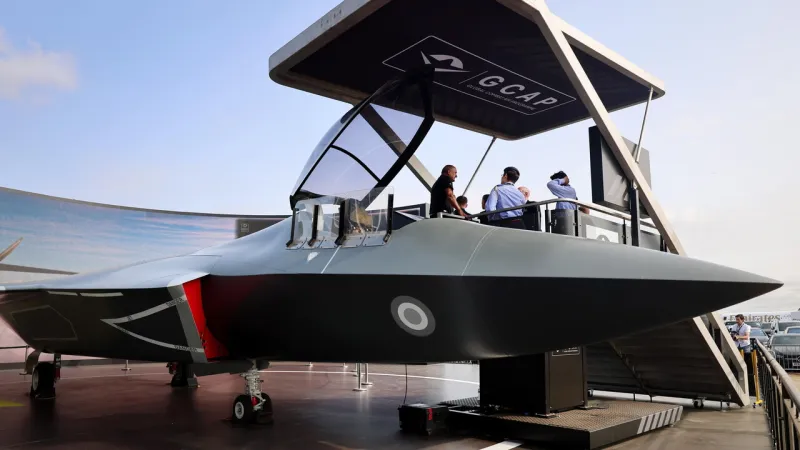
LONDON – Canada has formally entered the Global Combat Air Programme (GCAP) as an observer nation, signifying a strategic move to bolster its defense capabilities and deepen its engagement with key Western allies. The announcement, made during a high-level summit in London, underscores a collective response to evolving geopolitical challenges, particularly from Russia and China, as articulated by Italian Defense Minister Guido Crosetto.
GCAP aims to develop a next-generation stealth fighter jet by 2035, integrating advanced technologies for air superiority. The ambitious multinational effort initially brings together the United Kingdom, Italy, and Japan, pooling expertise and resources to create a formidable aerial combat platform capable of addressing future threats.
Minister Crosetto emphasized the necessity of such collaborations, stating that the project is a clear response to the strategic challenges posed by both Russia and China. His remarks highlight a growing consensus among Western nations regarding the imperative to enhance collective security and technological superiority in an increasingly complex global arena.
Canada's decision to join as an observer reflects its commitment to modernizing its armed forces and maintaining interoperability with its allies. While not yet a full partner, observer status allows Ottawa to gain insights into the program's development, assess its potential alignment with Canadian defense requirements, and explore avenues for future collaboration.
The Global Combat Air Programme represents more than just a new aircraft; it embodies a broader vision for defense industrial cooperation and technological innovation among like-minded nations. Participants aim to leverage cutting-edge artificial intelligence, advanced sensors, and networked capabilities to ensure air dominance for decades to come.
For Canada, participation as an observer offers a unique opportunity to stay at the forefront of military aviation technology. It provides a pathway to potentially integrate Canadian industrial capabilities into a major international defense project, fostering economic benefits and high-skill job creation within its aerospace sector.
The move comes at a time when global security dynamics are shifting rapidly. Persistent aggression from Russia in Eastern Europe and increasing assertiveness from China in the Indo-Pacific region have spurred many nations to re-evaluate and enhance their defense postures and international partnerships.
Observers believe Canada's involvement could pave the way for a more substantial role as the program progresses, potentially leading to full membership. Such a transition would further solidify the transatlantic and trans-Pacific defense links critical to the stability of the international order.
Minister Crosetto's direct correlation of GCAP with countering Russian and Chinese influence resonates with the strategic thinking of many allied capitals. It frames the project not merely as a technological advancement but as a crucial component of broader deterrence and defense strategies.
The development of advanced combat aircraft like those envisioned by GCAP requires immense financial investment and sustained technological commitment. By sharing these burdens, participating nations aim to achieve capabilities that would be prohibitively expensive or technically challenging for any single country to develop alone.
This collaborative model stands in stark contrast to the unilateral defense procurement often seen in previous eras. It signifies an understanding that future security challenges demand a unified, multi-national approach to research, development, and deployment of advanced military assets.
The London summit served as a pivotal moment, bringing together defense officials and industry leaders to solidify the strategic roadmap for GCAP. Canada's presence there, even as an observer, signals a clear intent to be part of this future-defining defense initiative.
Ultimately, Canada's entry into the GCAP as an observer is a significant step in reinforcing Western collective security. It underscores a proactive approach to address the strategic environment, characterized by rising global tensions and the imperative to maintain a technological edge in air combat capabilities.