 Chandra Wijayanto
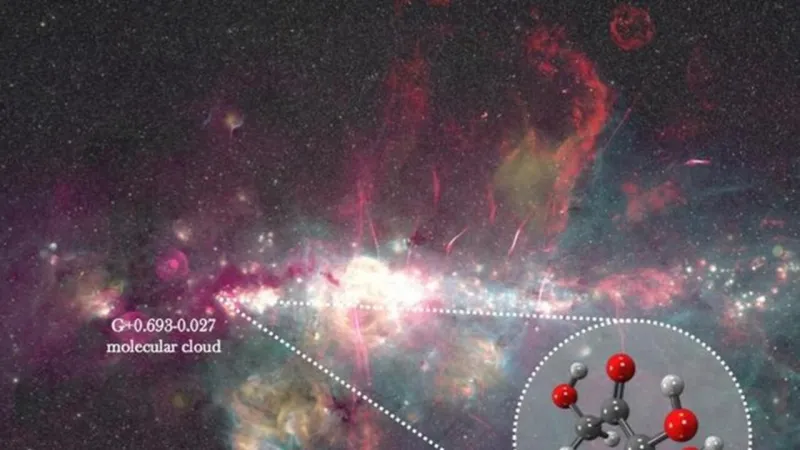
Scientists have recently announced the groundbreaking discovery of complex sugar molecules permeating vast stretches of interstellar space. This pivotal finding, made through advanced astronomical observations, offers profound insights into the potential origins of life by identifying one of its fundamental building blocks far beyond Earth's confines. The presence of these vital organic compounds, essential for the formation of DNA and RNA, challenges previous assumptions about where the necessary ingredients for biological development can naturally arise.
This detection marks a critical step in astrobiology, bolstering theories that the universe may be brimming with the chemical precursors necessary for life. The specific sugar identified, glycolaldehyde, is a simple monosaccharide and a known constituent of RNA, a molecule central to genetic information and protein synthesis.
Researchers utilized cutting-edge telescopic arrays, likely instruments with high spectral resolution, to analyze light signatures emanating from distant molecular clouds. These cosmic nurseries, where stars and planetary systems are born, provide unique environments for complex chemical reactions.
For decades, scientists have debated the mechanisms by which complex organic molecules, like sugars, could form in the cold, radiation-rich vacuum of space. The prevailing view often favored formation within protective dust grain mantles, shielded from destructive forces.
The sugars are not merely incidental; they are a critical component of deoxyribonucleic acid (DNA) and ribonucleic acid (RNA), the molecular blueprints of all known terrestrial life. Their prevalence in interstellar medium suggests a universal factory for these vital components.
Glycolaldehyde is particularly intriguing because it represents the simplest member of the aldose family of sugars. Its molecular structure contains both aldehyde and hydroxyl groups, enabling it to participate in a wide array of chemical reactions crucial for larger biomolecules.
The conditions in interstellar space are extreme. Temperatures often hover just above absolute zero, and harsh ultraviolet radiation can easily break apart delicate organic compounds. The persistence and formation of these sugars under such duress underscore the robustness of cosmic chemistry.
While direct observation of sugars is novel, theories have long posited that interstellar dust grains act as catalytic surfaces. On these microscopic particles, atoms and simple molecules can adhere, react, and slowly build more complex structures over millions of years.
This discovery reignites discussions about panspermia, the hypothesis that life or its precursors could be spread throughout the universe via meteorites, asteroids, or even interstellar dust. If sugars are common, then the fundamental ingredients might already be widespread.
The next phase of research will likely focus on identifying more complex sugars and other biomolecules in diverse interstellar environments. Scientists aim to understand the precise pathways of their formation and how they might be incorporated into nascent planetary systems.
Understanding cosmic sugar formation could shed light on how early Earth acquired its chemical inventory. It is plausible that asteroids and comets, which frequently impacted our planet during its formative years, delivered these essential compounds from their interstellar origins.
The presence of such crucial life building blocks far from star systems could also influence the search for life on exoplanets. If the chemical prerequisites are ubiquitous, then the window for life to emerge might be wider than previously imagined.
This type of profound discovery typically involves international collaborations, pooling resources from observatories and theoretical physicists worldwide, highlighting the global nature of modern scientific endeavor.
The quest to understand humanity's genesis is one of humanity's oldest scientific and philosophical pursuits. Each new discovery in astrobiology, particularly those involving fundamental organic molecules, provides another piece to this immense cosmic puzzle.