 Dorry Archiles
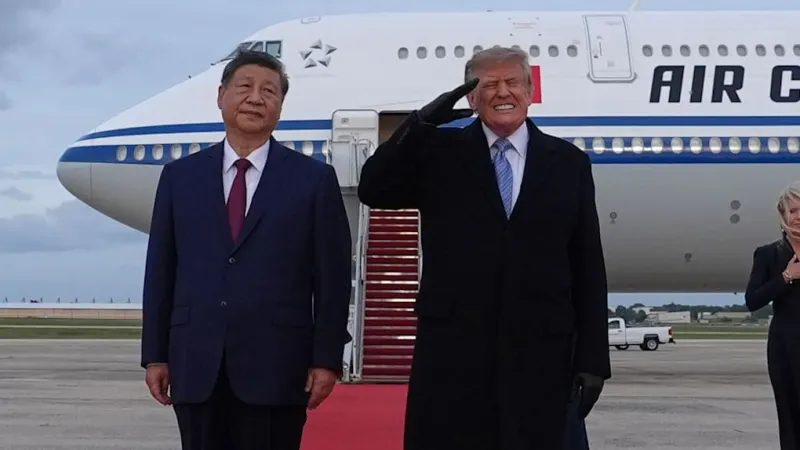
WASHINGTON – President Donald Trump purportedly shared an artificial intelligence-retouched photograph of himself with Chinese President Xi Jinping following a state visit, drawing significant scrutiny and prompting widespread derision from observers and media analysts. Several experts have concurred that the image displayed characteristics consistent with AI manipulation, raising questions about digital authenticity in high-stakes political communication.
The image, which surfaced on President Trumps social media platform, allegedly depicted a meeting between the two global leaders during Xi Jinpings recent state visit to the United States. While the exact date of the original meeting depicted remains undisclosed, the timing of the photographs online appearance sparked immediate conjecture.
Digital forensic specialists and graphic design professionals quickly highlighted anomalies within the photograph. These included subtle distortions in facial features, unnaturally smooth skin textures, and inconsistencies in lighting that are hallmarks of generative AI processes.
One prominent digital ethics researcher, speaking anonymously due to the politically charged nature of the allegations, stated, "The tell-tale signs are there. We are seeing increasingly sophisticated AI tools being used to subtly alter reality, and this photo exhibits many of those markers." This assessment echoes a growing concern regarding synthetic media.
The revelation ignited a fresh wave of public discussion regarding the ethical implications of using advanced AI in political messaging. Critics argue that such practices undermine public trust and blur the lines between genuine documentation and fabricated imagery, creating a precarious landscape for informed discourse.
This incident arrives amid broader global conversations about the potential misuse of artificial intelligence. Concerns about deepfakes and manipulated content have intensified, with figures like Bill Gates publicly warning about the risks. As Gates noted, "AI misuse risks one billion deaths," underscoring the severe consequences of unchecked technological advancement. Bill Gates: AI Misuse Risks One Billion Deaths, Urges Global Laws
The White House has yet to issue an formal statement addressing the allegations concerning the AI-retouched photo. However, the absence of an immediate denial has only fueled speculation among political commentators and the public.
The image in question showed President Trump and President Xi in what appeared to be a cordial exchange, though the specific elements of retouching purportedly aimed to enhance or modify certain aspects of the visual narrative. Experts point to details such as an unusually brightened background or an altered expression on one of the leaders.
This situation also spotlights the evolving challenge for news organizations and the general public in discerning authentic visual information from digitally altered content. Verification tools are constantly battling increasingly sophisticated AI capabilities designed to create believable but false images.
The controversy underscores a critical juncture in how political figures engage with digital media and the publics expectation of transparency. As AI technology becomes more accessible, the capacity for sophisticated image manipulation continues to expand, presenting new ethical dilemmas.
Analysts suggest that the motivation behind posting an AI-retouched image could range from simple aesthetic enhancement to more strategic attempts at shaping perception or conveying a specific diplomatic atmosphere that may not have fully transpired.
Regardless of intent, the incident serves as a stark reminder of the persistent threat posed by disinformation in the digital age, particularly when it emanates from high-profile political figures.
The global community has increasingly recognized the need for robust frameworks and regulations to govern AI usage, particularly in areas affecting public information and political discourse. Efforts are underway in various nations to establish guidelines for transparency regarding AI-generated content.
The alleged posting of an AI-retouched photo by President Trump resonates with a larger pattern of technological advancements challenging traditional media consumption and verification processes. Companies like Meta are also exploring AI in new ways, sometimes with privacy as a key concern, as seen with Meta Pioneers AI Smart Glasses Without Camera, Boosts Privacy. This highlights the double-edged sword of AI.
This specific instance involving an AI-retouched photo of two world leaders amplifies the gravity of digital alterations. It moves beyond mere partisan debate to touch upon the very integrity of diplomatic representation and historical record.
The incident is poised to become a case study in the broader conversation surrounding AI ethics and its intersection with political communication in the 21st century. It will likely prompt renewed calls for clear labeling of AI-generated or modified content, especially in governmental contexts.