 Dorry Archiles
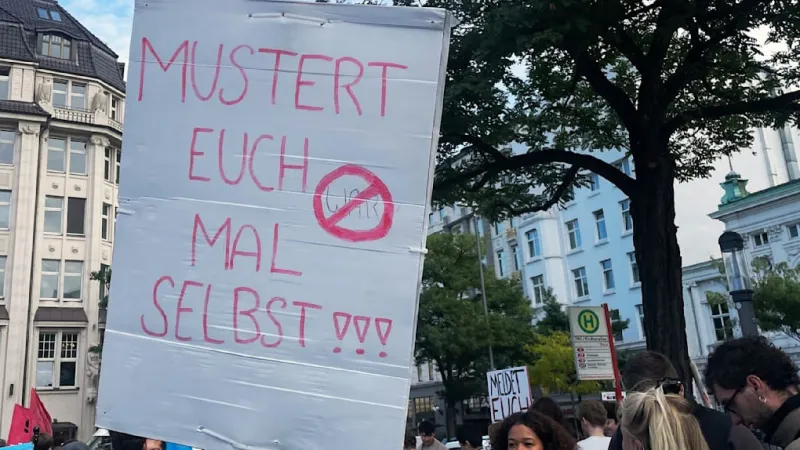
More than 45,000 students across Germany have launched a nationwide protest against the potential reintroduction of military conscription, demanding an end to any plans that would compel them into service. The demonstrations, orchestrated by the Schulstreik gegen Wehrpflicht alliance, articulate a clear refusal among young people to be forced into military duty or potential armed conflict.
The protests spanned multiple cities, mobilizing a significant segment of the nations youth who fear a return to compulsory military service. Organizers emphasized that the students are not only against being conscripted but also adamantly oppose the prospect of being compelled into wartime roles.
Discussions surrounding the reintroduction of conscription have gained traction within German political circles amid an evolving geopolitical landscape. Concerns about national defense capabilities and regional security have prompted a re-evaluation of military readiness.
The Schulstreik gegen Wehrpflicht alliance, a newly formed coalition of student groups and youth activists, coordinated the widespread action. Their message is unequivocal: young people should have the freedom to choose their paths without the shadow of mandatory military service.
A spokesperson for the Schulstreik gegen Wehrpflicht alliance stated, "We do not want to be forced and we do not want to go to war." This sentiment resonated widely among the thousands of participants.
Germany suspended compulsory military service in 2011, transitioning to an all-volunteer professional army. The re-evaluation of this decision marks a significant shift in defense policy discourse, driven by external pressures and internal debates.
The renewed debate about conscription has divided political parties. While some advocate for its return to bolster military strength, others warn against imposing such a burden on the youth and question its practical efficacy in modern warfare. The current government has not yet made a definitive decision, keeping the discussion active.
The renewed focus on defense comes amidst heightened tensions in Eastern Europe and a shifting global power dynamic. Developments such as Russia Intensifies NATO Provocations, Experts See Logic in Escalation have fueled arguments for a more robust national defense. This complex environment informs the urgency with which some politicians view military reforms.
For many students, the prospect of mandatory military service represents an unwelcome disruption to their educational and career aspirations. They argue that such a policy could impede personal development and limit individual freedoms at a crucial stage of life.
The protests underscore a generational divide in perceptions of national duty and security. While older generations might recall the era of conscription, todays youth have grown up in a different geopolitical reality, largely free from such obligations.
The reintroduction of conscription would also entail significant logistical and financial implications for the German state, requiring substantial investment in infrastructure, training, and personnel management. This aspect forms part of the broader political debate.
The future of conscription in Germany remains uncertain. The widespread student demonstrations indicate a strong public resistance that policymakers will undoubtedly need to consider as they deliberate on this critical defense issue. The government faces a challenging task balancing national security imperatives with the desires of its young populace.
Other European nations have similarly debated or reintroduced forms of national service in response to evolving security threats. Ukraine's ongoing conflict and its defense challenges serve as a stark reminder of geopolitical instability, highlighted by Ukraine's Economic Lifelines Under Relentless Russian Assault.