 Stefani Rindus
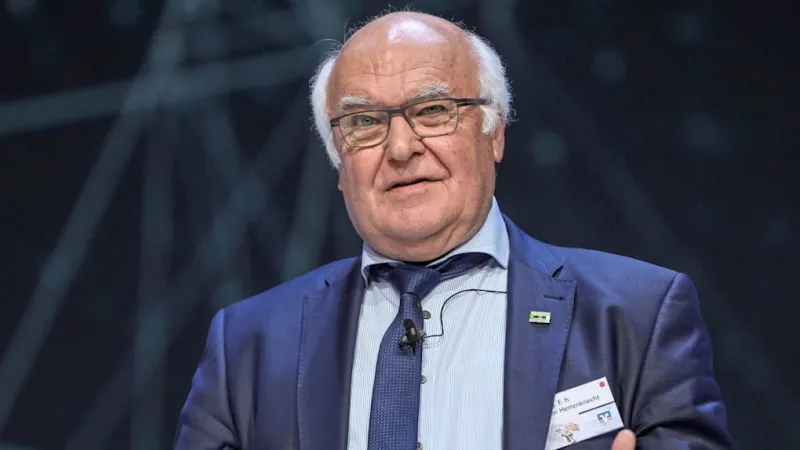
Martin Herrenknecht, a leading German entrepreneur, recently delivered a scathing critique of Germany's infrastructure development, calling it "too sluggish, too slow, too uninnovative." He specifically highlighted severe systemic failings and expressed deep concern over the nation's apparent complacency when compared to its neighbors.
Herrenknecht, the head of Herrenknecht AG, a global leader in tunnel boring machines, articulated his frustrations, suggesting that Germany is "dreaming in its banana republic." This stark metaphor underscores his view of a country lagging severely in critical areas of national development.
His commentary, emerging from the business sector, aligns with growing apprehension among industrialists regarding Germany's diminishing competitiveness on the global stage. Infrastructure, a bedrock of economic prosperity, remains a consistent point of contention.
The entrepreneur did not spare words when discussing the bureaucratic hurdles and procedural delays that plague major projects. He lamented a pervasive inertia that hinders progress, contrasting it with the perceived dynamism of other European nations.
While Herrenknecht did not explicitly name the praised neighboring country in the initial report, such commendation often points to nations known for their efficient and swift project execution, frequently Switzerland or Austria, which consistently rank high in global competitiveness indices.
Experts observe that Germany's reputation for engineering prowess is increasingly challenged by practical realities. Large-scale public works projects frequently run over schedule and over budget, eroding public trust and business confidence.
This criticism resonates with findings from recent reports, including a simulation concerning a major tunnel disaster that exposed grave emergency response failures in German infrastructure. Such incidents underscore the broader systemic issues Herrenknecht addresses.
The slow pace of digitalization and the antiquated state of transport networks, from roads to railways, represent significant bottlenecks for a modern industrial economy. These factors directly impact logistical efficiency and investment attractiveness.
Herrenknecht's strong remarks are a call to action for policymakers and industry leaders alike, urging a fundamental reassessment of current strategies. He implies that without significant change, Germany risks falling further behind.
The entrepreneur emphasized the necessity for Germany to recapture its innovative spirit and accelerate decision-making processes. He argued that the nation's future economic resilience hinges on its ability to adapt and implement modern solutions with greater urgency.
This sentiment is echoed across various sectors, where business leaders frequently express exasperation with the country's regulatory environment and its impact on development.
For instance, critiques concerning governmental spending priorities have surfaced, with some economists warning against Bundeswehr funds wasted on obsolete technology, diverting resources that could bolster critical civilian infrastructure.
The challenge extends beyond mere funding. It encompasses a cultural shift towards embracing risk, fostering entrepreneurial spirit, and streamlining administrative procedures that currently stifle ambitious projects.
Martin Herrenknecht's intervention serves as a powerful reminder that while Germany boasts a robust economy, underlying structural weaknesses, particularly in infrastructure, demand immediate and decisive attention to avoid long-term detrimental effects on its prosperity.
The debate around Germany's economic performance and its infrastructure challenges is expected to intensify as the country navigates a complex global economic landscape.