 Angel Doris
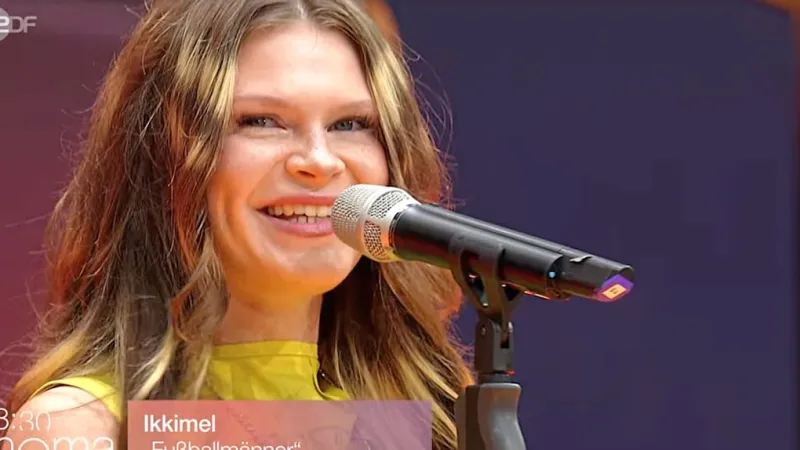
BERLIN, Germany — The German public broadcaster ZDF currently faces significant public scrutiny following the inclusion of a rapper known for her highly provocative artistic concept in its morning programming. Viewers tuning in for traditional news coverage on politics, economic affairs, and weather reports have expressed considerable dissatisfaction, stating they were confronted with content incongruous with their expectations for a public service channel.
This latest incident has reignited a broader debate across Germany regarding the appropriate scope and content mandate for publicly funded media institutions like ZDF. Critics contend that such programming deviates from the core mission of providing neutral, informative content, especially during early morning slots.
The contentious segment involved a musical artist frequently described as left-leaning, whose performance style explicitly aims for maximum provocation. While artistic expression often tests societal norms, its placement within a morning news context on a channel largely supported by mandatory public license fees has drawn a sharp distinction from the typical viewer experience.
ZDF, one of Germany's two major public television broadcasters, operates under a specific legal framework emphasizing its role in providing diverse and comprehensive programming. This includes news, culture, entertainment, and education, all while maintaining impartiality and reflecting the breadth of German society.
The public's perception of this mandate frequently centers on reliable factual reporting and in-depth analysis. Introducing a performer whose artistic identity hinges on challenging established sensibilities during peak news consumption times has, for many, crossed a perceived line of appropriateness.
This situation highlights a persistent tension within public broadcasting: how to remain relevant and engaging to a diverse audience, including younger demographics, without alienating its traditional base or compromising its perceived commitment to journalistic integrity and broad appeal.
Discussions about the direction of ZDF and other public service broadcasters are not new. They frequently resurface whenever content choices diverge significantly from viewer expectations, particularly when perceived as politically charged or overly avant-garde for the general public.
Public broadcasters across Europe routinely navigate these challenges, attempting to innovate and remain contemporary while upholding their fundamental commitment to public service. The ZDF controversy underscores the delicate balance required to satisfy varied tastes while adhering to a publicly defined mission.
The current climate of heightened public scrutiny extends to numerous German institutions and public figures. For instance, Berlin Mayor Wegner recently faced criticism over perceived internal political maneuvering, demonstrating a broader public expectation of accountability and transparent conduct from public entities. This ongoing vigilance signals a public increasingly engaged with the operations of its foundational bodies.
While proponents of artistic freedom might argue for the inclusion of diverse and challenging voices on public platforms, opponents contend that the morning news slot specifically demands a different kind of content, one focused primarily on objective information and a calm start to the day.
The debate also touches upon the use of public funds. License fee payers expect their contributions to support programming that serves the common good and broad informational needs, rather than segments that might be interpreted as niche or divisive.
Industry observers suggest that broadcasters must constantly re-evaluate their programming strategies to meet evolving audience habits and preferences while staying true to their founding principles. The ZDF incident serves as a stark reminder of these ongoing pressures.
The channel has yet to issue a comprehensive response directly addressing the specific criticisms surrounding the rapper's segment. However, such incidents typically prompt internal reviews of editorial guidelines and scheduling decisions.
Ultimately, the ongoing dialogue surrounding ZDF's programming choices reflects a societal conversation about media responsibility, audience expectations, and the role of artistic expression within public service mandates in contemporary Germany. The outcome of this debate could influence future content strategies for public broadcasters nationwide.