 Edward DP Situmorang
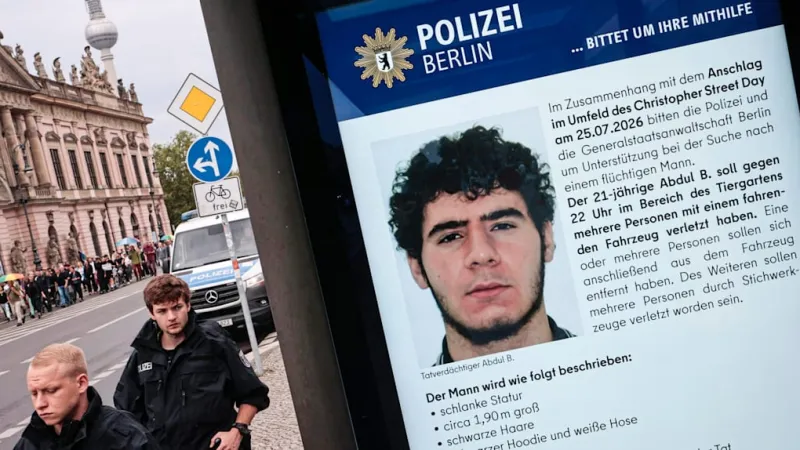
BERLIN, Germany – A nationwide debate has ignited among German state justice ministers, who are now advocating for a fundamental reform of the country's juvenile criminal law as it applies to young adults, following a deadly Islamist attack perpetrated by 21-year-old Abdul Ballout during a Christopher Street Day (CSD) event. The call for a policy shift underscores growing concerns over accountability for serious crimes committed by individuals who, despite reaching legal adulthood, can currently still be prosecuted under youth statutes.
The demand for a course correction stems directly from the brutality of the CSD attack, which has drawn sharp condemnation across Germany and Europe. Ministers argue that the existing legal framework, which allows individuals up to the age of 21 to potentially face juvenile court proceedings, is no longer adequate for offenses of such extremist and premeditated nature.
Under current German law, individuals between 18 and 21 years old are classified as young adults. Courts have discretion to apply either adult criminal law or juvenile criminal law, depending on a comprehensive assessment of the perpetrator's maturity level at the time of the offense. This flexibility aims to foster rehabilitation, but critics contend it undermines the severity of sentences for heinous crimes.
Several state justice ministers from various political parties have voiced their intent to push for legislative changes. Their unified stance indicates a growing political consensus that the balance between rehabilitation and punitive justice needs recalibration, especially in cases involving terrorism or extreme violence.
The distinction between juvenile and adult criminal law carries significant implications. Juvenile sentences typically focus on educational measures and often result in shorter incarceration periods, with a maximum of 10 years for severe crimes. Adult law, conversely, allows for significantly harsher penalties, including life imprisonment, and emphasizes deterrence and retribution.
Abdul Ballout, the perpetrator of the CSD attack, was 21 years old at the time of the incident, placing him precisely within the demographic whose legal treatment is now under scrutiny. His actions, widely condemned as an act of Islamist extremism, have intensified public and political pressure for a more stringent judicial response.
The Christopher Street Day celebration, a public event advocating for LGBTQ+ rights, became the scene of a horrifying assault. Such events are symbols of openness and diversity, making the targeting by an Islamist extremist particularly alarming and a direct challenge to democratic values. The attack sent shockwaves through the community and the nation.
Proponents of reform argue that a 21-year-old, by societal standards, is fully capable of understanding the gravity of their actions and should be held fully accountable under adult criminal law, especially when committing ideologically driven violence. They emphasize that age should not be a blanket shield against appropriate punishment.
Conversely, some legal experts and child welfare advocates caution against an overly broad repeal of the juvenile criminal law for young adults. They argue that individual maturity assessments are crucial and that a blanket application of adult law might hinder rehabilitation efforts for individuals who, despite their age, still exhibit developmental immaturity.
The proposed overhaul is expected to be a contentious issue in the German Bundestag, potentially sparking robust debate among political factions. While the drive for reform is strong following the CSD attack, ensuring a balanced and just approach will be paramount.
Germany's progressive juvenile criminal law, established decades ago, was founded on principles of social reintegration and the belief that younger offenders, even those legally adult, still possess a greater capacity for reform than older criminals. This philosophical underpinning is now being re-evaluated in the face of modern extremist threats.
This debate in Germany mirrors similar discussions in other European nations grappling with how to address serious crimes, including terrorism, committed by young adults. The rise of extremist ideologies among younger populations presents a complex challenge to traditional justice systems.
This incident draws parallels with other discussions concerning justice and extremism. For instance, the Diocese Rejects Former Pastor's "Signal from Heaven" CSD Attack Claim highlights the broader societal response and interpretations surrounding such violent acts.
Furthermore, discussions on justice system adjustments often follow significant incidents, as seen in calls for German Police Urge Measured Reforms After Berlin Attack, emphasizing the ongoing nature of legislative review in response to public safety concerns.
The coming months will likely see intensive consultations among legal practitioners, politicians, and civil society groups as Germany grapples with how best to adapt its justice system to contemporary challenges while upholding its commitment to justice and fairness. The outcome of this debate will set a precedent for how the nation treats young adults accused of grave offenses.