 Angel Doris
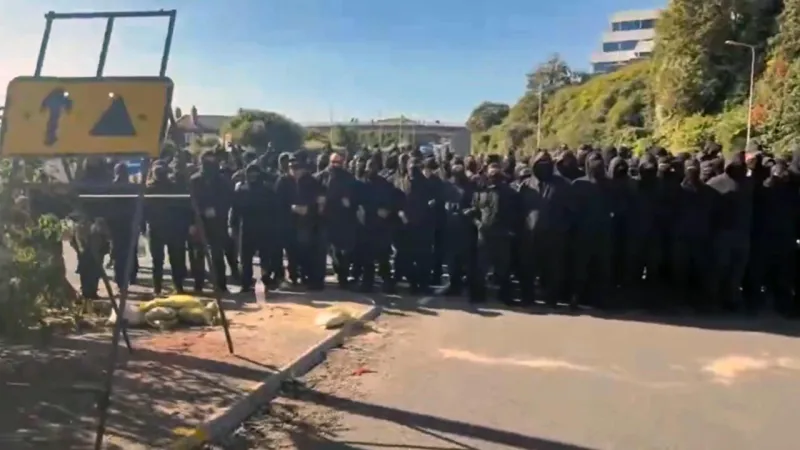
Dover, England – Dozens of masked individuals effectively shut down the crucial Port of Dover today, disrupting maritime traffic and prompting a significant response from Kent Police, who characterized the developing situation as a "public order incident." The unexpected blockade has raised immediate concerns about trade, travel, and the security of a vital international gateway.
The Port of Dover serves as the United Kingdom's busiest ferry port, handling billions in trade and millions of passengers annually. Its strategic location makes any disruption a matter of national and international significance, underscoring its role in cross-Channel commerce and tourism.
The sudden appearance of an organized group of masked individuals, whose affiliations and motives remain unclear, has immediately drawn widespread attention. Initial reports indicate the protesters employed tactics designed to physically impede access to port facilities, causing immediate operational gridlock.
Kent Police were swift to acknowledge the gravity of the situation, deploying officers to the scene to manage the evolving circumstances. Their preliminary statement confirmed the incident as a matter of public order, indicating potential breaches of peace and unlawful assembly rather than a mere demonstration.
The precise number of individuals involved in the demonstration has not been officially confirmed beyond initial media estimates of "dozens." However, their coordinated actions were sufficient to cause significant operational delays and logistical challenges for port authorities.
Authorities have initiated an investigation into the circumstances surrounding the blockade, aiming to identify the participants and ascertain their demands or grievances. The deliberate use of masks by the group suggests a concerted effort to conceal their identities from law enforcement.
Disruptions at the Port of Dover invariably create ripple effects across supply chains and passenger travel networks. Freight companies are likely to experience substantial delays, impacting the timely delivery of goods between the UK and continental Europe and potentially affecting perishable cargo.
For travelers planning cross-Channel journeys, the incident presented immediate logistical challenges. Ferry services, a primary mode of transport through Dover, faced cancellations or significant rescheduling, leaving many passengers stranded or rerouted.
Kent Police urged the public to avoid the affected areas and to follow official guidance for travel updates. They emphasized their commitment to maintaining public safety and restoring normal operations at the port with minimal further disruption, prioritizing a peaceful resolution.
Local businesses dependent on the smooth functioning of the port, from logistics firms to hospitality services, are also bracing for the economic consequences of an extended shutdown. The incident underscores the vulnerability of critical infrastructure to concerted protest actions and their wide-ranging impact.