 Dorry Archiles
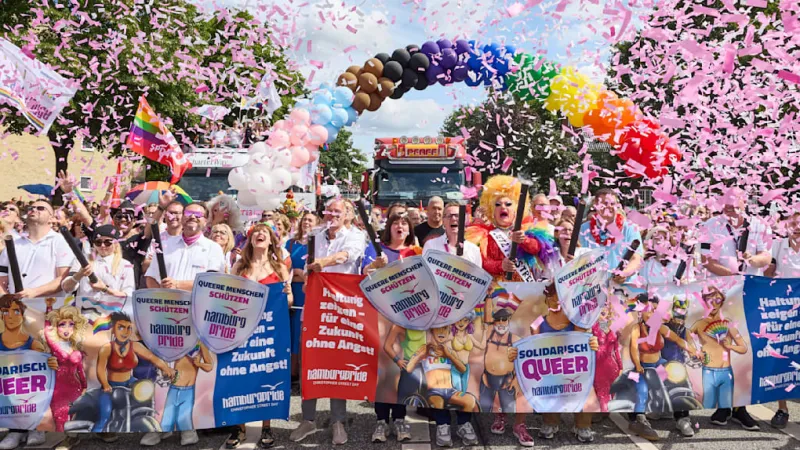
Hamburg – Members of Germany's queer community convened in Hamburg one week after a violent attack marred Berlin's Christopher Street Day parade, delivering sharp criticisms against both Islamist ideologies and the nation's major political parties. The demonstration, while maintaining an outwardly festive atmosphere characteristic of LGBTQ+ events, featured pointed denunciations from activists targeting the Union, AfD, SPD, and Greens for perceived failings.
The protest emerged as a direct response to the heightened tensions and anxieties following the incident at the Berlin CSD. Participants expressed a complex blend of resilience, joy, and profound anger, transforming the celebratory gathering into a platform for demanding accountability and systemic change.
Central to the grievances was an activist who forcefully condemned Islamist extremism. This condemnation resonated with many attendees, reflecting a community grappling with multifaceted threats to its safety and freedom of expression.
However, the critique extended beyond extremist elements. The activist also leveled significant accusations against the German political establishment, challenging the efficacy and sincerity of mainstream parties in protecting queer rights and addressing societal prejudices.
Alice Weidel, a prominent figure within the Alternative for Germany (AfD) party, was specifically singled out by the activist, who declared that Weidel, despite her public profile, does not represent the community's interests or values. This highlights a deep distrust of certain political factions within the LGBTQ+ movement.
The criticism was not confined to conservative or far-right parties. Even the Union (CDU/CSU), the Social Democratic Party (SPD), and the Green Party, traditionally seen as more aligned with progressive causes, faced scrutiny for what activists perceived as insufficient action or misplaced priorities.
Activists argued that the political landscape often fails to adequately grasp the unique challenges faced by the queer community, particularly in the face of rising intolerance. They called for more robust protective measures, genuine political solidarity, and a clearer stance against all forms of hate.
The demonstration underscored a growing frustration within certain segments of the queer community regarding how political leaders articulate and address issues of identity, safety, and integration. It suggests a demand for politicians to move beyond symbolic gestures and implement tangible policies.
Observers noted the significance of such broad criticism, indicating a possible shift in the communitys engagement with traditional political alliances. The Hamburg event showcased a desire for a more direct, uncompromising approach to advocating for their rights and security.
This sentiment aligns with broader discussions on political narratives and their impact on minority communities, particularly where concerns about extremism intersect with perceived governmental inaction. Experts often note the complex interplay between societal tolerance, political discourse, and the rise of various forms of bigotry, a topic explored in analyses such as Lefts Dangerous Empathy: Islamism, Israel Hatred, and Misguided Narratives.
The Hamburg protest, therefore, served as a powerful declaration. It was a clear message that while the community remains vibrant and resilient, it is simultaneously demanding more decisive and unwavering support from its elected representatives against all forms of bigotry and violence.
Participants emphasized that true solidarity requires proactive engagement and concrete policies, not just verbal condemnations after an incident occurs. The vibrant street demonstration thus became a critical forum for expressing both collective strength and profound political disappointment.
The incident in Berlin, which galvanized this Hamburg response, has prompted a reevaluation among many LGBTQ+ advocates concerning the effectiveness of current strategies for combating hate crimes and promoting inclusion. The community seeks assurances of safety that extend beyond mere rhetoric.
Such demonstrations are not uncommon in Germany, where civil society frequently mobilizes to address social and political issues. However, the dual critique of both external threats and internal political shortcomings highlights a particular moment of introspection and assertiveness within the queer movement.
The call for politicians to better understand and act upon the concerns of marginalized groups continues to grow louder across various German cities. This latest protest in Hamburg provides further evidence of a community determined to hold its leaders accountable for comprehensive protection and equity.