 Angel Doris
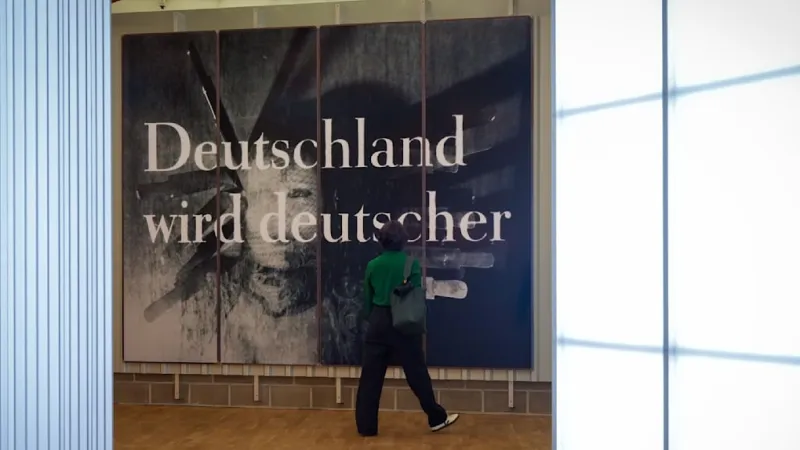
BERLIN – The Hamburger Bahnhof, a renowned contemporary art museum in the German capital, is steadfastly reasserting its fundamental cultural mission, leveraging its "A Thousand Times Berlin" exhibition to underscore its true purpose amidst increasingly commercialized and ephemeral installations. This deliberate refocusing comes as its historic halls concurrently host a fashion-sponsored interactive display, presenting a stark dichotomy between transient spectacle and enduring institutional values.
The ongoing "A Thousand Times Berlin" exhibition serves as a profound statement, meticulously curating works that delve into the multifaceted identity and historical layers of the German metropolis. This carefully assembled collection aims to remind visitors, as well as the institution itself, of the profound responsibility inherent in preserving and interpreting cultural heritage.
In stark contrast, the historic main hall features an installation where visitors engage with building blocks, a venture supported by a prominent fashion brand. While drawing a different demographic and offering a novel form of engagement, critics and patrons alike observe a tension between this playful, sponsor-driven activity and the traditional gravitas expected of such a venerable establishment.
This juxtaposition at the Hamburger Bahnhof illuminates a critical debate reverberating throughout the international cultural landscape: what constitutes the true luxury of a museum? Is it found in blockbuster events and commercially appealing displays, or does it reside in the diligent fulfillment of its curatorial and educational duties?
The museum's leadership appears to be subtly advocating for the latter, positioning "A Thousand Times Berlin" not merely as another show but as a declaration of intent. It implicitly argues that a museum's genuine value stems from its ability to offer deep, reflective engagement with art and history, rather than from fleeting entertainment.
The exhibit navigates Berlin's tumultuous past and vibrant present, utilizing diverse artistic perspectives to create a rich tapestry of experiences. It challenges visitors to consider the city's evolution, its enduring spirit, and the narratives that define it. This commitment aligns with Italy's recent unveiling of weekend exhibitions, which similarly spotlight significant artistic and historical themes, emphasizing national cultural narratives.
For years, cultural institutions worldwide have grappled with the imperatives of financial sustainability, often leading to partnerships that can blur the lines between cultural preservation and corporate branding. The current programming at Hamburger Bahnhof, though not framed as a crisis, brings this delicate balance into sharp relief.
Experts suggest that the success of any museum ultimately hinges on its capacity to remain true to its educational and aesthetic mandates. Professor Elena Volkov, a leading art historian based in Munich, commented, "The core mission of a museum is not to merely attract crowds, but to cultivate understanding and appreciation for human creativity across generations. Compromising that mission for commercial gain risks diluting its very essence."
This focus on a museum's core mission becomes particularly pertinent in an era where digital distractions and experiential consumption increasingly shape public expectations. A museum must find innovative ways to engage without sacrificing its scholarly integrity.
The exhibition title itself, "A Thousand Times Berlin," evokes a sense of enduring narratives and repeated reflections, contrasting sharply with the transient nature of a sponsored play space. It suggests an institutional commitment to the long view, to the myriad stories that collectively define a place and its people.
Ultimately, the Hamburger Bahnhof's current programming presents a compelling case study for other global institutions. It asks whether the future of museums lies in spectacle or in substance, in fleeting amusement or in profound cultural stewardship. The museum seems to be leaning towards the latter, signaling a return to foundational principles.
This subtle but significant emphasis on its "actual mission" reaffirms the Hamburger Bahnhof's status not just as a repository of art, but as a vital cultural compass for Berlin and beyond, navigating the complexities of modern engagement while safeguarding its inherent value.