 Stefani Rindus
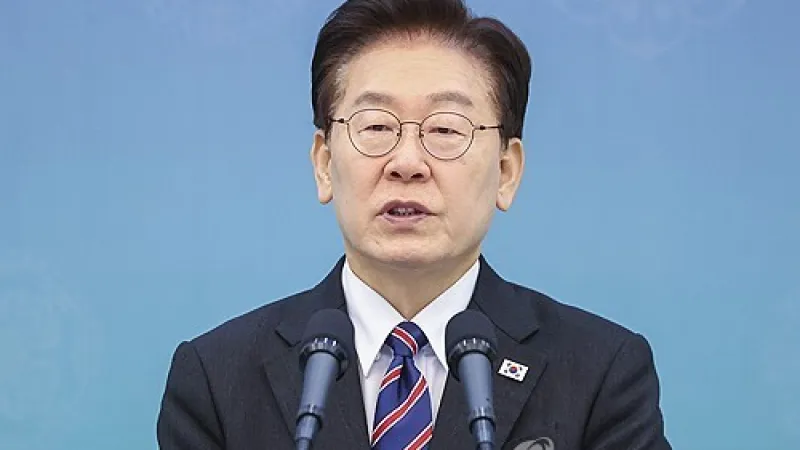
SEOUL, Nov. 6 -- South Korean President Lee Jae Myung on Friday pledged extensive government efforts to formally acknowledge and restore the honor of countless civilians tragically killed during instances of state violence amid the Korean War. Speaking from the presidential office in Seoul, President Lee underscored a national commitment to confront the painful legacies of the conflict, which deeply scarred the nation decades ago. This initiative aims to bring long-overdue justice and recognition to victims and their families.
The pledge addresses one of the most sensitive chapters in South Koreas modern history: the systematic elimination of perceived communist sympathizers and others deemed a threat by both sides during the 1950-1953 conflict. These actions often involved arbitrary arrests, torture, and summary executions, leaving an indelible mark on families who have sought official acknowledgment and apology for generations.
President Lees remarks highlighted the moral imperative for the state to acknowledge its role in these tragedies. He emphasized that genuine national reconciliation cannot occur without a full accounting of the past and a sincere effort to restore dignity to those unjustly victimized. The process, he suggested, involves historical truth-finding, memorialization, and providing avenues for families to grieve and achieve closure.
For decades, many of these incidents remained largely unspoken, overshadowed by the larger narrative of national struggle and anti-communism. Families of victims often faced social stigma and were hesitant to speak out, fearing retribution or being branded as traitors. The political climate historically made such public acknowledgement difficult, if not impossible.
Recent years have seen a gradual shift, with civic groups and historians tirelessly advocating for the truth. Commissions established to investigate past atrocities have unearthed significant evidence, bringing to light the scale and brutality of the violence. These findings have paved the way for a more open discourse on the Korean War civilian honor movement.
The presidents commitment marks a significant escalation of these reconciliation efforts, signaling a top-down approach to address these historical injustices. It is anticipated that this initiative will involve inter-ministerial cooperation, potentially drawing on the expertise of the Justice Ministry to navigate the complex legal and historical considerations.
Such efforts are crucial not only for the victims and their descendants but also for the nations collective memory. By confronting these dark episodes, South Korea aims to strengthen its democratic values and ensure that similar state-sponsored abuses are never repeated. This process is seen as vital for building a more inclusive and just society.
While the exact mechanisms for achieving this honor restoration are still being formulated, observers expect a multi-faceted approach. This could include further independent investigations, the establishment of dedicated memorial sites, educational programs to inform the public, and potentially symbolic reparations or official apologies to affected families.
The legacy of the Korean War extends beyond the battlefield; it lives in the memories and unresolved grief of countless citizens. President Lees announcement provides a beacon of hope for those who have waited decades for their loved ones sacrifices and suffering to be acknowledged by the very state that was, at times, responsible for their plight.
Restoring the Korean War civilian honor is a long and arduous journey, fraught with emotional and political complexities. However, the presidential pledge signifies a critical turning point, demonstrating a national resolve to heal historical wounds and move forward with a unified understanding of its past. This commitment resonates deeply with a populace increasingly seeking transparency and accountability from its leadership.